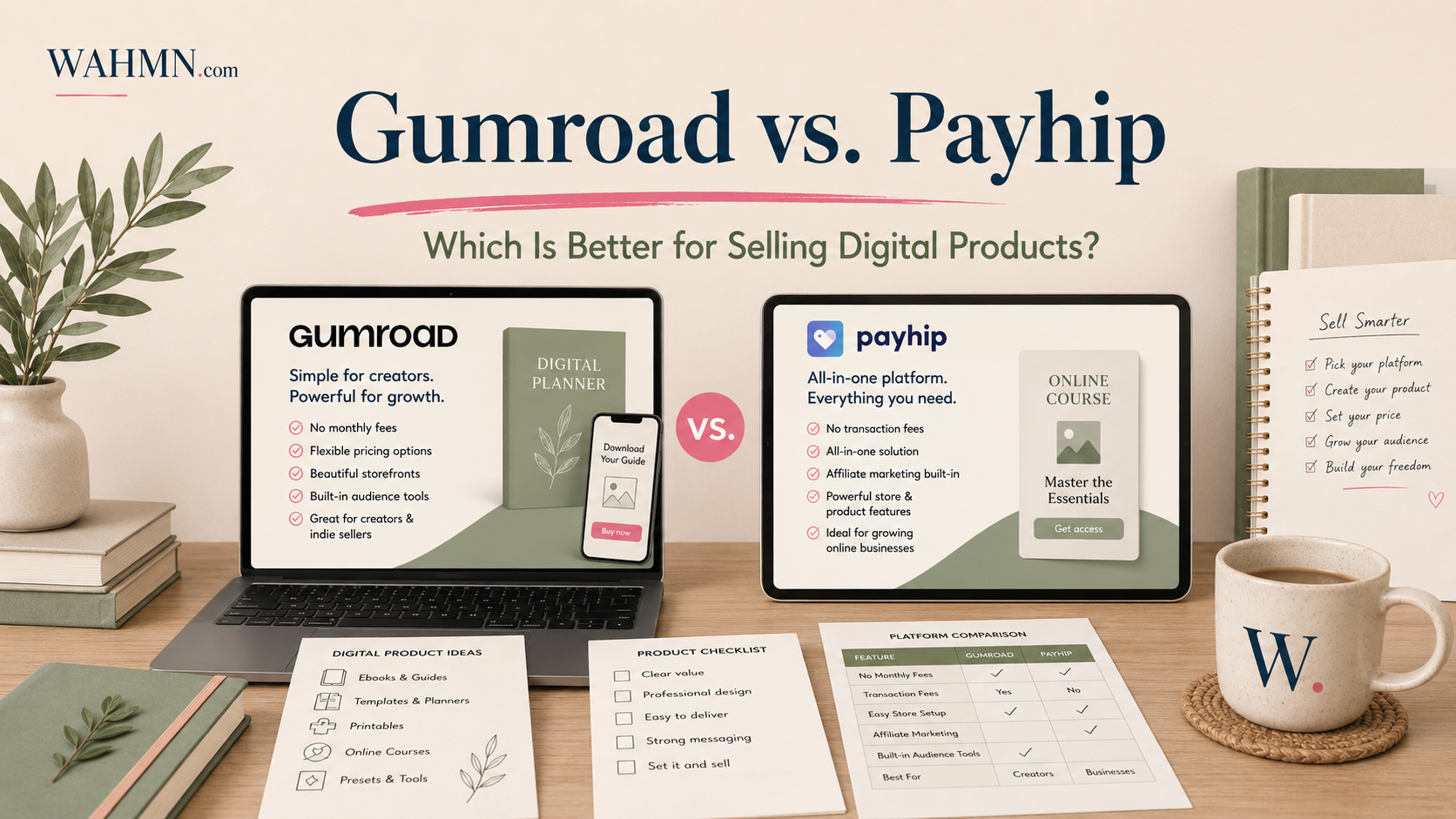
Gumroad vs. Payhip: Which Is Better for Selling Digital Products?
In this article
Starting an online business requires choosing the right tools to reach your customers. Many creators and educators find themselves stuck when comparing Gumroad vs Payhip to host their digital goods. Both platforms offer unique ways to monetize your knowledge, but they cater to different business needs.
When you evaluate these services, you must look closely at transaction fees, available features, and overall ease of use. These factors determine how much profit you keep and how smoothly your storefront runs. Understanding the nuances of Payhip vs Gumroad helps you build a sustainable income stream.
Your final decision often depends on your specific product type, current sales volume, and your growth stage. Whether you are a beginner or a seasoned entrepreneur, picking the right partner is essential for long-term success. Let’s explore which platform aligns best with your professional goals.
Key Takeaways
- Both platforms provide simple, user-friendly interfaces for selling digital downloads.
- Transaction fees vary significantly based on your chosen pricing plan.
- Feature sets differ regarding marketing tools, affiliate programs, and tax handling.
- Your business stage influences which platform offers the best return on investment.
- Choosing the right tool depends on your specific product niche and audience size.
Introduction
When you want to sell digital products without building a complex website, you must choose between Gumroad or Payhip. Both platforms offer a streamlined way to reach customers, but they serve different business models and goals. Making the right choice early saves you time and helps you keep more of your hard-earned revenue.
Selecting the best tool depends on your specific needs as a creator. You should evaluate how each platform handles transaction fees, tax compliance, and the overall customer experience. By focusing on these core areas, you can ensure your digital storefront remains efficient and professional. Both sit inside a wider field, and our look at the best platforms to sell digital products and at choosing a payment processor covers the options either of these two leaves out.
The following table outlines the primary criteria you should consider when deciding between Gumroad or Payhip for your digital business:
| Feature | Gumroad | Payhip |
|---|---|---|
| Setup Ease | Very High | High |
| Transaction Fees | Flat Percentage | Tiered/Variable |
| Tax Handling | Automated | Automated |
| File Delivery | Secure/Instant | Secure/Instant |
Ultimately, your decision should align with your long-term growth strategy. Whether you prioritize marketplace discovery or lower monthly costs, understanding these differences is the first step toward a successful launch.
At-a-glance table
To simplify your decision, we have organized the key differences between Gumroad vs Payhip into a single, easy-to-read format. This overview highlights how each platform manages the essential tools you need to run a successful digital storefront.
| Feature | Gumroad | Payhip |
|---|---|---|
| Pricing Model | Flat 10% fee | Tiered (Free to 5%) |
| Setup Speed | Very Fast | Fast |
| Storefront Control | Minimal | Moderate |
| Checkout Experience | Optimized/Simple | Customizable |
| File Delivery | Automated | Automated |
| Subscriptions/Courses | Included | Included |
| Affiliate Tools | Basic | Advanced |
| Analytics | Standard | Detailed |
| Payouts | Weekly/Monthly | Instant (PayPal/Stripe) |
When evaluating Gumroad vs Payhip, notice that Gumroad prioritizes a frictionless experience for creators who want to start selling immediately. Its flat fee structure is predictable, though it may become expensive as your sales volume grows.
Conversely, Payhip offers more flexibility for those who want to scale their business over time. By choosing a higher-tier plan, you can significantly reduce your transaction fees, making it a stronger choice for established sellers who prioritize long-term profit margins.
Setup ease
Setting up a digital storefront is the bridge between your creative work and your first sale. Both platforms aim to simplify this journey, but they offer slightly different experiences for the average user. Whether you are a seasoned entrepreneur or a complete beginner, the goal is to minimize the time spent on configuration so you can focus on your content.
Gumroad is famous for its minimalist approach. You can create an account and have a product page live in just a few minutes. The interface is clean, and the platform guides you through the process of setting a price and uploading your files with ease.
If you are looking for a Payhip alternative to Gumroad, you will find that Payhip follows a similar philosophy. It allows users to sign up and start selling without needing any technical development skills. The dashboard is intuitive, making it a strong contender for those who want a straightforward path to their first transaction.
“The best tools are the ones that get out of your way and let you focus on what you create.”
When comparing the two, consider these key steps in the setup process:
- Account Creation: Both platforms require only basic information to get started.
- Product Uploads: You can drag and drop files into either system effortlessly.
- Payment Integration: Connecting your PayPal or Stripe account takes only a few clicks on both sites.
- Customization: Payhip offers slightly more control over the look of your store without requiring custom code.
For many beginners, Payhip serves as a highly effective Payhip alternative to Gumroad because it balances simplicity with extra features. While Gumroad is excellent for those who want a “set it and forget it” style, Payhip provides a bit more flexibility for creators who want to grow their brand. Ultimately, both platforms provide a smooth, efficient path from registration to your first sale.
Pricing and fees
When comparing Gumroad vs Payhip fees, the best choice depends on your specific sales volume and product pricing. Gumroad utilizes a simple, flat-rate model that appeals to creators who want to avoid monthly commitments. They charge a flat 10% fee on every sale, which includes payment processing costs.
This straightforward approach makes Gumroad an attractive option for beginners who are still validating demand. You do not have to worry about monthly subscriptions while you test your ideas. However, as your sales grow, that 10% cut can become a significant portion of your revenue.
Payhip takes a different route by offering a tiered subscription model. This allows sellers to choose a plan that aligns with their current business stage. While they offer a free plan, it comes with a higher transaction fee, whereas their paid plans reduce those costs significantly.
If you are deciding between Gumroad vs Payhip, consider how your profit margins change at scale. High-volume sellers often find that Payhip’s paid plans save them money over time. Conversely, low-volume sellers might prefer the lack of monthly overhead found on the free tier of Payhip or the flat structure of Gumroad.
| Plan Type | Monthly Cost | Transaction Fee |
|---|---|---|
| Gumroad (Standard) | $0 | 10% flat |
| Payhip Free | $0 | 5% |
| Payhip Plus | $29 | 2% |
| Payhip Pro | $99 | 0% |
Careful analysis of these numbers is essential for your bottom line. If you sell high-priced items, the 0% transaction fee on the Payhip Pro plan can lead to substantial savings. Always calculate your expected monthly revenue to see which structure maximizes your take-home pay.
Real-dollar examples
Calculating your actual take-home pay reveals the true cost of doing business online. When you analyze Gumroad vs Payhip fees, the difference often comes down to your specific sales volume and product price. Small changes in percentage rates can significantly impact your monthly profit margins.
To understand how these platforms perform, consider these three common sales scenarios:
- Inexpensive Downloads: Selling a $5 PDF guide where platform fees take a larger relative bite.
- Premium Digital Products: Selling a $200 masterclass where the flat-fee structure of one platform might save you money.
- Recurring Purchases: Managing a $30 monthly membership where consistent, low-percentage fees help you scale.
The following table illustrates how much a creator keeps from a $100 sale, assuming standard payment processing costs are included in the platform’s fee structure.
| Scenario | Gumroad (10% flat) | Payhip (Free Plan 5%) | Winner |
|---|---|---|---|
| $10 Digital Download | $9.00 | $9.50 | Payhip |
| $100 Premium Course | $90.00 | $95.00 | Payhip |
| $500 Bundle Deal | $450.00 | $475.00 | Payhip |
When you evaluate Payhip vs Gumroad, remember that Gumroad simplifies the process by charging a flat 10% fee on all sales. This predictability is helpful for creators who prefer a hands-off approach to their finances. Conversely, Payhip offers a tiered system that can be much cheaper as your revenue grows.
Ultimately, your choice depends on your long-term business goals. If you are just starting, the lower fees on Payhip might provide the extra cash flow needed to reinvest in your brand. If you value a streamlined, all-in-one experience, the higher cost of Gumroad might be a worthwhile trade-off for your time.
Payhip plan break-even
If you are weighing Gumroad vs Payhip fees, calculating your break-even point is a smart business move. Payhip offers a free plan with higher transaction fees and several paid tiers that lower those costs in exchange for a monthly subscription. Choosing the right path depends entirely on your monthly sales volume and average order value.
To find your break-even point, you must compare the monthly subscription cost against the savings you gain from lower transaction fees. The formula is simple: divide the difference in monthly cost by the difference in transaction fees per sale. This calculation reveals exactly how many sales you need to make before a paid plan starts putting more money in your pocket.
| Plan Type | Monthly Cost | Transaction Fee |
|---|---|---|
| Free Forever | $0 | 5% |
| Plus Plan | $29 | 2% |
| Pro Plan | $99 | 0% |
For example, moving from the Free plan to the Plus plan saves you 3% on every transaction. If you sell $1,000 worth of products monthly, the 3% savings equals $30, which covers the $29 monthly fee. At this specific volume, the paid plan becomes more cost-effective than staying on the free tier.
Always consider your average customer value when running these numbers. If you sell high-ticket items, you will hit your break-even point much faster than someone selling low-cost digital downloads. Analyzing Gumroad vs Payhip fees through this lens ensures you never pay more in transaction costs than you need to for your growing business.
Some of the links below are affiliate links. If you buy through one, I may earn a commission at no extra cost to you.
Those plan costs are a worked example rather than a live quote. Check the current pricing on Payhip before you commit to a tier, because the figures that decide your break-even are the ones in force on the day you sign up, not the ones in this table.
Tax handling
Navigating the complex world of digital sales tax is a critical step for any online business owner. Whether you are selling e-books, software, or courses, you must ensure your platform manages tax compliance correctly. This is especially true for United States sellers who face the challenge of multi-state tax nexus.
Gumroad acts as the “Merchant of Record” for your sales. This means they take on the responsibility of collecting and remitting sales tax and VAT on your behalf globally. For many creators, this hands-off approach is a major reason to choose the platform, as it removes the burden of tracking individual state laws.
If you are searching for a reliable Gumroad alternative, you should look closely at how the platform handles these liabilities. Payhip also functions as a Merchant of Record, which simplifies the process significantly. Both platforms handle the heavy lifting of tax calculation based on your customer’s location, ensuring you remain compliant without needing a degree in accounting.
Before you publish your products, verify that your chosen platform provides detailed, downloadable transaction records. These reports are vital for your own bookkeeping and for providing proof of tax remittance during an audit. You should never rely on a system that hides your sales data or makes it difficult to export your financial history.
Ultimately, the best Gumroad alternative is one that provides transparency alongside automation. Always confirm that the platform supports the specific tax requirements of your target markets. By prioritizing tax-ready features, you protect your business from future legal headaches and allow yourself more time to focus on creating great content.
Storefront design
When deciding between Gumroad or Payhip, the visual presentation of your products plays a major role in conversion. Your storefront acts as the digital front door to your brand, and the level of control you have over its appearance can significantly influence how customers perceive your business.
Gumroad offers a minimalist, clean aesthetic that works well for creators who want to get up and running quickly. It focuses on a streamlined buying experience, which helps reduce friction for the buyer. However, this simplicity means you have fewer options to drastically change the layout or navigation structure of your shop.
On the other hand, Payhip provides more flexibility for those who want a traditional e-commerce feel. It allows for better organization of product collections and gives you more control over your storefront’s branding elements. If you want your shop to feel like a dedicated website, Payhip often provides a more robust set of tools to achieve that goal.
Consider these key differences in design capabilities:
- Customization: Payhip allows for more granular control over colors, fonts, and page layouts to match your existing brand identity.
- Navigation: Payhip supports custom menus and categories, making it easier for customers to browse large catalogs.
- Domain usage: Both platforms allow you to connect a custom domain, which is essential for building long-term brand authority.
Ultimately, the right choice between Gumroad or Payhip depends on your specific conversion goals. If your strategy relies on product discovery and a deep catalog, the added layout flexibility of Payhip may be the better path. If you prefer a fast, high-converting landing page style, the focused design of Gumroad remains a top-tier choice for many digital sellers.
Checkout
When evaluating Gumroad vs Payhip, the checkout experience often dictates your conversion rate. A smooth, fast process ensures that potential buyers do not abandon their carts at the final step. Both platforms prioritize speed, but they approach the user interface with different philosophies.
Gumroad is famous for its minimalist, pop-up style checkout. It feels incredibly modern and works exceptionally well for impulse purchases. Because the interface is so streamlined, customers can complete a transaction in seconds without leaving the page they are currently browsing.
Payhip offers a more traditional, robust checkout flow that feels familiar to most online shoppers. It provides excellent support for collecting specific customer information, which is helpful if you need to verify tax details or gather marketing data. When comparing Gumroad vs Payhip, consider whether your audience prefers a quick “one-click” feel or a structured, professional form.
Mobile usability is a top priority for both services. Each platform automatically adjusts its layout to fit smartphones and tablets, ensuring that your customers have a frictionless experience regardless of their device. This is vital for creators who drive traffic through social media platforms like Instagram or TikTok.
Regarding payment methods, both platforms handle major credit cards and PayPal seamlessly. However, Gumroad’s integration with Apple Pay and Google Pay often gives it a slight edge for mobile-first buyers. If you are selling high-ticket premium offers, the extra data fields in Payhip might provide more peace of mind for your customers.
| Feature | Gumroad | Payhip |
|---|---|---|
| Checkout Style | Minimalist Pop-up | Structured Form |
| Mobile Optimization | Excellent | Very Good |
| Impulse Buy Suitability | High | Moderate |
| Data Collection | Basic | Advanced |
| Platform Comparison | Gumroad vs Payhip | Gumroad vs Payhip |
File delivery
Reliable digital product delivery is the most critical step in the customer journey for digital creators. Once a customer completes a purchase, they expect immediate access to their files. Both Gumroad and Payhip excel at automating this process, ensuring that your buyers receive their downloads without any manual effort on your part.
When a customer buys an item, both platforms automatically send a receipt email containing a unique download link. This secure file delivery method prevents customers from sharing links publicly. Gumroad uses a system that limits the number of times a file can be accessed, which helps protect your intellectual property from unauthorized distribution.
Payhip offers similar protections, allowing you to set specific download limits or expiration dates for your files. Whether you are selling complex software, high-resolution audio files, or simple PDF templates, these platforms handle the heavy lifting. You can upload large files easily, and the systems manage the bandwidth required to serve them to your global audience.
By using these built-in tools, you significantly reduce the number of support requests related to missing files or broken links. A smooth, automated experience builds trust with your audience and encourages repeat purchases. The following table highlights the key differences in how these platforms manage your digital assets.
| Feature | Gumroad | Payhip |
|---|---|---|
| File Protection | Advanced link masking | Download limits & expiry |
| Delivery Method | Automated email link | Automated email link |
| File Size Limit | Up to 16GB per file | Up to 5GB per file |
| Access Control | Strict IP tracking | Customizable download caps |
Choosing between these two depends on your specific file types and security needs. If you sell massive software packages, Gumroad’s higher file size limit might be a deciding factor. However, if you prefer granular control over how long a link stays active, Payhip provides excellent flexibility for your digital product delivery needs.
Courses, memberships, subscriptions
Building a sustainable creator business requires more than just selling one-off files. While simple downloads work for many, creators who focus on recurring revenue often need more robust tools to manage ongoing access. Whether you are launching a video course or a private community, the platform you choose dictates how you deliver value over time.
When you look at digital memberships, the requirements change significantly. You need a system that handles recurring billing, manages member access levels, and protects your gated content from unauthorized sharing. Both platforms offer ways to handle these tasks, but they approach the user experience from different angles.
“The most successful creators are those who build a direct, ongoing relationship with their audience rather than just completing a single transaction.”
If you are searching for a Payhip alternative to Gumroad, you should consider how each service handles structured learning. Payhip excels at providing a clean, straightforward interface for selling courses with drip-feed content. This is ideal for creators who want to guide their students through a specific curriculum without overwhelming them.
Consider these key differences when evaluating your options for long-term growth:
- Drip Content: Payhip allows you to release lessons on a schedule, which keeps students engaged over several weeks.
- Gated Access: Both platforms allow you to restrict access to files or pages, but the setup process varies in complexity.
- Community Features: If your business relies on member interaction, you may need to integrate third-party tools regardless of the platform.
Choosing a Payhip alternative to Gumroad often comes down to your specific business model. If your primary goal is to foster digital memberships that require constant updates and community participation, look for the platform that offers the most reliable recurring billing features. Consistency is the foundation of a loyal customer base, so prioritize tools that make the renewal process seamless for your subscribers.
Affiliate tools for the seller
Expanding your reach often requires the help of others, which is where affiliate marketing for digital products becomes essential. By incentivizing partners to promote your work, you can tap into new audiences that you might not reach on your own. Both Gumroad and Payhip offer built-in systems to help you manage these partnerships effectively.
When evaluating seller affiliate tools, you should consider how much control you need over the recruitment and payout process. Gumroad keeps things simple by allowing you to add affiliates via their email address. Once added, the platform handles the tracking and commission payouts automatically, which saves you significant administrative time.
Payhip offers a slightly more flexible approach for those who want deeper customization. You can set specific commission rates for individual affiliates, which is helpful if you have partners with different levels of influence. Tracking your referrals is straightforward on both platforms, providing you with the data needed to see which partners drive the most sales.
To choose the right platform for your growth strategy, look for these core features:
- Automated Payouts: Reduces the need for manual accounting and monthly invoices.
- Custom Commission Rates: Allows you to reward top-performing partners with higher percentages.
- Clear Reporting Dashboards: Helps you monitor clicks, conversions, and total earnings per affiliate.
- Easy Onboarding: Simplifies the process of inviting new partners to join your program.
While both platforms provide solid seller affiliate tools, your choice should depend on your reporting needs. If you prefer a hands-off experience, Gumroad’s integrated system is highly efficient. If you require granular control over your affiliate marketing for digital products, Payhip’s feature set provides the extra layer of management that many professional creators demand.
Coupons and promotions
Understanding the nuances of Gumroad vs Payhip promotions helps you decide which platform fits your growth strategy best. Both platforms provide essential tools to help you reach your revenue goals through smart pricing strategies. Whether you are launching a new ebook or running a seasonal sale, these features are vital for your success.
When you use digital product coupons, you gain the ability to reward loyal customers while attracting new ones. Gumroad offers a very straightforward interface for creating discount codes. You can easily set percentage-based or fixed-amount discounts. This simplicity is perfect for creators who want to launch a quick flash sale without technical headaches.
Payhip takes a slightly different approach by offering more granular control over your promotional campaigns. You can set specific limits on how many times a code can be used or restrict it to certain products. This level of detail helps you protect your profit margins during aggressive marketing pushes. It is particularly useful for creators who run complex affiliate-driven sales where tracking is critical.
Both platforms allow you to bundle products, which is a powerful way to increase your average order value. By grouping related items, you provide more value to the buyer while moving more inventory. Using digital product coupons on these bundles can create a sense of urgency that drives immediate conversions.
The following table highlights the core differences in how these platforms handle your marketing needs:
| Feature | Gumroad | Payhip |
|---|---|---|
| Discount Types | Percentage/Fixed | Percentage/Fixed/Free Shipping |
| Usage Limits | Basic | Advanced/Conditional |
| Bundle Support | Strong | Strong |
| Campaign Tracking | Standard | Detailed |
Ultimately, your choice between Gumroad vs Payhip promotions depends on your specific business model. If you prefer a fast, minimalist setup, Gumroad is a fantastic choice. If you require deep control over your sales incentives and affiliate tracking, Payhip provides the robust tools you need to scale effectively.
Email/customer communication
Building a loyal audience requires more than just a great product; it needs reliable communication tools. Both platforms allow you to send receipts and automated updates to your customers, which is vital for maintaining trust. Effective email marketing for creators helps you turn one-time buyers into repeat fans who look forward to your next release.
Analytics and integrations
Understanding your sales data is the key to growth. You need clear digital product analytics to see which items perform best and where your traffic originates. Both platforms offer dashboards that track conversion rates and visitor behavior.
If you need advanced features, you can connect these stores to tools like Zapier or Google Analytics. This flexibility makes a Payhip alternative to Gumroad or a similar service highly attractive for those who rely on external data stacks to run their business.
Payouts
Getting paid on time is non-negotiable for any entrepreneur. Gumroad typically processes payouts on a set schedule, often weekly or monthly depending on your location. Payhip also provides reliable payout options, usually through PayPal or Stripe, ensuring your funds reach your bank account quickly.
Reliability is the priority when choosing your payment gateway. Always check the specific payout terms for your country to avoid unexpected delays in your cash flow.
Selling from an existing website
You might already have a blog or a portfolio site where you want to showcase your work. Both platforms provide simple embed codes that let you add “Buy Now” buttons directly to your own pages. This creates a seamless experience for your visitors, as they never have to leave your site to complete a purchase.
Using a Gumroad alternative or Payhip in this way allows you to keep your branding consistent. You maintain full control over the look and feel of your primary website while offloading the heavy lifting of file delivery and payment processing.
Best by stage
Your needs will change as your business grows from a side project to a full-time career. Here is how to prioritize your platform choice based on your current stage:
- Launching: Focus on platforms with low upfront costs and simple setup to validate your idea quickly.
- Validating: Use built-in analytics to identify your best-selling products and refine your pricing strategy.
- Scaling: Look for advanced integrations and affiliate tools that help you reach a wider audience.
- Established: Prioritize platforms that offer robust customer management and deep data insights to maximize lifetime value.
Marketplace discovery
Choosing between Payhip vs Gumroad depends on your specific business goals and audience reach. While both platforms offer unique benefits, neither acts as a massive digital product marketplace that guarantees sales through organic traffic alone.
Strategic Platform Selection
You might prefer Gumroad for its clean, modern aesthetic and ease of use for creators starting from scratch. Payhip remains a strong Gumroad alternative if you prioritize lower transaction fees and robust tax handling features. Each platform serves a distinct purpose for independent sellers.
When to Look Elsewhere
Some businesses outgrow these simple tools. You may need a dedicated course platform like Teachable or a full ecommerce suite like Shopify if you require complex inventory management or advanced marketing funnels. These systems provide deeper control for scaling operations.
Common Questions
Are you still wondering if Gumroad or Payhip is right for you? Most users find that Payhip offers better long-term savings on fees. Gumroad often wins on simplicity and design. Both handle global tax compliance well, though you should always verify your specific local requirements. Start with the platform that feels most intuitive for your current product catalog and growth stage.
FAQ
When comparing Payhip vs Gumroad, which platform is more affordable for high-volume sellers?
Is Gumroad or Payhip better for handling international sales tax and EU VAT?
Can I use a Payhip alternative to Gumroad if I want to sell structured online courses?
Which platform offers more customization for my storefront design?
Is it easy to migrate my products if I decide to switch from Gumroad to Payhip?
How do payouts work on each platform?
Keep reading on WAHMN
More articles in this category, browse the full article library, or explore our business tools and learning paths.
Whichever you pick, the platform is the easy decision. Business Launcher covers the pricing, launch and buyer experience around it, and Email Marketing Business covers keeping those buyers.