Best Platforms for Selling Digital Downloads: Fees, Taxes and Ease of Use Compared
In this article
Launching an online business in the United States requires choosing the right infrastructure for your creative work. Many entrepreneurs struggle when they look for the best platforms to sell digital downloads because the market offers so many distinct options.
Your final decision depends on your specific product type, target audience, and budget. Some creators prioritize low transaction fees, while others need advanced marketing tools to scale their operations. Understanding how these digital download platforms handle taxes and user experience is vital for long-term success.
We will examine how you can effectively sell downloadable products by comparing key features across top providers. This guide provides practical recommendations to help you maintain control over your brand while maximizing your profit margins.
Key Takeaways
- Evaluate transaction fees against your monthly sales volume.
- Consider how each service manages automated sales tax compliance.
- Prioritize user-friendly interfaces to save time on store management.
- Assess the level of creative control and customization available.
- Match the platform features with your specific target audience needs.
Introduction
Many entrepreneurs today want to sell digital downloads online without the headache of building a custom website from scratch. Managing a complex commerce infrastructure often distracts from the creative process, which is why so many small businesses turn to specialized platforms.
Whether you are selling ebooks, templates, online courses, music, or printable artwork, the right tools can simplify your workflow. Choosing the best platform to sell digital products is a critical step that impacts your profit margins and your daily operations.
This guide helps you navigate the crowded marketplace to find a solution that fits your specific needs. We will evaluate how each digital download store handles essential tasks like tax compliance, customer discovery, and platform fees.
Our analysis focuses on the needs of creators based in the United States. By comparing everyday usability and long-term costs, you can make an informed decision that supports your business growth for years to come.
Evaluation criteria
Choosing the right platform for your digital goods requires looking beyond simple price tags. While headline pricing often grabs attention, the true cost of digital product selling platforms involves a complex mix of hidden variables. We use a consistent framework to ensure you make an informed decision based on your specific business goals.
Our evaluation focuses heavily on digital product fees, which include transaction costs, monthly subscriptions, and payment processing charges. We also examine how each service handles tax responsibilities, such as VAT or sales tax collection. These financial details can significantly impact your profit margins over time. For a closer look at the two most people end up comparing, see Payhip versus Gumroad.
Beyond money, we prioritize platform ease of use for both the seller and the buyer. A smooth checkout process and reliable file delivery are essential for maintaining a professional reputation. We also look at marketing tools and whether you truly own your customer data, which is vital for long-term growth.
The ideal choice often depends on your current stage of business. A beginner might value a simple, low-cost setup, while an established brand may require advanced customization and deep integration capabilities. These digital product selling platforms must be judged by how well they scale with your success.
The following table outlines the core metrics we use to compare these services. We weigh these factors to ensure you find the best platform ease of use for your unique workflow.
| Evaluation Metric | Why It Matters | Impact Level |
|---|---|---|
| Transaction Fees | Directly affects your net profit per sale. | High |
| Tax Compliance | Reduces legal risk and manual accounting. | Medium |
| File Delivery | Ensures customer satisfaction and trust. | High |
| Customer Ownership | Allows for future email marketing efforts. | Medium |
Quick comparison table
Finding the best website to sell digital products can feel overwhelming without a simple guide. Many creators struggle to decide where to sell digital downloads because each platform offers different features and fee structures.
This digital download platform comparison provides a snapshot of the most popular options available today. Use this data to quickly filter out platforms that do not align with your current business goals.
“The secret to success is choosing a platform that grows with your business rather than one that limits your potential.”
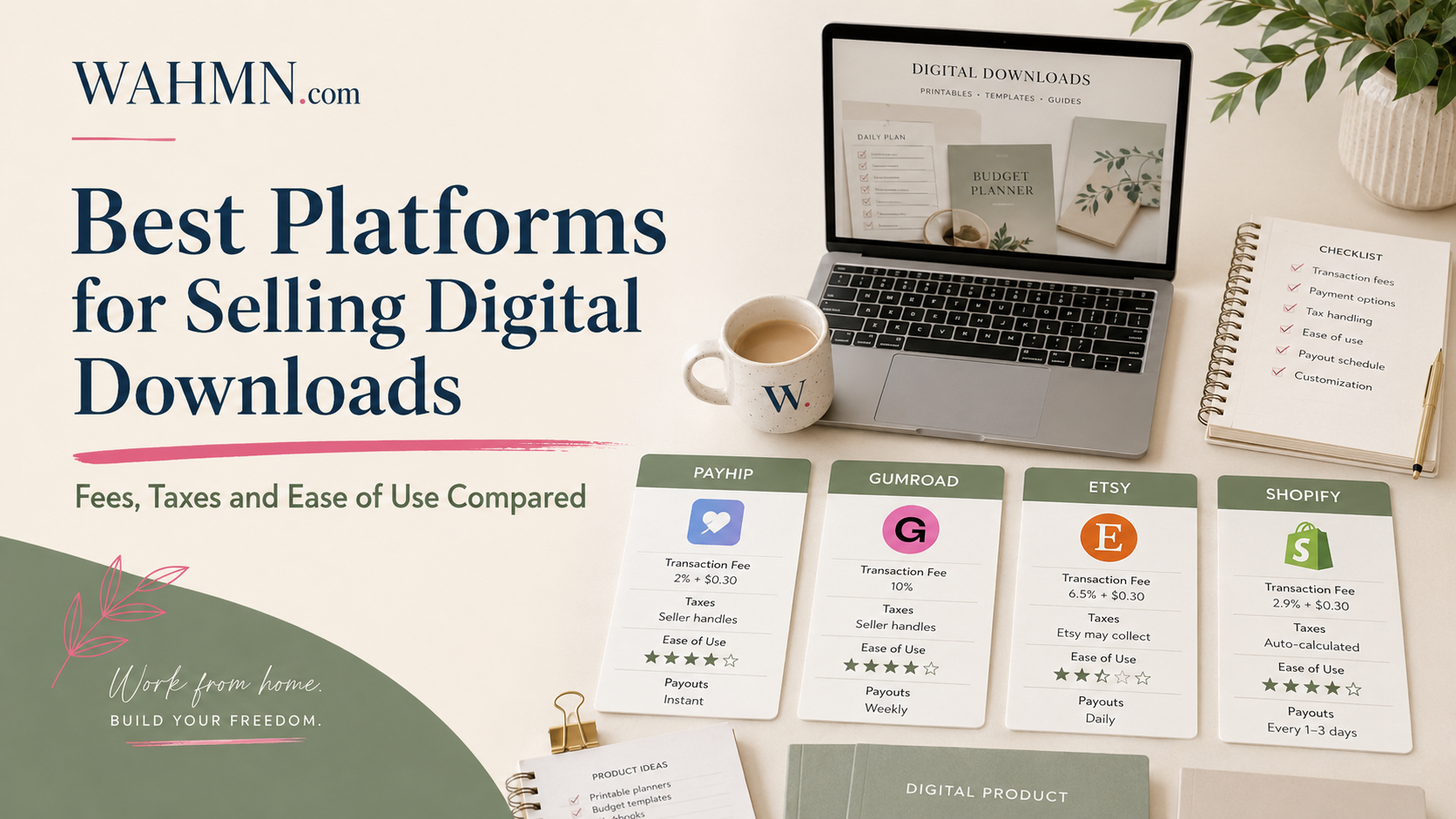
| Platform | Pricing Model | Tax Assistance | Built-in Discovery | Ideal User |
|---|---|---|---|---|
| Payhip | Free/Subscription | High | Low | Beginners |
| Gumroad | Percentage-based | High | Medium | Solo Creators |
| Etsy | Listing/Transaction | Medium | High | Handmade Sellers |
| Shopify | Monthly Fee | High | Low | Scaling Brands |
Please remember that companies frequently update their terms of service and fee structures. You should always verify current pricing and payment processing terms directly on the official platform website before making a final business decision.
Three platform types
Choosing the right home for your digital products starts with identifying which platform category fits your business model. Most digital product selling platforms fall into one of three distinct groups. Each category handles taxes, branding, and technical requirements in its own unique way.
First, we have creator storefront platforms. These tools are designed for speed and simplicity, allowing you to launch a shop in minutes. They are perfect for creators who want to focus on content rather than complex web development. You typically sacrifice some deep customization for the sake of a streamlined, user-friendly experience.
Second, full-scale ecommerce platforms offer extensive control over your brand identity. These systems provide robust tools for managing inventory, customer data, and complex tax compliance. While they require more technical effort to set up, they scale beautifully as your business grows.
Finally, online marketplace platforms provide the unique advantage of built-in customer discovery. Instead of driving all your own traffic, you benefit from the existing audience already browsing the site. This often comes with higher transaction fees, but it lowers the barrier to entry for new sellers.
| Platform Type | Primary Benefit | Technical Effort | Best For |
|---|---|---|---|
| Creator Storefront | Fast Setup | Low | Quick Launches |
| Ecommerce Platform | Total Control | High | Growing Brands |
| Online Marketplace | Built-in Traffic | Medium | New Sellers |
Platforms to evaluate
Selecting the best platform to sell digital products involves balancing features, costs, and ease of use. Every creator has unique needs, so we focus on a mix of popular and specialized tools. This approach ensures you find a solution that fits your specific business model.
When searching for the best platforms to sell digital downloads, you will encounter many different systems. We have selected a group of services that represent the most reliable options for modern creators. Each of these tools offers distinct advantages regarding audience reach and technical control.
We will assess these platforms for digital files using a consistent set of criteria. Our evaluation covers pricing structures, tax handling, and how simple the setup process is for beginners. By using the same standards for every service, we provide a clear view of what each one brings to the table.
| Platform | Primary Focus | Ease of Use | Best For |
|---|---|---|---|
| Payhip | Digital Downloads | Very High | Beginners |
| Gumroad | Creator Economy | High | Social Sellers |
| Etsy | Marketplace | Medium | Built-in Traffic |
| Shopify | Full E-commerce | Medium | Scaling Brands |
Payhip deep section
When you decide to sell digital downloads online, Payhip stands out as a platform that balances simplicity with powerful tools. It offers a focused storefront experience that helps creators launch their shops without needing technical expertise. The platform handles the heavy lifting of file hosting and secure delivery, allowing you to focus on your creative work.
Managing Payhip digital products is straightforward thanks to an intuitive dashboard. You can upload files, set prices, and customize your product pages in just a few minutes. The checkout process is designed to be seamless for your customers, supporting various payment methods to ensure high conversion rates.
“Payhip is designed to be the simplest way to sell your digital products, providing everything you need to start in minutes.”, Payhip Team
Beyond basic uploads, the platform includes robust marketing features. You can easily create discount codes, run affiliate programs, and manage your customer list directly from the dashboard. These tools are essential for growing your brand and keeping your audience engaged over time.
When evaluating the cost, it is important to distinguish between the platform charges and payment processor fees. Payhip fees vary depending on the plan you choose, ranging from a free tier with higher transaction costs to monthly subscription plans with lower per-sale fees. Always calculate your expected volume to see which plan maximizes your profit.
For sellers in the United States, tax compliance is a critical responsibility. While Payhip provides tools to help track sales, you must confirm your specific reporting requirements with a tax professional. The platform offers settings to help manage VAT and sales tax, but the ultimate responsibility for accurate filing remains with the business owner.
| Feature | Free Plan | Plus Plan | Pro Plan |
|---|---|---|---|
| Transaction Fee | 5% | 2% | 0% |
| Monthly Cost | $0 | $29 | $99 |
| Product Limit | Unlimited | Unlimited | Unlimited |
| Support Level | Standard | Priority | Priority |
Ultimately, Payhip is an excellent choice for those who want to sell digital downloads online without the complexity of a full website builder. By understanding the structure of Payhip fees and utilizing the built-in marketing tools, you can build a sustainable business. Take the time to test the interface to ensure it fits your specific workflow needs.
Gumroad deep section
If you want a streamlined way to sell files, Gumroad offers a unique approach to creator commerce. This platform is designed specifically for independent artists, writers, and educators who need to launch products without complex technical hurdles. By focusing on Gumroad digital downloads, the service removes the friction often found in traditional e-commerce setups.
As a popular creator commerce platform, Gumroad provides a clean, minimalist checkout flow that converts visitors into buyers quickly. You can set up custom product pages that highlight your work with minimal effort. These pages are optimized for mobile devices, ensuring your audience can purchase your content from anywhere.
The platform also includes built-in audience tools that help you manage your customer list and send updates. You can track your sales performance through a simple dashboard that provides clear analytics. While this convenience is a major benefit, it does come with a tradeoff regarding customization. You have less control over the visual design of your storefront compared to building a site from scratch.
When evaluating your costs, remember that Gumroad charges a flat fee per transaction. You should calculate your effective cost by looking at the percentage taken from each sale, as this impacts your profit margins. Always review the current terms of service and tax-handling features, as these can change and vary based on your location. If you find the fee structure does not fit your business model, you might look for a Gumroad alternative that offers different pricing tiers.
The following table outlines the key operational aspects of using this service for your digital business:
| Feature | Description | Impact on Seller |
|---|---|---|
| Checkout Flow | Simplified, one-page process | High conversion rates |
| Customization | Limited template options | Fast setup, less branding |
| Analytics | Built-in sales tracking | Easy to monitor growth |
| Fee Structure | Flat percentage per sale | Predictable profit margins |
Ultimately, choosing a creator commerce platform requires balancing ease of use with your long-term growth goals. Gumroad digital downloads remain a top choice for those who prioritize speed and simplicity over deep technical control. Before committing, ensure you understand how the platform handles global tax obligations to avoid surprises during tax season.
Etsy deep section
Selling Etsy printable products allows creators to tap into a massive global audience searching for creative assets. Unlike standalone websites, this platform provides a ready-made environment where customers already expect to find high-quality digital files. You do not need to drive your own traffic from scratch, which is a significant advantage for beginners.
When you list Etsy digital downloads, you benefit from the platform’s internal search engine. Shoppers frequently visit the site with the intent to purchase, making it a powerful marketplace for digital products. However, you must follow strict listing guidelines and pay attention to transaction fees that can impact your profit margins over time.
While the platform offers great visibility, it also comes with specific limitations. You have less control over your branding compared to a private website, as your shop must exist within the Etsy ecosystem. Competition can be intense, so optimizing your titles and tags is essential to stand out among thousands of other sellers.
| Feature | Etsy Benefit | Potential Drawback | Impact Level |
|---|---|---|---|
| Traffic | High organic search | High competition | High |
| Branding | Easy setup | Limited customization | Medium |
| Fees | Low entry cost | Transaction & listing fees | Medium |
Ultimately, your success depends on how well you balance the convenience of the marketplace against the need for long-term brand ownership. Careful planning regarding your pricing strategy will help you navigate the various costs associated with selling on this platform. If you prioritize discovery over total control, this marketplace remains a top-tier choice for digital creators.
Shopify deep section
Shopify stands out as a comprehensive ecommerce platform for downloads that scales with your growing business. While simpler tools exist, this platform is often considered the best website to sell digital products for entrepreneurs who prioritize brand identity and long-term growth.
When you choose this route, you gain complete control over your storefront design and domain ownership. You are not just renting space; you are building a professional home for your business. This level of customization allows you to create a unique shopping experience that reflects your specific brand voice.
Managing Shopify digital products requires a bit more technical setup than other marketplaces. You will need to install specific apps from the Shopify App Store to handle secure file delivery and customer access. These tools ensure that your files are protected and delivered instantly after a successful purchase.
The platform offers a wide range of payment options, allowing you to accept credit cards and digital wallets seamlessly. You also gain access to powerful analytics and marketing integrations that help you track sales and reach new customers. These features are essential for businesses that want to move beyond basic transactions.
However, you must consider the total cost of ownership before committing. Beyond the monthly subscription, you should account for:
- App expenses for specialized digital delivery features.
- Payment processing fees that vary based on your plan.
- Tax configuration requirements that you must manage within the settings.
Because of these factors, Shopify is best suited for brands that need an expandable commerce operation. If you are ready to invest time into building a robust, independent business, this platform provides the tools to succeed at scale.
Additional platform(s)
Your search for where to sell digital downloads might lead you beyond the standard industry giants. While major platforms offer broad appeal, your specific business model may require specialized features that these giants lack.
When evaluating alternative digital product platforms, consider your primary goals. Some creators prioritize deep course delivery, while others need robust membership management or high-end design flexibility. Platforms like Teachable or Kajabi excel at education, whereas MemberPress offers deep integration for WordPress users.
“The best tool is the one that solves your specific problem without creating ten new ones in the process.”
Selecting the right digital storefront alternatives depends heavily on your catalog size and how much control you want over the checkout experience. Before committing to a new service, use this checklist to ensure it aligns with your long-term growth:
- Audience Ownership: Does the platform allow you to export your customer email list easily?
- Integration: Can it connect with your existing website or email marketing software?
- Fee Structure: Are the transaction fees sustainable as your sales volume increases?
- Customization: Does the storefront reflect your brand identity or does it look like a generic template?
Ultimately, the perfect platform balances ease of use with the technical power you need to scale. Always test the checkout flow yourself to ensure your customers enjoy a seamless experience from start to finish.
Which is cheapest?
Many creators assume the lowest monthly price equals the cheapest platform for digital downloads, but this is often a mistake. True affordability depends on your total operating cost rather than a single advertised rate. You must look at the entire ecosystem of expenses to find the best fit for your business model.
When evaluating digital selling fees, consider how transaction charges and payment processing percentages stack up against fixed monthly subscriptions. A platform that charges zero monthly fees might seem attractive, but it often takes a larger cut of every sale. Conversely, a platform with a monthly fee might offer lower transaction rates that save you money as your sales volume grows.
“The true cost of doing business online is rarely found in the subscription price alone; it is hidden in the friction of every transaction.”
Consider these variables when calculating your potential expenses:
- Transaction fees: The percentage taken by the platform per sale.
- Payment processing: Standard costs from providers like Stripe or PayPal.
- Hidden costs: Paid apps, listing fees, and currency conversion charges.
Building a low-cost digital storefront requires a strategic approach to your specific sales volume. If you are just starting, a platform with no monthly fee is usually the safest bet. However, once you reach a high volume of sales, moving to a subscription-based model often becomes more efficient because you keep a larger percentage of your revenue.
| Cost Factor | Low Volume Strategy | High Volume Strategy |
|---|---|---|
| Monthly Subscription | Prefer $0/mo | Fixed fee is acceptable |
| Transaction Fees | Higher % is expected | Lower % is critical |
| Profit Margin | Lower per unit | Higher per unit |
Always account for potential refunds and currency conversion, as these can silently erode your margins. A platform that seems cheap today might become expensive tomorrow if your growth outpaces its fee structure. Always re-evaluate your costs every few months to ensure you are still using the most economical solution for your current stage of business.
Tax handling
Navigating the complex world of taxes is a critical step for any online creator. When you choose among various digital product selling platforms, you must understand how they manage your financial obligations. While some tools simplify the process, they rarely remove your entire burden as a business owner.
Many platforms act as a marketplace facilitator. This means they automatically collect and remit digital product sales tax on your behalf in specific jurisdictions. However, this does not apply to every state or every type of product you might sell.
“Tax compliance is not a set-it-and-forget-it task. Sellers must remain proactive in tracking their nexus and reporting requirements to stay in good standing with state authorities.”
You should also consider how platforms handle payment reporting. Most services will issue a 1099-K form if you meet specific revenue thresholds. Keeping accurate income tax records is your responsibility, regardless of the software you use to process transactions.
Always verify the current documentation provided by your chosen platform. Because laws change frequently, you should consult a qualified tax professional to discuss your specific business model. Relying on automated systems for online sales tax for downloads is helpful, but it is not a substitute for professional legal advice.
| Feature | Marketplace Facilitator | Self-Managed |
|---|---|---|
| Tax Collection | Automated by Platform | Manual Setup Required |
| Reporting | 1099-K Provided | Seller Responsibility |
| Compliance | Platform Handles Nexus | Seller Handles Nexus |
| Risk Level | Lower | Higher |
Built-in buyers
Choosing the right home for your files often comes down to how you plan to find your customers. Some platforms offer a built-in audience for digital products, which can be a massive advantage for creators just starting out. Instead of spending hours on social media or paid ads, you can tap into a community that is already looking to buy.
This process, known as marketplace discovery, allows your products to appear in search results or curated lists on the platform itself. It effectively lowers the barrier to entry because you do not need to generate every single visitor through your own marketing efforts. However, this convenience comes with specific trade-offs that every business owner should consider carefully.
When you rely on a marketplace, you often face stiff competition from other sellers on the same page. You must also follow the platform’s strict rules regarding pricing, file types, and communication. Furthermore, you may find that you have weaker customer ownership, as the platform often keeps the data to itself rather than giving you direct access to your buyers’ email lists.
If you want to sell downloads to existing buyers without these restrictions, you might prefer a platform that acts only as a checkout infrastructure. These tools give you full control over your brand presentation and customer relationships. The following table highlights the key differences between these two approaches to help you decide which path fits your current goals.
| Feature | Marketplace Platforms | Checkout Infrastructure |
|---|---|---|
| Customer Acquisition | High (Built-in traffic) | Low (Requires own marketing) |
| Brand Control | Limited | High |
| Competition | High | Low |
| Ownership | Platform-centric | Creator-centric |
Best for specific situations
Selecting the best platform to sell digital downloads is a personal decision based on your current stage of business. Your choice should reflect your budget, sales volume, and how much control you need over your brand identity. There is no single perfect solution for everyone, as your needs will likely evolve as you grow.
If you are just starting out, simplicity is your greatest asset. Beginners often benefit from platforms that handle file hosting and payment processing without requiring complex setup. These tools allow you to sell digital downloads online with minimal friction, letting you focus entirely on creating high-quality content for your audience.
For creators who already have a loyal following, the best website to sell digital products is one that offers deep customization and branding. You want a storefront that feels like an extension of your existing website. This approach builds trust and keeps your customers within your ecosystem, which is vital for long-term retention.
If you prefer to rely on built-in traffic rather than your own marketing efforts, marketplace-focused platforms are often the right choice. These sites attract millions of shoppers, providing instant visibility for your work. However, keep in mind that you will face more competition and potentially higher fees compared to running your own standalone shop.
Businesses that prioritize tax compliance and automated reporting should look toward platforms with robust global tax handling features. Managing VAT and sales tax across different regions can be a headache, so choosing a provider that automates these calculations is a smart move. Here is a quick summary to help you identify your starting point:
- Beginners: Look for platforms with low upfront costs and simple, intuitive interfaces.
- Established Creators: Prioritize platforms that offer full brand control and deep integration with your existing site.
- Marketplace Sellers: Choose platforms that provide access to a large, pre-existing customer base.
- Growing Brands: Focus on scalability and advanced features like tax automation and marketing tools.
Remember that your choice today does not have to be permanent. Many successful entrepreneurs start on one platform and migrate to another as their revenue increases and their needs become more complex. The best platform to sell digital products is simply the one that helps you reach your next milestone today.
Can you use more than one?
Managing your digital storefront does not require sticking to a single provider. Many creators find success through multi-platform digital selling by combining the traffic of marketplaces with the control of dedicated websites.
Platform lock-in and moving
You might worry about moving digital products between platforms as your business grows. Always export your customer lists and product files regularly to keep your data portable. Check the terms of service for Etsy or Gumroad before you migrate to ensure you retain your hard-earned assets.
WAHMN decision tree
Choosing where to sell digital downloads depends on your specific goals. If you need built-in traffic, start with a marketplace. If you want full brand control and lower long-term fees, build your own site on Shopify or Payhip.
Free vs paid breakpoint
Most platforms offer free tiers that take a higher percentage of each sale. Once your monthly revenue hits a certain threshold, switching to a paid subscription plan often saves you money. Calculate your volume to see when the fixed cost becomes cheaper than the transaction fees.
FAQs
Should you start with one platform or combine several? Begin with one to simplify your workflow. Add a second channel only when you have the time to manage inventory across multiple locations. Remember that tax responsibility remains with you regardless of which platform handles the checkout process.
FAQ
What is the best platform to sell digital products if I am a complete beginner?
Where to sell digital downloads if I don’t have an existing social media following?
How do these platforms handle sales tax for sellers in the United States?
What is the best website to sell digital products for an established brand?
Is it better to stick to one platform or sell on multiple sites at once?
At what point should I switch from a free platform to a paid subscription?
Keep reading on WAHMN
More articles in this category, browse the full article library, or explore our business tools and learning paths.
The platform matters less than what you do with it. Business Launcher covers pricing, launching and the buyer experience on whichever one you choose.