
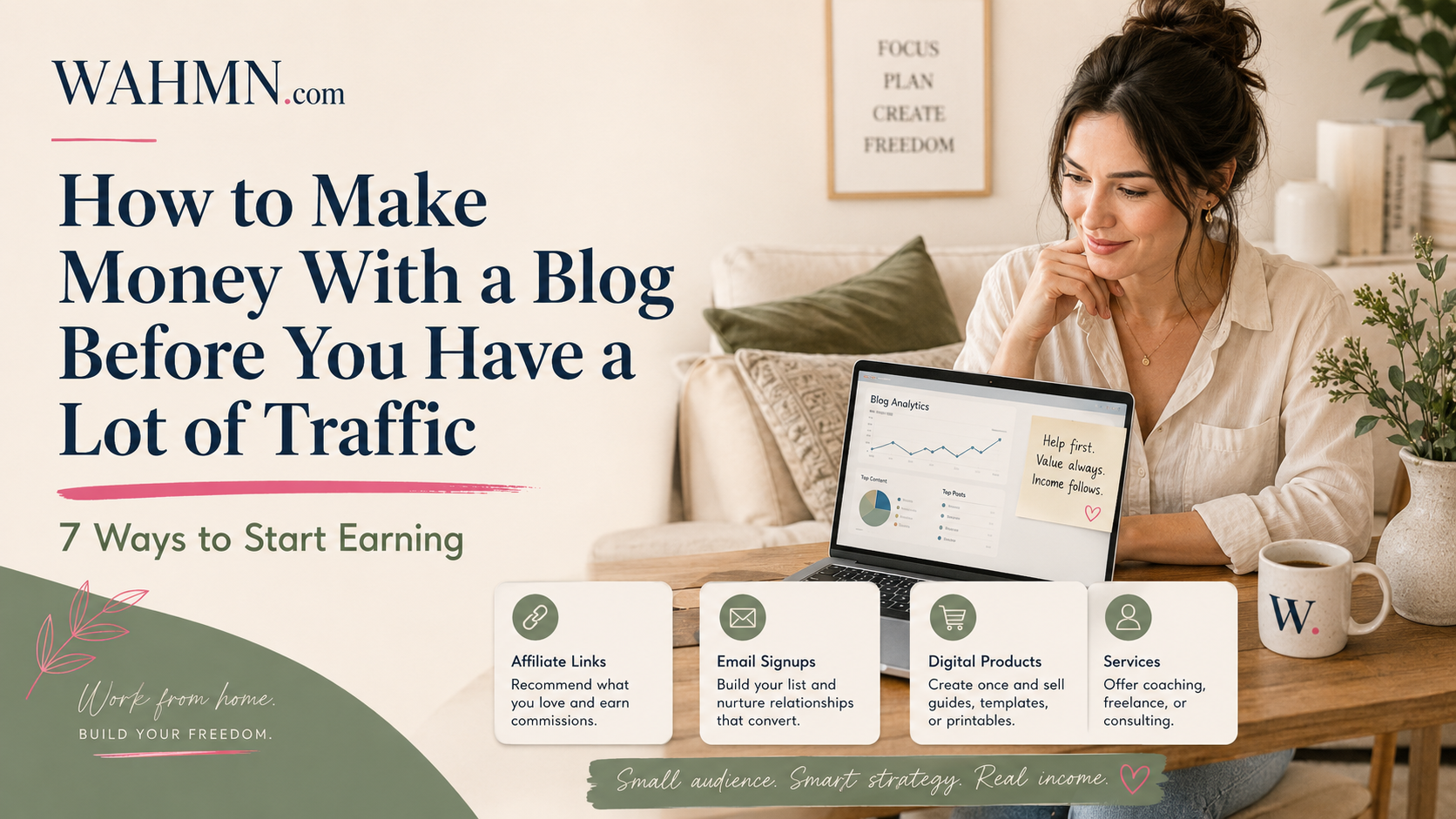
How to Monetize a Blog With Low Traffic: 7 Ways to Start Earning
In this article
- Introduction
- Traffic is not the only metric
- Four things a blog can monetize
- Method 1: Services
- Method 2: Affiliate marketing
- Method 3: One small digital product
- Method 4: Email list
- Method 5: Workshop or consultation
- Method 6: Paid newsletter/membership
- Method 7: Sponsorship
- What about display ads?
- Choose by blog type
Many creators believe they need massive audiences before they can generate revenue. The truth is quite different. You do not need millions of visitors to build a profitable online business.
Effective blog monetization for beginners relies on building deep connections rather than chasing vanity metrics. By focusing on your specific niche, you can turn a small, engaged readership into a reliable income stream.
This guide explores seven practical strategies for low-traffic blog monetization. We will cover services, affiliate marketing, digital products, email lists, consultations, memberships, and sponsorships. These methods provide a clear path for those ready to make money blogging without waiting for viral growth.
Key Takeaways
- Success does not require massive visitor numbers.
- Focus on building a loyal and engaged community.
- Diversify your income through services and digital goods.
- Leverage email lists to nurture your existing audience.
- Start earning early by solving specific reader problems.
Introduction
If you want to know how to monetize a blog with low traffic, you must shift your focus from raw volume to genuine value. Many creators mistakenly believe they need massive monthly pageviews to start earning, but that is a common myth. Instead, your success depends on the depth of your connection with your readers.
When you aim to make money blogging with low traffic, you should prioritize relevance and trust over broad advertising impressions. High-traffic sites often rely on display ads, but those require thousands of visitors to generate meaningful income. A more effective blog monetization strategy involves creating direct offers that solve specific problems for your existing audience.
This article outlines seven distinct paths to help you generate revenue regardless of your current visitor count. You do not need to implement every method at once to see results. In fact, it is often better to monetize a new blog by choosing one approach that aligns perfectly with your niche and your readers’ needs.
By focusing on high-intent visitors, you can build a sustainable business model from day one. Start by identifying what your audience truly wants, then provide a solution that delivers real value. This targeted approach turns even a small, dedicated group of readers into a profitable community.
Traffic is not the only metric
If you want to learn how to monetize a blog with low traffic, you must look beyond simple vanity metrics. Many creators fall into the trap of believing that millions of pageviews are required to earn a living. In reality, your success depends on the depth of your connection with your visitors.
When you aim to monetize small blog assets, focus on high-value actions instead of raw traffic numbers. Metrics like email sign-ups, direct inquiries, and click-through rates provide a much clearer picture of your business health. These signals show that your content is actually solving problems for your audience.
“The goal is not to get more traffic, but to get more of the right people who are ready to take action.”
Understanding audience intent is the secret weapon for smaller sites. A reader who arrives at your site searching for a specific solution is far more likely to purchase a product than a casual browser. This alignment between your content and their needs creates a powerful commercial opportunity.
Your conversion rate often improves when you serve a niche group with precision. Instead of trying to appeal to everyone, you can focus on the specific pain points of your most engaged readers. This targeted approach allows you to build a sustainable income stream without needing a massive global reach.
Ultimately, a smaller audience with a clear problem often creates stronger commercial results than a large audience with weak engagement. By prioritizing quality over quantity, you can build a profitable platform that stands the test of time. Focus on the people who truly value your expertise, and the revenue will follow.
Four things a blog can monetize
If you want to make money with a small blog, you must first identify the core assets you already own. Many creators mistakenly believe that high traffic is the only path to profit. In reality, your site holds specific value that can be leveraged long before you reach thousands of daily visitors.
Focusing on these four distinct assets allows you to build a sustainable income without overwhelming your readers. By understanding what your blog audience truly values, you can provide solutions that feel natural rather than forced. Your reader attention is a limited resource, so it is vital to treat it with care and provide genuine utility.
- Audience Attention: This is the time and focus your readers give your content. You can monetize this through sponsorships or display ads once you have a consistent readership.
- Expertise: Your unique knowledge is a powerful tool for expertise monetization. This often leads to high-value services like consulting, coaching, or specialized workshops.
- Recommendations: Readers often look to you for guidance on tools or products. Affiliate marketing allows you to earn a commission by recommending items you already trust.
- Owned Audience: When you move followers to an email list, you gain direct access to them. An owned audience is your most valuable asset because it is not dependent on search engine algorithms.
Each of these assets maps directly to specific revenue streams. For example, if your strength lies in your expertise, offering a digital product or a consultation service is a logical step. By aligning your monetization strategy with your existing assets, you ensure that your business model remains authentic to your brand.
Remember that you do not need to use all four paths at once. Start by identifying which asset is currently the strongest on your site. Focusing on one area allows you to refine your approach and build trust with your readers before expanding into new territory.
Method 1: Services
Turning your expertise into a service-based business is the fastest way to how to monetize a blog with low traffic. You do not need a massive audience to begin earning a full-time income. Instead, you only need to solve a specific problem for a single client.
When you write high-quality content, you demonstrate your authority in a specific niche. This allows you to make money blogging with low traffic by positioning yourself as a professional who can deliver results. Your existing articles serve as a portfolio that builds trust with potential customers before they even contact you.
You can offer various blog services depending on your unique skills and background. Consider these popular options to get started:
- Freelance writing: Creating content for other brands in your niche.
- Graphic design: Designing social media assets or website branding.
- Technical audits: Reviewing websites for SEO or performance improvements.
- Strategy sessions: Providing one-on-one advice to help others reach their goals.
- Implementation support: Helping clients set up software or email marketing tools.
Offering freelance services is an excellent way to bridge the gap while you grow your audience. You can include a simple “Work With Me” page on your site that outlines your offerings. This creates a clear path for readers to inquire about your availability.
If you prefer a more advisory role, consulting services allow you to charge a premium for your time and expertise. By focusing on high-value tasks, you can generate significant revenue even with a small, dedicated readership. Remember, your goal is to provide tangible value that helps your clients succeed.
Method 2: Affiliate marketing
If you want to make money with a small blog, affiliate marketing is often the most accessible starting point. Instead of needing millions of page views, you focus on providing high-value solutions to a specific audience. By recommending products that genuinely solve problems, you build a sustainable income stream based on trust rather than sheer volume.
For those new to this model, affiliate marketing for beginners is about quality over quantity. You do not need to promote every product you find. In fact, your readers will appreciate it more if you only suggest items that you have personally vetted or that align perfectly with their needs.
To see success, you should integrate affiliate links into content that already has high commercial intent. Readers searching for these topics are often ready to make a purchase, making them more likely to click your recommendations. Consider focusing on these types of posts:
- Comparison posts that weigh the pros and cons of two popular tools.
- In-depth tutorials showing how to use a specific product to achieve a result.
- Curated lists of essential gear for your specific niche.
Always remember that your product recommendations must remain helpful and honest. If you push low-quality items just to earn a quick commission, you risk losing the trust of your loyal readers. Authenticity is your greatest asset when your traffic is still growing.
Finally, always include a clear affiliate disclosure at the beginning of your posts. Transparency is not just a legal requirement in many regions; it also strengthens your relationship with your audience. When readers know you are being open about your partnerships, they are more likely to support your work by clicking your links.
Method 3: One small digital product
If you want to monetize a small blog, stop chasing massive traffic numbers and start building a specific solution for your readers. You do not need a massive audience to generate income; you simply need to solve a recurring problem for the people who already visit your site.
Creating a small digital product is the most effective way to test your market without spending months on development. Instead of building a massive, complex course, focus on a single, high-value asset that provides an immediate win for your audience.
“The best products are born from the questions your readers ask you every single day.”
To identify what to build, look at your comment section or email replies. If readers consistently ask how to organize a specific task or solve a technical hurdle, you have found your product idea. You can validate your concept by offering a simple solution that saves them time or effort.
Consider these practical formats that are easy to produce and highly valuable to a niche audience:
- A customizable template for project management or content planning.
- A concise online guide that walks users through a complex process.
- A helpful ebook that compiles your best advice on a specific topic.
- Checklists or spreadsheets that automate a repetitive task for your readers.
By focusing on a small digital product, you keep your overhead low and your production time short. This approach allows you to learn how to monetize a blog with low traffic while building trust with your community. Once you prove that your audience is willing to pay for a solution, you can scale your offerings or expand into larger projects later.
Method 4: Email list
Your email list acts as a direct bridge between your content and your readers. Unlike social media platforms or search engines that change their algorithms frequently, your list is an asset you fully own. This makes it a cornerstone of new blog monetization because it ensures you can reach your audience whenever you have something valuable to share.
To grow your list effectively, you need a compelling lead magnet. This is a free resource, such as a checklist, template, or mini-guide, that provides immediate value to your visitors in exchange for their contact information. Place your signup forms in high-visibility areas, such as the end of your most popular blog posts or within a dedicated sidebar widget.
Once a reader joins, your email marketing strategy should focus on building trust through a consistent welcome sequence. Start by delivering the promised resource, then follow up with helpful tips that relate to your blog’s main topic. This consistent communication keeps your brand top-of-mind and establishes your authority in your niche.
A well-structured subscriber funnel serves as the backbone for all your future revenue streams. Whether you plan to sell services, promote affiliate offers, or launch your own digital products, your email list provides the direct communication channel needed to drive conversions. By nurturing these relationships, you create a sustainable path for long-term growth that does not depend on external traffic sources.
Method 5: Workshop or consultation
You do not need thousands of readers to start earning money from your expertise. In fact, blog monetization for beginners often works best when you focus on high-value, direct interactions rather than high-volume traffic.
A paid consultation allows you to solve specific problems for your readers. By offering a one-to-one session, you provide personalized advice that a standard blog post simply cannot match. This creates a premium experience that justifies a higher price point.
If you prefer teaching multiple people at once, consider hosting an online workshop. You can package your knowledge into a clear, actionable lesson with a defined outcome. Keeping the schedule limited helps create urgency and makes the logistics much easier to manage.
An expert session does not require expensive software or complex platforms. You can start by using simple tools like Zoom or Google Meet to deliver your content. Focusing on the value of the information is far more important than having a fancy website setup.
When you create your first coaching offer, keep the process simple to avoid burnout. You should start with a small pilot program to test your audience’s interest before investing in automation. Follow these steps to launch your first session:
- Define one specific problem you can solve in 60 minutes.
- Set a clear, fixed price for the session.
- Use a simple booking link to handle scheduling and payments.
- Gather feedback from your first few clients to refine your approach.
By keeping your booking process straightforward, you remove friction for your potential clients. Clear communication about what the session includes will help you close sales faster. Start small, deliver great results, and scale your services as your confidence grows.
Method 6: Paid newsletter/membership
Creating a paid community is an advanced step in blog monetization for beginners that rewards consistency. Once you have established a loyal audience, you might consider launching a paid newsletter or a membership website. These models are excellent for generating recurring revenue because they rely on the ongoing value you provide to your most dedicated readers. A paid newsletter is the version of this that people renew every month, covered in creating a paid newsletter.
A membership website works best when your audience craves more than just free blog posts. Readers often pay for access to premium content that helps them solve specific problems or achieve personal goals. You can offer several types of value to keep your members engaged:
- Exclusive analysis: Deep dives into industry trends or niche topics.
- Curated resources: Templates, checklists, or private databases.
- Community access: Private forums or group chats for networking.
- Accountability: Regular check-ins or coaching sessions.
While the potential for recurring revenue is high, this path requires a significant commitment. You must deliver consistent value to justify the subscription cost. If you choose to launch a paid newsletter, you are promising your subscribers a reliable schedule and high-quality insights every single time.
Think of this as a later-stage strategy rather than an immediate obligation. Most successful bloggers start with simpler methods before moving to premium content models. Only pursue this route when you are ready to manage the ongoing responsibility of maintaining a community and delivering fresh, high-value material on a strict timeline.
Method 7: Sponsorship
If you have a dedicated niche, brands will value your influence over your raw visitor numbers. Many people exploring blog monetization for beginners mistakenly believe that high traffic is the only path to success. In reality, companies often prefer to reach a small, highly engaged group that trusts your specific recommendations.
A successful blog sponsorship relies on your ability to connect a brand with your loyal readers. When your content solves a specific problem for your audience, you become a valuable partner for businesses in that space. You are not just selling space; you are providing authentic access to a targeted community.
There are several ways to integrate sponsored content into your site without compromising your voice:
- Dedicated blog posts reviewing a product or service.
- Newsletter placements that highlight a brand’s latest launch.
- Video or written product demonstrations that show your audience how to use a tool.
When pursuing brand partnerships, you must prioritize honesty and clarity. Always use clear disclosures to let your readers know when a post is sponsored. Maintaining strict editorial boundaries ensures that your audience continues to trust your advice, which is your most important asset.
To get started, create a professional media kit that highlights your niche, audience demographics, and engagement rates. Focus on the quality of your content and the specific interests of your readers. Brands want to know that you understand their goals and can represent their values effectively to your community.
What about display ads?
You might be tempted to turn on display advertising the moment you launch your site. Many people assume this is the primary way to learn how to monetize a blog with low traffic, but the reality is often disappointing.
Most ad networks require a significant number of monthly pageviews before they accept your site. Even if you get approved, new blog monetization through ads usually results in pennies per day. Relying solely on ad revenue early on can be discouraging.
Your earnings depend heavily on your RPM, which stands for revenue per mille, or earnings per thousand impressions. This rate fluctuates based on your content category, the location of your visitors, and the current demand from advertisers.
While display advertising is a passive income stream, it requires massive scale to become a full-time salary. It is much more effective to focus on direct methods like services or digital products first. These paths allow you to earn significantly more from a smaller, dedicated audience.
Think of ads as a long-term bonus rather than your primary business model. Once your traffic grows, you can layer ads on top of your existing revenue streams to boost your total income.
Choose by blog type
Your blog type acts as a roadmap for selecting the most effective revenue streams. When you decide to monetize small blog traffic, you must first look at the specific value you provide to your readers.
Effective niche blog monetization relies on matching your content format to the needs of your audience. Different structures naturally lend themselves to different financial models.
- Personal blog: Focus on building trust through storytelling, which makes coaching or consulting a natural fit.
- Review blog: Leverage your deep research to earn through affiliate commissions on products you recommend.
- Educational blog: Create repeatable digital products like e-books or mini-courses to solve specific reader problems.
- Business blog: Use your content to demonstrate authority, driving leads directly to your professional services.
If you run a business blog, your primary goal is often to showcase your expertise to potential clients. Conversely, a review blog thrives when you provide honest, data-driven insights that help users make purchasing decisions.
Ultimately, the best way to earn depends on the problems your audience faces and the skills you already possess. By aligning your strategy with your site’s core purpose, you create a sustainable path to growth.
Find highest-intent existing pages
Your existing content library holds hidden gems that can drive revenue right now. You do not need to wait for massive traffic spikes to make money with small blog platforms. Instead, focus your energy on the pages that already attract your most engaged readers.
Start by performing a thorough content audit to identify your top-performing posts. Look for articles that feature high-intent content, such as product comparisons, detailed tutorials, or answers to specific, recurring questions. These pages often signal that a reader is actively looking for a solution or a recommendation.
Once you identify these pages, evaluate them for commercial intent. If a reader is searching for “best software for small business” or “how to fix a leaky faucet,” they are likely ready to take action. You can capture this interest by ensuring your content provides a clear, helpful path forward.
Maximize your conversion opportunities by implementing these simple updates:
- Refresh your calls to action: Ensure every button or link clearly tells the reader what to do next.
- Add internal links: Guide readers from informational posts to your service or product pages.
- Improve disclosures: Build trust by being transparent about affiliate links or sponsored content.
- Place a useful next step: Offer a free checklist or a consultation link that solves their immediate problem.
By refining these specific pages, you turn casual visitors into loyal customers. This strategy allows you to see results quickly without the need for an entirely new content library. Small, intentional changes often lead to the biggest impact on your bottom line.
Monetization audit worksheet
A successful monetization audit helps you bridge the gap between casual readers and loyal customers. By evaluating your current content, you can identify which pages are ready to generate income. This process is essential for new blog monetization, as it ensures your limited traffic works as hard as possible for your business goals.
Set up the revenue path
To build a sustainable income, you must define a clear revenue path for every high-intent page. Start by selecting one specific problem your audience faces and matching it with a solution you offer. This creates a logical journey for the reader, moving them from a simple question to a valuable action.
“The goal is not to get more traffic, but to get more value from the traffic you already have.”, Anonymous
Hypothetical examples
The following table illustrates how different types of content can lead to specific revenue outcomes. Use this as a template to map your own site structure.
| Content Topic | Audience Problem | Revenue Path | Measurable Action |
|---|---|---|---|
| Best Budget Laptops | Needs tech advice | Affiliate Link | Click-through rate |
| SEO Basics Guide | Needs marketing help | Consultation Call | Lead inquiry |
| Meal Prep Tips | Needs time savings | Digital E-book | Purchase conversion |
| Weekly Industry News | Needs updates | Newsletter Signup | Email subscribers |
Build email list
Growing your base of email subscribers is the most reliable way to own your audience. Instead of relying on social media algorithms, you can send your offers directly to people who already trust your voice. Offer a small, free resource in exchange for their contact information to boost your conversion rates quickly.
Measure besides traffic
Focusing only on page views is a common mistake that hides your true progress. You must implement conversion tracking to see how many visitors actually take the steps you desire. Monitor metrics like email signups, link clicks, and direct sales to understand what truly resonates with your readers.
Consistency in measurement allows you to pivot when something is not working. If a page has high traffic but low conversions, try changing your call to action or the placement of your offer. Small adjustments often lead to significant improvements in your overall revenue.
Start with one path
Success in digital publishing relies on picking a single revenue stream that fits your current audience. You can make money blogging with low traffic by focusing your energy on one specific goal rather than spreading yourself thin across multiple platforms.
What not to do
Avoid the trap of launching five different income streams at once. This approach dilutes your message and confuses your readers. Stick to focused monetization to ensure your efforts yield measurable results.
When to add second revenue stream
Introduce a second income source only after your first path generates consistent results. Wait until you have a stable process for managing your initial offer. This stability allows you to scale without sacrificing quality.
30-day plan
Follow a 30-day blog plan to organize your setup, promotion, and measurement phases. Spend the first week on technical setup, the next two weeks on promotion, and the final week analyzing your data. This structure helps you learn how to monetize a blog with low traffic effectively.
Blog monetization FAQs
Many creators worry about audience size. You do not need thousands of visitors to start earning. High-intent traffic matters more than raw numbers. Pricing should reflect the value you provide to your specific niche. Affiliate marketing works well if you choose products that solve real problems for your readers. Start small, test your assumptions, and refine your strategy based on actual performance metrics.
FAQ
Do I need a minimum amount of monthly visitors to start earning?
What is the most effective way to monetize small blog audiences quickly?
Can I really make money with small blog traffic using affiliate marketing?
Why should I focus on an email list for new blog monetization?
How do I choose between a digital product and a membership model?
Are display ads worth it for a blog with low traffic?
Keep reading on WAHMN
More articles in this category, browse the full article library, or explore our business tools and learning paths.
Email Marketing Business covers earning more from a small audience, and Blogging Business covers growing it without chasing numbers for their own sake.