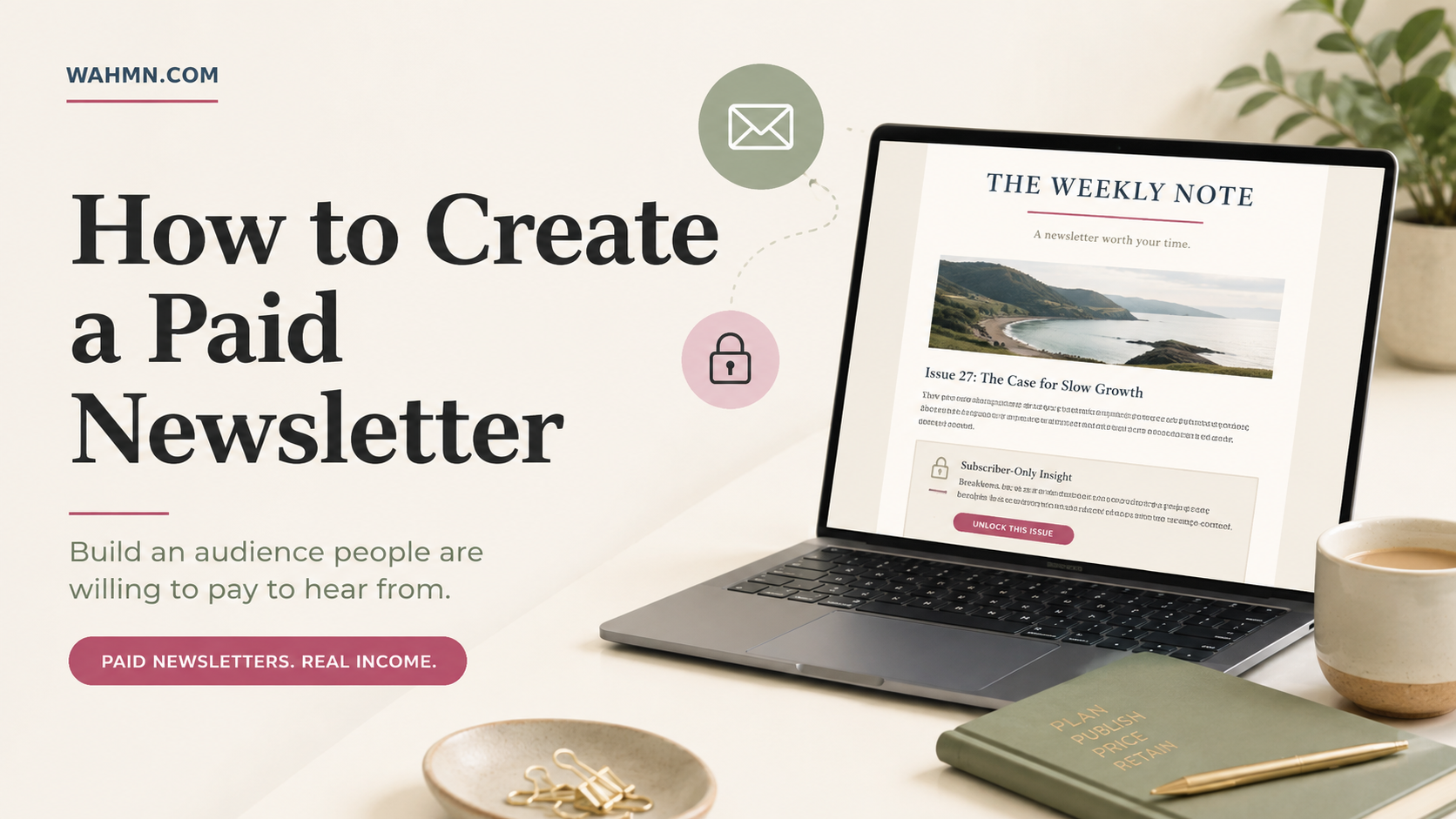
How to Create a Paid Newsletter
In this article
- Define Your Paid Newsletter’s Audience and Value
- How to Create a Paid Newsletter From a Strong Content Concept
- Choose an Email Subscription Service and Payment Platform
- Set Pricing, Tiers, and Payment Options
- Create Paid Content Subscribers Will Keep Paying For
- Launch the Newsletter and Convert Free Readers Into Paid Subscribers
- Grow the Audience and Improve Newsletter Monetization
- Retain Subscribers and Build Sustainable Newsletter Revenue
- Conclusion
- FAQ
Building recurring revenue through email is a game-changer for modern creators and businesses. Many professionals in the United States now shift away from one-time sales to build deeper connections with their audience.
Learning how to create a paid newsletter allows you to monetize your expertise directly. This guide walks you through the essential steps, from finding your niche to launching your first subscription-based content model.
We focus on practical strategies that turn casual readers into loyal members. You will discover how to select the right platform, set competitive pricing, and keep your subscribers engaged for the long haul.
Key Takeaways
- Identify your target audience to ensure your content provides real value.
- Select a reliable platform that supports recurring billing and email delivery.
- Set pricing tiers that reflect the unique expertise you offer your readers.
- Promote your launch effectively to build initial momentum and trust.
- Focus on retention strategies to keep your community growing over time.
- Prioritize consistent value to maintain long-term subscriber loyalty.
Define Your Paid Newsletter’s Audience and Value
Creating a paid newsletter is less about the writing and more about solving a recurring problem for a specific group. When you focus on a clear target, you build a foundation that supports long-term growth and reader loyalty.
Identify a Specific Audience With a Strong Information Need
Successful subscription-based content begins with a clearly defined audience facing an important, recurring information need. You must look for groups that have both the desire for specialized knowledge and the purchasing power to pay for it.
Consider how often your audience encounters their specific challenge. If the problem occurs daily or weekly, your newsletter becomes an essential tool rather than a luxury. This frequency is the secret to high retention rates.
Choose a Niche That Supports Subscription-Based Content
To determine if your niche is viable, evaluate the competitive landscape. If there are no alternatives, you might be in a market that does not value paid information. Conversely, if the market is crowded, you must offer a unique perspective that others lack.
When you learn how to create a paid newsletter, you must balance your passion with market demand. Research whether your potential subscribers already pay for similar resources, such as industry reports, private forums, or specialized software.
Define the Transformation Subscribers Will Pay For
Subscribers do not pay for information alone; they pay for a meaningful transformation. You must clearly articulate how your content changes their lives or careers. Whether you help them save time, make better financial decisions, or gain professional confidence, the outcome must be tangible.
Educational, Curated, Analytical, and Community-Based Newsletter Models
Selecting the right format is vital for your success. Use the table below to compare common models and see which aligns with your expertise.
| Model | Primary Value | Best For |
|---|---|---|
| Educational | Skill acquisition | Teaching complex topics |
| Curated | Time savings | Filtering industry news |
| Analytical | Decision support | Deep market insights |
| Community | Networking | Peer-to-peer connection |
Understanding these models helps you decide how to create a paid newsletter that feels authentic to your voice. By choosing a structure that matches your strengths, you ensure that your subscription-based content remains sustainable and engaging for years to come.
How to Create a Paid Newsletter From a Strong Content Concept
A strong content concept acts as the foundation for every successful subscription-based content business. When you learn how to create a paid newsletter, you must ensure your ideas can scale beyond the initial launch excitement. A repeatable framework allows you to produce high-quality material without burning out.
Choose a Sustainable Paid Newsletter Format
Your chosen format should align perfectly with your production capacity and your audience’s appetite for information. If you choose a format that is too labor-intensive, you will struggle to maintain the consistency required for long-term growth. Select a structure that highlights your unique expertise while remaining manageable for your weekly workflow.
Plan the Free and Paid Content Experience
Successful creators often use a hybrid model to attract and convert readers. You should offer enough free value to build trust, while reserving your most exclusive analysis for paying members. This strategy creates a clear path for readers to see the value of upgrading their status.
Set a Consistent Publishing Schedule
Reliability is the currency of the newsletter world. Subscribers need to know exactly when to expect your content in their inbox. Whether you choose a daily, weekly, or monthly cadence, sticking to your promise builds the habit that keeps your audience engaged.
Daily Briefings, Weekly Deep Dives, and Premium Series
Different formats serve different needs. Daily briefings work well for news-heavy niches, while weekly deep dives provide the space needed for complex research. Premium series allow you to package content into distinct, high-value chapters.
| Format Type | Best For | Production Effort | Reader Expectation |
|---|---|---|---|
| Daily Briefing | News & Trends | High | Quick Updates |
| Weekly Deep Dive | Analysis & Strategy | Medium | Detailed Insights |
| Premium Series | Courses & Guides | High (Front-loaded) | Structured Learning |
Develop an Editorial Standard Subscribers Can Trust
Your editorial standard is the primary driver of retention. When you understand how to create a paid newsletter, you realize that quality control is non-negotiable. Always prioritize accuracy, clarity, and actionable advice to ensure your subscription-based content remains indispensable to your readers.
- Fact-check every claim to maintain credibility.
- Use a consistent voice that reflects your brand identity.
- Edit ruthlessly to remove fluff and focus on value.
Choose an Email Subscription Service and Payment Platform
Selecting the right infrastructure is the most critical step in launching your paid newsletter. Your chosen email subscription service acts as the foundation for your publishing business, influencing everything from your design options to your long-term growth potential.
Compare Newsletter Platforms for Paid Publishing
Different platforms cater to different creator needs, ranging from total simplicity to advanced marketing automation. Understanding these nuances helps you pick a tool that aligns with your specific business model.
Substack for Simple Subscription-Based Content
Substack is best known for its all-in-one simplicity. It handles hosting, payments, and email delivery without requiring any technical setup, making it ideal for writers who want to focus purely on content.
Kit for Audience Growth and Automated Email Marketing
Kit (formerly ConvertKit) excels at audience growth. It provides powerful automation tools that allow you to segment your subscribers and send targeted sequences based on their behavior.
Ghost for Membership Websites and Publisher Control
Ghost offers a professional-grade membership website experience. It gives you full ownership of your data and design, which is perfect for creators who want a custom brand identity and deep control over their platform.
beehiiv for Newsletter Growth and Revenue Features
beehiiv is built specifically for newsletter scaling. It includes integrated referral programs and advanced analytics that help you optimize your revenue and reach new readers efficiently.
Evaluate Payment Processing for Newsletters
Reliable payment processing for newsletters is essential for maintaining trust with your subscribers. Most modern platforms rely on Stripe to handle the heavy lifting of financial transactions.
Stripe Support, Transaction Fees, Taxes, and Payouts
Stripe provides a secure way to manage recurring billing and one-time payments. When evaluating your options, consider the following financial factors:
- Transaction Fees: Most platforms charge a percentage on top of Stripe’s standard processing fees.
- Tax Compliance: Ensure your platform automatically calculates and collects sales tax based on the subscriber’s location.
- Payouts: Check the platform’s schedule for transferring funds to your bank account.
Connect a Custom Domain and Configure Sender Authentication
Using a custom domain is a professional necessity for any serious publisher. It builds brand authority and ensures that your emails are less likely to land in the spam folder.
You must also configure sender authentication protocols like SPF, DKIM, and DMARC. These technical settings verify your identity with email providers, which significantly improves your deliverability rates.
Protect Subscriber Data and Follow U.S. Email Marketing Rules
Operating in the United States requires strict adherence to the CAN-SPAM Act. You must always include a clear physical mailing address in your emails and provide an easy way for subscribers to opt out.
Protecting subscriber data is equally important for long-term success. Always be transparent about how you collect information and ensure your chosen platform follows industry-standard security practices to keep your audience’s data safe.
Set Pricing, Tiers, and Payment Options
Successful newsletter monetization relies on how well you align your pricing with the specific outcomes you provide to your readers. When your price matches the urgency and frequency of the value you deliver, subscribers feel confident in their investment.
Choose a Starting Monthly and Annual Subscription Price
Start by researching competitors in your niche to see what they charge for similar content. A common starting point for many creators is $5 to $10 per month for standard access. Always ensure your pricing reflects the depth of your research and the exclusivity of your insights.
Use Annual Plans to Improve Cash Flow and Retention
Annual plans are a powerful tool for your business. They provide a significant boost to your upfront cash flow, which helps you reinvest in your growth immediately. Furthermore, annual subscribers are statistically less likely to churn, as they have already committed to a full year of your content.
Create Free, Paid, and Premium Access Levels
Structuring your tiers helps you capture different segments of your audience. By offering a ladder of access, you allow readers to start small and upgrade as they see the value you provide.
What to Include in a Free Newsletter
Your free tier should act as a high-quality sample of your work. It must build trust and demonstrate your expertise without giving away your most valuable assets.
- Weekly summaries of industry news.
- Short-form commentary on current trends.
- Occasional invitations to join the paid community.
What to Reserve for Paying Subscribers
Paying subscribers expect a deeper level of engagement and utility. Reserve your most actionable content for this group to ensure they feel their subscription is worth the cost.
- In-depth data analysis and proprietary research.
- Access to private Q&A sessions or community forums.
- Downloadable templates, guides, or exclusive archives.
Offer a Trial, Founding-Member Rate, or Limited-Time Discount
Lowering the barrier to entry can significantly increase your conversion rates. Consider offering a 7-day free trial or a “Founding Member” discount for the first 50 subscribers. These tactics create a sense of urgency and reward early adopters for their loyalty.
Calculate Break-Even Revenue After Platform and Payment Fees
Effective payment processing for newsletters requires you to account for all hidden costs. You must subtract platform fees, credit card processing charges, and potential refunds from your gross revenue to understand your true profit margin.
| Expense Category | Estimated Impact | Action Required |
|---|---|---|
| Platform Fees | 5% – 10% | Review tier pricing |
| Processing Fees | 2.9% + $0.30 | Monitor transaction volume |
| Taxes & Refunds | 3% – 5% | Maintain a reserve fund |
By tracking these numbers, you ensure that your newsletter monetization strategy remains sustainable over the long term. Always review your margins quarterly to adjust for changes in your payment processing for newsletters costs.
Create Paid Content Subscribers Will Keep Paying For
Creating paid content requires a shift from general updates to a reliable promise of value. When you ask readers to pay, you must move beyond simple news updates. Instead, focus on delivering a specific outcome that solves a recurring problem for your audience.
Build Recurring Content Around a Clear Subscriber Promise
A strong subscriber promise acts as the foundation for your business. It tells your readers exactly what they gain by staying subscribed month after month. Consistency is the key to building trust and ensuring your audience feels their investment is worthwhile.
- Define the specific transformation you provide.
- Ensure every issue reinforces this core value.
- Avoid drifting into topics that do not serve your primary goal.
Combine Exclusive Analysis With Practical Subscriber Benefits
Your readers want more than just information; they want actionable intelligence. By blending deep analysis with practical tools, you provide a unique advantage that free alternatives cannot match. This approach makes your subscription-based content feel like a professional necessity rather than a luxury.
Use Research, Data, Commentary, and Curated Resources Effectively
Effective newsletters often act as a filter for the noise of the internet. By gathering raw data and adding your own expert commentary, you save your subscribers hours of work. This curation adds significant value to their daily routine.
Turn Public Information Into Distinctive Paid Insights
Public information is available to everyone, but context is rare. You can transform common data into premium insights by applying your unique perspective. Use the following methods to add depth to your writing:
- Synthesis: Connect disparate news stories to show a larger trend.
- Context: Explain why a specific event matters to your reader’s industry.
- Practical Recommendations: Provide clear steps based on your analysis.
Balance Content Quality With a Manageable Production Workflow
High-quality output does not have to lead to burnout. You can maintain a sustainable pace by creating templates and batching your research. Efficiency allows you to focus on quality without sacrificing your personal time or mental health.
Use Archives, Downloads, and Subscriber-Only Events to Increase Value
Adding extra assets can make your subscription-based content feel much more substantial. Archives allow new members to access your past expertise, while downloads provide immediate utility. Consider hosting live Q&A sessions to foster a sense of community and deepen your relationship with your most loyal readers.
Launch the Newsletter and Convert Free Readers Into Paid Subscribers
Turning your free readers into loyal, paying subscribers is the most exciting milestone in your newsletter journey. Successfully monetizing email list assets requires a clear strategy that bridges the gap between casual interest and financial commitment. By focusing on transparency and value, you can build a sustainable income stream that rewards your hard work.
Prepare the Signup Page and Paid Offer
Your signup page serves as the digital storefront for your publication. It must clearly articulate what a subscriber receives in exchange for their hard-earned money. Keep the design clean and ensure the value proposition is front and center so visitors understand exactly why they should join.
Write a Persuasive Welcome and Sales Email Sequence
A well-crafted email sequence acts as your automated sales team. These paid email campaigns should guide readers through the transition from free to premium access. By nurturing your audience, you build the trust necessary for them to feel comfortable entering their payment details.
Explain the Problem, Paid Benefits, Price, and Cancellation Terms
Your sales emails must address the specific pain points your audience faces. Clearly outline how your premium content solves these problems while remaining transparent about pricing and cancellation policies. When readers know they can cancel at any time, they feel much safer making the initial purchase.
Use a Free Content Sample to Demonstrate Quality
Nothing proves your value better than a high-quality sample of your work. Offer a “best of” edition or a deep-dive report to show potential subscribers the caliber of content they can expect. This tangible proof often serves as the final nudge needed to convert a skeptic into a paying member.
Announce the Launch Across Email, Social Media, and Relevant Communities
When you are ready to go live, shout it from the rooftops. Coordinate your paid email campaigns with announcements on social media platforms like LinkedIn or X. Engaging with relevant online communities allows you to reach new readers who may not yet be on your email list.
Make the Upgrade Path Simple on Mobile and Desktop
Friction is the enemy of conversion. Ensure your checkout process is seamless across all devices, especially mobile, where many readers consume content. A streamlined payment experience prevents potential subscribers from dropping off due to technical hurdles.
Use Clear Calls to Action Without Overwhelming Free Readers
Your calls to action should be direct and easy to find. Avoid cluttering your emails with too many buttons or aggressive sales language. Instead, gently invite your readers to upgrade by highlighting the specific benefits they are currently missing out on.
Grow the Audience and Improve Newsletter Monetization
Scaling your publication involves more than just writing; it requires a data-driven growth engine. To achieve consistent newsletter monetization, you must build a system that moves prospects from initial discovery to a free signup, and eventually toward a paid subscription.
Build a Reliable Subscriber Acquisition System
Search-Optimized Articles and Free Resources
Publishing high-quality, search-optimized articles helps you capture organic traffic from search engines. By addressing the specific questions your target audience asks, you establish authority and attract readers who are already interested in your niche.
Partnerships, Guest Features, and Newsletter Recommendations
Collaborating with other creators is a powerful way to expand your reach. When you participate in guest features or secure recommendations in established newsletters, you gain immediate trust from a pre-qualified audience.
Social Media Content and Short-Form Previews
Use social media to share short-form previews of your best work. These snippets act as a teaser, encouraging followers to click through to your landing page to read the full story.
Use Lead Magnets to Grow an Owned Email List
A high-value lead magnet, such as a downloadable checklist or an exclusive report, is essential for monetizing email list growth. By offering something tangible in exchange for an email address, you build an owned audience that you can nurture over time.
Test Referral Programs and Subscriber Incentives
Word-of-mouth remains one of the most effective newsletter revenue strategies. Implementing a referral program rewards your current readers for bringing in new subscribers, creating a viral loop that lowers your overall acquisition costs.
Analyze Conversion Rate, Churn, Open Rate, and Engagement
You should view your metrics as a connected ecosystem rather than isolated statistics. A high open rate is meaningless if your conversion rate remains stagnant, while high churn often indicates a disconnect between your content and subscriber expectations.
Improve the Offer Based on Subscriber Feedback
Ongoing newsletter monetization improves when you listen to your readers. Use surveys and direct feedback to identify which topics, formats, and benefits resonate most, allowing you to refine your value proposition for better retention.
| Metric | Purpose | Actionable Insight |
|---|---|---|
| Open Rate | Measures subject line appeal | Test new headlines if below 30% |
| Conversion Rate | Tracks paid signups | Optimize landing page copy |
| Churn Rate | Monitors subscriber loss | Survey departing members |
| Engagement | Tracks click behavior | Identify high-value content |
Retain Subscribers and Build Sustainable Newsletter Revenue
Once a reader joins your paid list, the real work of building a sustainable revenue stream begins. True newsletter monetization relies on your ability to provide dependable value long after the initial transaction. When subscribers feel their investment is respected, they are far more likely to renew their commitment.
Deliver Consistent Value After the Initial Purchase
Consistency is the bedrock of a loyal audience. You must ensure that every edition meets the high standards promised during the signup process. Reliability builds trust, and trust is the primary currency of the subscription economy.
Reduce Churn With Onboarding, Reminders, and Win-Back Emails
Churn is a natural part of any subscription business, but you can minimize it through proactive communication. A strong onboarding sequence helps new members understand how to access their benefits immediately. You should also send automated renewal reminders to prevent accidental lapses in service.
If a subscriber decides to leave, use exit surveys to understand their reasoning. These insights allow you to craft personalized win-back emails that address specific pain points. Effective communication often turns a cancellation into a long-term relationship.
Use Surveys and Behavioral Data to Guide Content Decisions
Data provides a clear roadmap for your editorial strategy. By tracking open rates and click-through behavior, you can identify which topics resonate most with your audience. Periodic surveys allow you to ask readers directly what they want to see next.
Expand Revenue With Sponsorships, Products, and Premium Services
Diversifying your income is a smart way to stabilize your business. Beyond subscriptions, you might explore various newsletter revenue strategies to maximize your reach. Consider these options to grow your bottom line:
- Sponsorships: Partner with brands that align with your niche.
- Digital Products: Sell e-books, templates, or exclusive guides.
- Premium Services: Offer consulting or private coaching sessions.
- Events: Host webinars or live Q&A sessions for your community.
Protect the Core Paid Experience While Adding New Offers
While adding new revenue streams, never lose sight of your primary value proposition. Your core newsletter should remain the priority for your existing members. Ensure that new offers complement the experience rather than cluttering it.
Manage Cancellations, Refunds, Taxes, and Customer Support
Handling the administrative side of your business with care is essential for professional growth. Reliable payment processing for newsletters ensures that transactions remain secure and compliant with U.S. regulations. Always maintain clear policies regarding refunds and tax obligations to keep your operations transparent.
| Revenue Strategy | Effort Level | Scalability | Primary Benefit |
|---|---|---|---|
| Paid Subscriptions | High | High | Recurring Income |
| Sponsorships | Medium | Medium | Immediate Cash |
| Digital Products | High | Very High | Passive Revenue |
| Consulting | Very High | Low | High Margin |
Conclusion
Mastering how to create a paid newsletter requires a blend of strategic planning and consistent execution. You must align your specific audience needs with a clear value proposition to see real results. Success relies on choosing the right platform and setting a price that reflects the quality of your work.
Effective newsletter monetization grows from a sustainable publishing workflow. When you keep your promise to subscribers, you build the trust needed for long-term growth. An easy upgrade path ensures that your free readers can transition into paid members without friction.
Keep a close watch on your metrics to refine your approach over time. Tracking engagement, churn, and acquisition costs helps you make smart decisions for your business. Use feedback from your community to adjust your content and keep your offer fresh.
A focused strategy provides the foundation for dependable income in the United States. Start small, stay consistent, and prioritize the needs of your readers. Your dedication to quality will turn your publication into a valuable asset for years to come.
FAQ
What is the first step in learning how to create a paid newsletter?
Which email subscription service is best for my business?
How does payment processing for newsletters work for U.S.-based creators?
What are the most effective newsletter revenue strategies for pricing tiers?
What kind of creating paid content actually keeps people subscribed?
How do I begin monetizing an email list I’ve already built?
What are the best practices for subscriber acquisition and growth?
How do I handle retention and reduce churn for my subscription-based content?
Are there legal requirements for sending paid newsletters in the United States?
Keep reading on WAHMN
More articles in this category, browse the full article library, or explore our business tools and learning paths.
Email Marketing Business covers the writing and the sending, and Membership Site Business covers the wider version of paid, recurring access.