
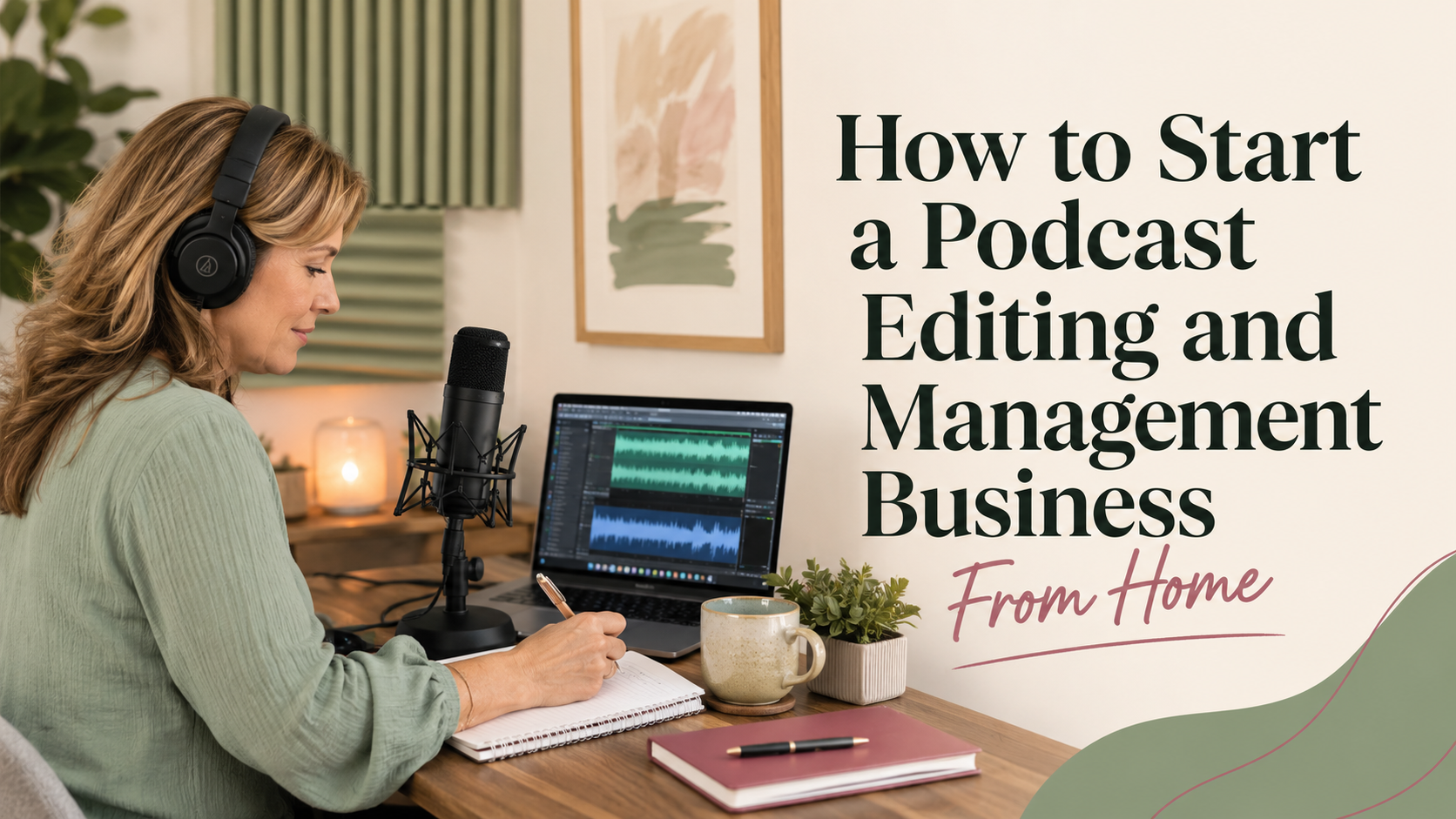
How to Start a Podcast Editing and Management Business From Home
In this article
- Introduction: explain the business model plainly
- What you can sell
- Who this business fits, and who should skip it
- Skills to learn before charging
- Minimum viable tools and startup setup
- Legal, insurance, safety, and professional boundaries
- Create a starter offer
- How to price the work
- How to get the first customers
- Client workflow from inquiry to completion
- Common mistakes and how to prevent them
- A practical 30-day launch plan
The demand for high-quality audio content has exploded across the United States. Independent creators and large companies now seek professional help to refine their sound and streamline production workflows.
Launching a podcast editing business from your home offers a flexible path toward financial independence. You can provide essential services like audio cleanup, show notes, and coordination for busy hosts.
This guide provides a practical podcast editing business step by step approach to help you succeed. We will cover everything from mastering technical skills to finding your first paying clients.
Building a sustainable venture requires consistency and a focus on client needs. By delivering polished episodes, you turn a creative passion into a reliable source of income.
Key Takeaways
- Identify your niche within the growing audio production market.
- Master essential software tools to ensure professional audio quality.
- Develop a clear pricing strategy to attract your ideal clients.
- Create efficient workflows to manage multiple shows simultaneously.
- Focus on building long-term relationships to ensure steady revenue.
Introduction: explain the business model plainly
If you want to build a home-based podcast business, you need to understand how the service model actually works. A successful podcast editing business for beginners is not just about fixing audio files. It is about helping creators maintain a consistent schedule so they can grow their audience without burning out.
Most new editors make the mistake of selling their time by the hour. This approach often limits your income because you are punished for working faster. Instead, you should focus on selling repeatable production services tied to weekly or monthly deliverables. By offering a flat-rate package, you provide clear value to the client while protecting your own profit margins.
High-quality podcast production services solve specific pain points for different types of clients in the United States. For example, a solo host might need help with noise reduction and intro music, while a small company might require full show notes and social media clips. Nonprofits and agencies often look for reliable partners who can handle the entire technical workflow from start to finish.
When you align your service with these specific needs, you stop being a commodity and start being a partner. You are not just editing audio; you are managing the technical side of their brand. This shift in perspective is the key to building a sustainable and profitable business from your home office.
What you can sell
Defining your service menu is the first step toward building a profitable podcast editing business. You do not need to offer every possible technical task to start. Instead, focus on a core set of podcast editing services that solve immediate pain points for busy creators.
Most clients prioritize high-quality audio. You can offer technical tasks like noise reduction, volume leveling, and mastering to ensure the final file sounds professional. These tasks form the foundation of your production work.
“The secret to a successful service business is not doing everything, but doing the right things exceptionally well for your clients.”
Beyond audio, you can provide podcast management services to save your clients even more time. These include writing engaging show notes, crafting episode descriptions, and handling the actual publishing process. By managing these administrative details, you become an essential partner rather than just a technician.
You can choose to sell these tasks as standalone items or bundle them into a comprehensive monthly package. Bundling is often better for your business because it creates predictable, recurring revenue. Clients appreciate the convenience of a “done-for-you” solution that covers their entire production workflow.
The following table helps you distinguish between essential deliverables and optional add-ons to keep your initial offer manageable:
| Service Category | Essential Deliverable | Optional Add-on |
|---|---|---|
| Audio Production | Noise reduction & leveling | Advanced sound design |
| Content Writing | Episode descriptions | Social media snippets |
| Publishing | Uploading to host | Guest coordination |
| Management | Project tracking | Sponsorship outreach |
Since you are working from home, you can complete most of this work remotely. Use cloud-based file sharing to receive raw audio and deliver finished episodes. Clear communication and organized project management ensure that your podcast editing services remain efficient and scalable as you grow your client base. Clips cut from the same episodes are what most clients ask for next, covered in starting a short form video editing business.
Who this business fits, and who should skip it
Before you invest in gear, you should determine if this career path aligns with your strengths. Launching a podcast editing business for beginners is a rewarding endeavor, but it requires a specific mindset. You must balance technical precision with the realities of running a service-based company.
This work is ideal for individuals who possess a natural curiosity for audio engineering and a high level of organization. If you are a reliable remote worker who enjoys meeting deadlines, you will likely thrive in this environment. Former producers or those with a background in sound design often find the transition to freelance work very natural.
Success depends on mastering essential podcast editor skills. You must be comfortable with repetitive tasks, such as removing filler words or balancing audio levels. Furthermore, you need the patience to handle multiple rounds of revisions based on client feedback.
However, this path is not for everyone. If you are looking for a way to generate passive income without active effort, you should reconsider your strategy. This is a client-facing role that requires constant communication and a commitment to high-quality service.
Engaging in freelance podcast production requires a professional attitude toward client relationships. If you prefer to avoid all client interaction or are unwilling to practice your craft before charging, you will struggle to build a sustainable business. The following table highlights the key differences between those who succeed and those who may find this work challenging.
| Trait | Ideal Candidate | Unlikely to Succeed |
|---|---|---|
| Work Style | Highly organized and disciplined | Disorganized or inconsistent |
| Client Interaction | Enjoys clear communication | Avoids all client contact |
| Motivation | Building a service business | Seeking passive income |
| Technical Growth | Willing to practice constantly | Unwilling to refine skills |
Ultimately, treat this as a professional service rather than an effortless way to make money from home. Those who approach the work with patience and discipline will find the most success in the long run.
Skills to learn before charging
Mastering the craft of audio editing is the most important step before you start charging for your services. While many podcast editing business tools are available to simplify your life, they are only effective when you understand the underlying principles of sound. You must learn why specific edits are necessary to preserve the natural flow of human speech.
Developing strong audio editing skills requires consistent practice across various recording environments. You should spend time editing solo monologues, multi-person interviews, and remote calls recorded over the internet. Learning how to handle difficult background noise or echo is essential for delivering a polished final product.
Your technical foundation should include several key areas of expertise:
- Spoken-word editing: Removing filler words while keeping the conversation natural.
- Noise and echo reduction: Cleaning up audio without making the speaker sound robotic.
- Loudness consistency: Ensuring the volume meets industry standards for platforms like Apple Podcasts.
- Music placement: Balancing background tracks so they do not overpower the host.
- File organization: Maintaining a clean system to prevent data loss.
- Quality control: Listening through the entire file to catch errors before delivery.
A professional podcast production workflow is not just about the software you use; it is about your reliability. Clients in the United States expect dependable communication and accurate, timely deliverables. You must understand basic publishing terminology, such as ID3 tags and RSS feed requirements, to support your clients effectively.
Before you take on your first paying customer, practice these tasks until they become second nature. Professional handling of client recordings builds trust and ensures long-term success in this competitive industry. When you can consistently deliver high-quality audio, you will be ready to scale your business with confidence.
Minimum viable tools and startup setup
Keeping your podcast editing business startup costs low is the smartest way to begin your journey. You do not need a high-end studio to deliver professional results for your clients. Focus your initial budget on items that directly impact the quality of your audio output and your ability to meet deadlines.
A reliable home podcast editing setup starts with a computer that handles multi-track audio processing without crashing. You should prioritize a machine with at least 16GB of RAM and a fast solid-state drive. Pair this with a pair of neutral-sounding, closed-back headphones to ensure you hear every detail of the recording accurately.
When selecting your podcast editing business tools, you must weigh the benefits of free software against paid alternatives. While free options like Audacity are excellent for beginners, paid software like Adobe Audition or Reaper offers superior workflow speed and advanced export controls. Choose tools that allow for efficient collaboration and provide the technical support you need as your client list grows.
“The best tool in your studio is not the software you buy, but the discipline you apply to your workflow every single day.”
Operating from home requires strict attention to data management and security. Always maintain a consistent file naming convention and use cloud storage services that offer robust folder permissions. Protecting client material is a core part of your professional reputation, so implement a redundant backup system that includes both local drives and encrypted cloud storage.
| Category | Essential Starter | Future Upgrade |
|---|---|---|
| Computer | Mid-range Laptop/Desktop | High-performance Workstation |
| Headphones | Wired Studio Monitors | High-fidelity Open-back |
| Software | Free DAW (Audacity) | Professional DAW (Reaper/Audition) |
| Storage | External Hard Drive | NAS Server/Cloud Sync |
Your workspace should be a quiet, dedicated area where you can focus without interruptions. A stable, high-speed internet connection is also non-negotiable for uploading large audio files quickly. By keeping your setup lean and organized, you ensure that your business remains profitable from the very first project.
Legal, insurance, safety, and professional boundaries
Running a podcast business requires more than just technical skills; it demands a solid podcast business legal requirements foundation. You must protect your interests by using a clear freelance contract for every new client. This document should explicitly define the scope of work, turnaround times, and the number of included revisions.
Your agreement must also cover payment terms, project ownership, and cancellation policies. Always clarify who holds the rights to the final audio files and what happens if a client fails to provide recordings on time. These details prevent misunderstandings and ensure you get paid for your hard work.
Beyond contracts, you should research your local and federal obligations in the United States. This includes registering your business, understanding self-employment taxes, and checking for any specific local licensing requirements. Consulting with a qualified tax professional or business adviser can save you significant stress during tax season.
Maintaining professional boundaries is vital for your reputation. You should never promise legal compliance, medical claims review, or guaranteed audience growth. These outcomes are outside your control and can lead to liability issues if a client feels misled.
Prioritizing podcast client privacy is another non-negotiable aspect of your operations. You must implement strict security measures to protect sensitive data:
- Use a secure password manager to store client login credentials.
- Always use private, encrypted file-sharing links for delivering episodes.
- Maintain consistent backups of all project files to prevent data loss.
- Keep all client communications and content strictly confidential.
Finally, consider discussing business insurance with a qualified adviser. General liability insurance can provide a safety net if an unexpected issue arises. By setting these professional standards early, you build trust and create a sustainable environment for your growing business.
Create a starter offer
Your first step toward consistent revenue is designing a professional starter offer that clients understand immediately. When you define exactly what you provide, you remove the guesswork for potential customers. This clarity is the foundation of a successful podcast editing business.
Many beginners struggle with podcast editing business pricing because they rely on vague hourly rates. Clients often feel hesitant when they cannot predict their monthly costs. By creating a fixed podcast editing package, you allow clients to budget effectively while you maintain control over your workload.
“Simplicity is the ultimate sophistication in service design. When your offer is easy to buy, your business becomes easy to scale.”
A strong starter offer should be manageable and repeatable. Focus on a standard episode length, such as 30 to 45 minutes, and include essential tasks like noise reduction, volume leveling, and basic trimming. Clearly state your turnaround time and the number of revisions allowed to manage expectations from the start.
| Feature | Starter Package Details |
|---|---|
| Episode Length | Up to 45 Minutes |
| Included Tasks | Audio cleanup, leveling, and intro/outro insertion |
| Turnaround Time | 3 Business Days |
| Revision Limit | 1 Round of minor edits |
Using this structured approach makes podcast editing business pricing much more transparent. As you gain experience, you can adjust your podcast editing package based on the feedback you receive from early customers. This iterative process helps you build a profitable podcast editing business that thrives on consistent, monthly recurring work.
How to price the work
Your podcast editing business pricing strategy determines whether you thrive or burn out. Many beginners make the mistake of charging too little, which leads to exhaustion and poor quality. You must account for your podcast editing business startup costs, such as software subscriptions, hardware maintenance, and taxes, before setting your floor price.
Always track your actual production time for several projects before finalizing your rates. You might find that a thirty-minute episode takes three hours to edit once you include noise reduction, leveling, and show notes. Knowing your true hourly output helps you avoid underpricing your labor.
“Price your services based on the value you provide to the creator, not just the time you spend clicking a mouse.”
When determining your podcast editing rates, consider using a tiered structure. This allows clients to choose the level of service that fits their budget while ensuring you are compensated for complex tasks like multi-track mixing or advanced sound design.
| Pricing Model | Best For | Key Benefit |
|---|---|---|
| Per Episode | New clients | Predictable costs |
| Monthly Retainer | Long-term partners | Guaranteed income |
| Tiered Packages | Scaling businesses | Upsell potential |
Do not forget to build in a buffer for revision risk and administrative time. You should clearly define what constitutes a standard edit versus a complex project. For example, charging extra for multiple speakers or long-form recordings protects your profit margins.
Finally, implement professional policies to safeguard your cash flow. Always require a deposit before starting work, and include clear clauses for late payments or rush fees. By maintaining these boundaries, you ensure your podcast editing business pricing remains sustainable as you grow your client base.
How to get the first customers
Launching your podcast editing business is exciting, but securing that first paying client is the real milestone. You do not need a massive marketing budget to start your podcast client acquisition journey today. Instead, focus on high-impact activities that put you directly in front of creators who need help.
Start by tapping into your existing network. Let friends, former colleagues, and local business owners know you are offering professional audio services. Many small businesses want to start a show but feel overwhelmed by the technical side of production.
To expand your reach, explore these proven channels for finding your first partners:
- Personal Contacts: Reach out to people you already know who have an interest in content creation.
- Podcast Communities: Join groups on platforms like Facebook or Reddit where creators discuss their struggles.
- LinkedIn Outreach: Connect with marketing managers or small business owners who could benefit from a branded show.
- Freelance Marketplaces: Use sites like Upwork or Fiverr to find short-term gigs that build your reputation.
- Production Agencies: Offer your services as a subcontractor to established agencies that have overflow work.
When you find a potential lead, avoid giving away hours of free labor. Instead, offer a focused audit of their latest episode or a short portfolio sample that highlights your specific skills. This shows value without devaluing your time.
Effective podcast editing outreach requires a personal touch. Use a simple message that identifies a specific problem, such as poor audio quality or inconsistent volume levels, and propose a low-risk next step. You might say: “I noticed your recent episode had some background noise issues. I specialize in cleaning up audio for creators, would you be open to a free three-minute sample of how I can improve your sound?”
Building trust is the final piece of the puzzle. Maintain responsive communication, provide transparent pricing, and offer a low-risk starter engagement to make the decision easy for the client. By focusing on these steps, you will successfully navigate your podcast client acquisition and grow your podcast editing business with confidence.
Client workflow from inquiry to completion
A professional podcast client workflow ensures that every podcast episode production runs smoothly from start to finish. By documenting your internal processes, you protect your turnaround time while providing a consistent, high-quality experience for your clients. This structure allows you to scale your podcast editing business without sacrificing quality or sanity.
The journey begins with an inquiry and a discovery call. During this phase, you must qualify the lead to ensure their needs align with your services. Collect essential details such as episode length, raw file condition, and specific host preferences. You should also clarify publishing responsibilities and establish firm deadlines to avoid scope creep.
“Consistency is the foundation of trust. When a client knows exactly what to expect at every stage of the production cycle, they are far more likely to remain a long-term partner.”
Once the client agrees to your terms, move quickly to the administrative phase. Send a clear proposal, a signed contract, and an invoice for the initial deposit. Never start work until the payment is secured and the legal paperwork is finalized. This protects your podcast editing business from potential disputes.
Use the following checklist to ensure you have everything needed before you begin the podcast episode production:
| Requirement | Description | Status |
|---|---|---|
| Raw Audio | High-quality source files | Pending |
| Show Notes | Key talking points/links | Pending |
| Metadata | ID3 tags and artwork | Pending |
After the editing phase, implement a rigorous quality control process. Check for audio levels, background noise, and pacing issues before sending the draft to the client. A solid podcast client workflow includes a dedicated review and approval step to ensure the final product meets the host’s vision.
Finally, confirm that the client has received the final files and is satisfied with the output. Always maintain a backup of the project files for at least 30 days. This simple habit provides a safety net for both you and your client, ensuring that no work is ever truly lost.
Common mistakes and how to prevent them
Starting a home-based business is exciting, but you must navigate several freelance podcast mistakes to stay profitable. Many new editors struggle because they accept every type of show too early. This often leads to technical demands that exceed your current equipment or skill level.
One of the most frequent podcast editing business mistakes involves underpricing your services and failing to define a clear scope. When you do not set boundaries, clients may ask for endless, unpaid revisions. You can prevent this by using a written contract that clearly outlines your approval limits and revision policy.
Poor organization and missed deadlines are other common issues that damage your professional reputation. You should implement a strict file naming system and use cloud storage to ensure you have strong backups for every project. Using a project buffer in your schedule helps you handle unexpected technical delays without missing your delivery dates.
To avoid podcast production errors, you must establish a consistent quality-control pass before sending files to the client. Creating standard operating procedures (SOPs) for your workflow ensures that every episode meets your high standards. Consider using the following checklist to maintain consistency:
- Check audio levels for consistency across all speakers.
- Remove distracting background noise or long, awkward silences.
- Verify that all intro and outro music tracks are correctly placed.
- Confirm that the final file format matches the client’s specific requirements.
Consistency is the key to building a sustainable business. By focusing on these preventative measures, you protect your working capacity and ensure your clients remain happy with your results. Taking the time to build these systems now will save you significant stress in the future.
A practical 30-day launch plan
Starting your podcast editing business step by step is the most effective way to build a sustainable career from home. By breaking your journey into four distinct weeks, you avoid feeling overwhelmed and keep your focus on high-impact activities.
Your 30-day podcast business plan should prioritize action over perfection. You do not need a fancy website or expensive studio gear to start; you simply need to prove you can deliver clean, professional audio to clients.
| Week | Primary Focus | Measurable Goal |
|---|---|---|
| Week 1 | Skill & Compliance | 10 hours practice; register business |
| Week 2 | Portfolio Building | 3 high-quality sample episodes |
| Week 3 | Outreach | 20 messages; 3 discovery calls |
| Week 4 | Delivery & Refinement | 1 pilot project; update offer |
During the first week, dedicate time to mastering your editing software. In the United States, use this time to research local business registration and tax requirements to ensure you are compliant from day one.
Your podcast editing business launch depends on your ability to communicate value. As you move into the third week, focus on having real conversations with potential clients. Listen to their pain points and adjust your service offer based on their specific needs rather than sticking to a rigid, pre-set package.
Finally, prioritize delivering your first pilot project with excellence. Use the feedback from these early interactions to refine your production time and pricing. Consistency in your workflow will eventually lead to a steady stream of referrals and long-term growth.
Growth path
Sustainable podcast production business growth depends on how you structure your operations. You start as a solo editor, but your goal should be to build a system that functions without your constant input. Moving from a freelancer to a business owner requires a shift in mindset.
The first stage involves moving from one-off projects to recurring-retainer models. This provides the steady cash flow needed to invest in better software or administrative help. Once you have consistent revenue, you can begin to delegate tasks to contractors.
However, you must be careful to avoid common podcast editing business mistakes that often derail expansion. Failing to document your processes leads to inconsistent quality as you add more team members. If you do not define clear ownership of tasks, your clients will notice the drop in service standards immediately.
To improve your profit margins, focus on specialization rather than trying to serve every podcaster. Use templates and automation tools to handle repetitive tasks like file naming or basic audio leveling. By selecting clients who value your specific niche, you can charge premium rates while keeping your workload manageable.
Eventually, you may transition into a full-scale podcast editing agency. This stage requires rigorous quality checks and a dedicated management layer to ensure every episode meets your brand standards. Growth is not just about adding more clients; it is about creating a sustainable system that delivers high-quality results every time.
| Stage | Primary Focus | Key Metric |
|---|---|---|
| Solo Editor | Skill mastery | Hourly rate |
| Retainer Operator | Client retention | Monthly recurring revenue |
| Contractor-led Team | Process documentation | Profit margin per project |
| Podcast Agency | Brand scaling | Customer lifetime value |
FAQs to answer
Many people starting a podcast editing business from home wonder if they need expensive gear. You can begin with a reliable computer and software like Audacity or Adobe Audition. High-end equipment matters less than your ability to deliver clean audio on time.
Reviewing podcast editing business FAQs helps clarify your path. You do not need formal certification to succeed in this industry. Clients value your portfolio and your ability to meet deadlines above all else.
Contracts protect your time and income. Always use a clear agreement that outlines your turnaround times and the scope of your services. If a project requires complex sound design or advanced mixing, refer it to a specialist to maintain your professional reputation.
Starting a podcast editing business from home requires patience and persistence. Focus on building repeatable systems for your workflow. Consistent quality and clear communication will help you retain clients for the long term.
Your success depends on your dedication to the craft. Keep learning new techniques as audio technology evolves. Reach out to potential clients today to begin your journey in this growing field.
FAQ
Do I need a formal degree or certification to start a podcast editing business for beginners?
What are the typical podcast editing business startup costs for a home-based setup?
How should I structure my podcast editing business pricing to stay competitive yet profitable?
Which podcast editing business tools are essential for managing clients?
What is the most effective podcast editing business step by step approach to finding my first client?
What are the most common podcast editing business mistakes to avoid when starting out?
How long does it usually take to edit a standard 30-minute podcast episode?
Do I need specialized insurance for a home-based podcast business in the United States?
Keep reading on WAHMN
More articles in this category, browse the full article library, or explore our business tools and learning paths.
Retainers make this work worthwhile, but only at the right rate. The Hourly Rate Calculator sets that, and Business Launcher covers proposals, contracts and your first clients.