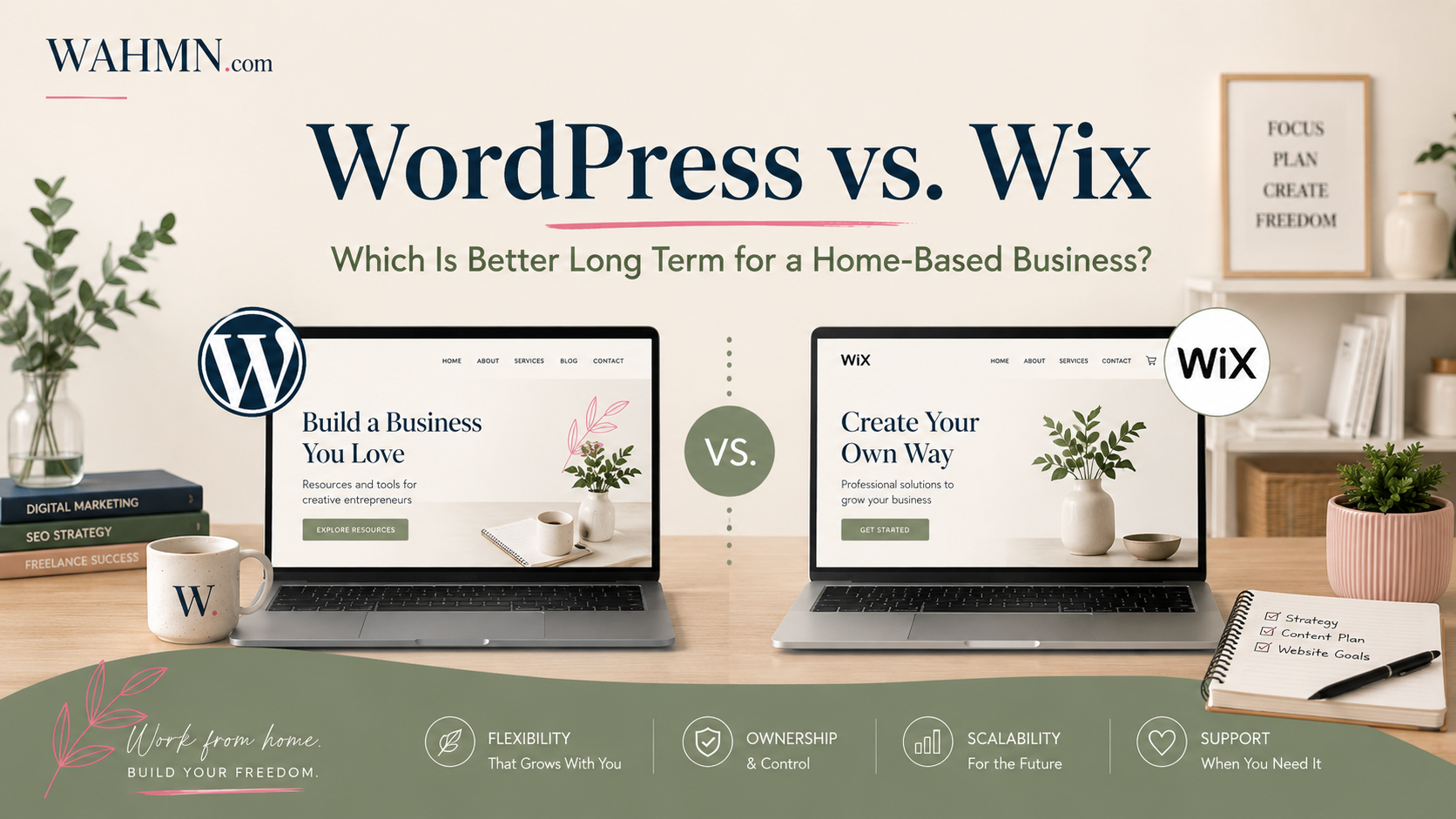
WordPress vs. Wix for a Home-Based Business: Which Is Better Long Term?
In this article
Starting a home-based venture is an exciting journey. One of the first hurdles you face is picking the right digital foundation. Many entrepreneurs find themselves debating WordPress vs. Wix when launching their online presence.
Choosing the correct platform is a critical decision. It impacts your long-term costs, site flexibility, and overall growth potential. Whether you are a blogger, a service provider, or a digital creator, your needs will evolve as you scale.
This guide evaluates how these tools handle your unique requirements. We will look at ease of use and technical maintenance to help you decide which path supports your goals. Finding the perfect fit ensures your small business thrives in a competitive market.
Key Takeaways
- Understand the fundamental differences in platform ownership and hosting.
- Compare the long-term financial commitments of each site builder.
- Evaluate how much technical control you need to manage your content.
- Identify which platform offers better scalability as your audience grows.
- Determine the best choice based on your specific industry, such as e-commerce or blogging.
Introduction
When you launch a business from home, your time and budget are your most valuable assets. Every decision you make during the setup phase impacts your daily operations and your ability to scale. For many entrepreneurs, the debate between Wix vs WordPress is the first major hurdle they face.
Choosing the right path is essential because you likely have limited technical support at your disposal. Whether you are a solopreneur or managing a small team in the United States, your website serves as your digital storefront. Finding the right balance between immediate usability and long-term growth is critical for your success.
“The secret of getting ahead is getting started.”
Many people ask if Wix or WordPress for beginners is the better choice. The answer depends on your specific goals and your comfort level with technology. Wix offers a hosted, all-in-one experience that prioritizes simplicity, while WordPress provides deep control and flexibility for those who want to own every aspect of their site.
There is no universal winner in this comparison. Instead, there is only the platform that best aligns with your current business needs and your future vision. By evaluating both options, you can make an informed decision that supports your business for years to come.
At-a-glance table
Choosing the right platform is a major milestone for your business. This quick guide breaks down the Wix vs WordPress debate to help you choose the best path forward.
| Feature | Wix | WordPress |
|---|---|---|
| Setup | Very easy (Drag-and-drop) | Moderate (Requires hosting) |
| Design Control | High (Template-based) | Unlimited (Custom code) |
| Maintenance | Fully managed | User-managed |
| Scalability | Limited | High |
When evaluating Wix vs WordPress, consider your specific business needs. Wix is generally the better choice for beginners and hands-off owners who want a professional site without technical headaches.
Conversely, WordPress is the superior option for customization-focused businesses and those expecting complex needs as they grow. While it requires more initial effort, the long-term flexibility is unmatched for scaling a brand.
What are we comparing?
When you start a home-based business, the debate over WordPress or Wix for small business often centers on the trade-off between convenience and long-term control. These two platforms represent fundamentally different approaches to building an online presence.
Wix functions as a hosted, all-in-one solution. This means the company manages the server, security, and software updates for you. You simply log in and start designing your site, which makes it an attractive option for entrepreneurs who want to focus on their products rather than technical maintenance.
On the other hand, self-hosted WordPress requires you to manage your own hosting, security, and software updates. While this demands more technical effort, it provides complete ownership over your website files and database. Choosing between WordPress or Wix for small business ultimately depends on how much responsibility you are willing to take on as your company grows.
To help you visualize these differences, consider the following comparison of core operational areas:
| Feature | Wix | WordPress |
|---|---|---|
| Hosting | Included (Managed) | External (Self-managed) |
| Maintenance | Automated | Manual/User-led |
| Ownership | Platform-dependent | Full site ownership |
| Best For | Quick, easy setup | Scalable, custom growth |
Whether you prioritize a fast launch or deep customization, understanding these structural differences is vital. Your choice of WordPress or Wix for small business will influence everything from your daily content publishing routine to your ability to scale your ecommerce operations in the future.
Which is easier to start?
If you are wondering whether Wix or WordPress for beginners is the right path, you are not alone. Many small-business owners feel overwhelmed by the technical requirements of building a professional online presence. Understanding the differences in the setup process is the first step toward making an informed decision.
Wix operates as an all-in-one platform, which makes it incredibly approachable for those without a dedicated IT team. When you sign up, the service handles the hosting, security, and software updates automatically. You simply choose a template, drag and drop your content, and hit publish.
In contrast, choosing Wix vs WordPress for business requires a bit more planning. WordPress is a powerful content management system that gives you total control, but it does not come with built-in hosting. You must manage several moving parts to get your site off the ground:
- Hosting: You need to purchase and configure a separate hosting plan.
- Domain Setup: You are responsible for connecting your domain name to your server.
- Themes and Plugins: You must select and install the right tools to build your site’s functionality.
- Maintenance: You are in charge of running regular updates to keep your site secure.
For a busy entrepreneur, the simplicity of Wix can be a major advantage. It allows you to focus on your products or services rather than server configurations. However, if you prefer long-term flexibility and do not mind a steeper learning curve, WordPress offers a robust foundation that grows with your company.
Ultimately, the right choice depends on your comfort level with technology. If you want to launch a site in an afternoon, Wix is often the preferred route. If you want to build a highly customized platform from the ground up, WordPress is the industry standard for Wix or WordPress for beginners who are willing to learn the ropes.
Which costs less?
When choosing between WordPress or Wix for small business, the true cost often hides in the details. While one platform might advertise a low monthly entry fee, your actual expenses will likely grow as your business scales. It is important to look at the total cost of ownership rather than just the initial sign-up price.
To get a clear picture of your investment, you must account for several recurring and one-time expenses. Many users overlook these hidden costs when they first start their journey. Consider these essential categories that impact your budget:
- Hosting and Domain: WordPress requires separate hosting and domain registration, whereas Wix bundles these into their subscription plans.
- Premium Designs: You may need to purchase professional themes or templates to give your site a unique, polished look.
- Plugins and Apps: While many tools are free, premium functionality often requires monthly or annual subscriptions.
- Payment Processing: Transaction fees can vary significantly depending on your chosen gateway and platform integration.
- Business Email: Professional email hosting is often an add-on service that you should factor into your monthly overhead.
Analyzing WordPress vs Wix pricing requires a long-term perspective. Wix offers an all-in-one model that simplifies billing, but you might find yourself paying for features you do not fully utilize. Conversely, WordPress allows you to pick and choose your services, which can be more cost-effective if you are careful with your selections.
Ultimately, the cheapest starting plan is rarely the most affordable option once you add necessary features. You should prioritize the tools that help your business grow rather than focusing solely on the lowest monthly rate. A slightly higher investment today can often prevent expensive migrations or platform changes in the future.
Three-year cost
When evaluating WordPress vs Wix pricing, you must look far beyond the initial sign-up fees. Many business owners focus only on the first month, but a true budget requires a three-year outlook to ensure long-term financial health.
A realistic budget includes recurring costs like domain registration, hosting renewals, and platform subscriptions. You should also factor in the price of premium extensions or plugins that add essential functionality to your site as your business grows.
Do not forget to account for the value of your own time. While WordPress vs Wix pricing often highlights subscription costs, the time spent on security updates and maintenance is a hidden expense that impacts your bottom line. If you eventually decide to switch platforms, you must also set aside a contingency fund for potential migration services.
The following table provides a breakdown of estimated costs for a standard business website over a three-year period. These figures represent typical market rates for small business owners in the United States.
| Expense Category | Wix (3-Year Total) | WordPress (3-Year Total) |
|---|---|---|
| Platform/Hosting Fees | $600 – $900 | $150 – $450 |
| Domain Registration | $45 – $60 | $45 – $60 |
| Premium Plugins/Themes | $0 – $150 | $200 – $600 |
| Maintenance/Security | Included | $100 – $300 |
| Total Estimated Cost | $645 – $1,110 | $495 – $1,410 |
As shown in the data, your choice depends on whether you prefer a predictable, all-in-one subscription or a modular system with variable costs. Strategic planning now will prevent unexpected financial strain as your business scales over the next three years.
Design flexibility
Choosing between Wix vs WordPress requires a deep look at how much control you need over your site’s design. Every business owner wants a unique look, but the path to achieving that vision varies significantly between these two platforms.
Wix offers a highly intuitive drag-and-drop interface that allows you to place elements anywhere on the screen. This visual-first approach is perfect for entrepreneurs who want a polished, professional site launched quickly without touching a single line of code. You can easily adjust typography, colors, and layouts to match your brand identity in just a few clicks.
When comparing Wix vs WordPress, it is important to note that WordPress provides a different kind of freedom. While it may have a steeper learning curve, it offers virtually unlimited customization through themes, page builders like Elementor, and custom CSS. If your business requires complex, bespoke design elements that evolve over time, WordPress is often the superior choice.
Consider these key differences in design capabilities:
- Responsive Behavior: Wix handles mobile optimization automatically, while WordPress themes often require manual adjustments to ensure a perfect look on all devices.
- Layout Control: Wix provides pixel-perfect placement, whereas WordPress relies on a grid-based structure that ensures consistency across different screen sizes.
- Advanced Customization: WordPress allows for deep access to site files, enabling developers to build custom functionality that goes beyond standard templates.
Ultimately, the decision in the Wix vs WordPress debate depends on your long-term goals. If you prioritize a fast, visually stunning launch, Wix is an excellent partner. However, if you anticipate needing deep design flexibility as your business grows, the robust ecosystem of WordPress will provide the necessary room to scale your vision.
Blogging
When comparing WordPress vs Wix for small business, the blogging experience often becomes the deciding factor. A business that relies on educational articles or thought leadership needs a robust system to manage its content library. While both platforms allow you to publish posts, they handle the underlying workflow in very different ways.
WordPress was built as a blogging platform, which shows in its deep content organization features. You can easily manage complex categories, nested tags, and custom taxonomies to keep your archives clean. This structure is vital for businesses that plan to scale their search traffic over several years.
“Content is the bridge between your business and your customers; it builds trust before a sale is ever made.”
Wix offers a more streamlined, visual approach to authoring. Its drag-and-drop editor makes it simple to create beautiful, media-rich posts without touching a line of code. However, for a high-volume publisher, the media management and archive tools in Wix can feel somewhat restrictive compared to the flexibility found in WordPress.
The following table highlights the core differences in how these platforms handle your publishing needs:
| Feature | WordPress | Wix |
|---|---|---|
| Content Organization | Advanced (Categories/Tags) | Basic (Categories) |
| Media Management | Extensive Library | Visual Gallery |
| Authoring Experience | Block-based/Flexible | Drag-and-drop/Visual |
| Comment System | Native/Plugin support | Basic/Social integration |
Ultimately, your choice depends on your long-term goals. If you prioritize deep search engine optimization and complex content hierarchies, WordPress is the industry standard. If you prefer a quick, visually appealing setup for your WordPress vs Wix for small business strategy, Wix provides a faster path to getting your first article live.
SEO
When evaluating Wix vs WordPress for business, search engine optimization often becomes the deciding factor for long-term growth. Both platforms provide the essential tools needed to rank well, but they approach technical management in very different ways.
Wix offers a streamlined, all-in-one experience that simplifies technical SEO for beginners. It handles sitemaps, basic redirects, and image optimization automatically, allowing you to focus on your content. However, this convenience comes at the cost of granular control.
WordPress provides unmatched flexibility through its vast ecosystem of plugins. If you need advanced structured data, custom URL structures, or complex redirect rules, WordPress allows you to implement these changes exactly as you see fit. This level of control is often vital for scaling a brand.
“Search engine optimization is not a magic trick; it is the result of consistent, high-quality content that solves real problems for your audience.”
Regardless of the platform, your rankings depend on factors beyond the software itself. Success in search results relies on:
- Content quality and relevance to user intent.
- Building domain authority through backlinks and brand presence.
- Providing a fast, mobile-friendly user experience.
- Consistent execution of on-page optimization strategies.
When considering Wix vs WordPress for business, think about your future needs. Wix is excellent for getting started quickly with built-in tools that work right out of the box. Conversely, WordPress is the superior choice if you anticipate needing deep technical customization as your site grows.
Ultimately, choosing between Wix vs WordPress for business should align with your technical comfort level and growth goals. While WordPress offers more power, Wix provides a faster path to launch for those who prefer to avoid complex backend management.
Digital products and ecommerce
Choosing between WordPress vs Wix for small business depends heavily on your specific ecommerce goals. While both platforms allow you to sell items, they handle the heavy lifting of retail in very different ways.
Wix offers an all-in-one approach that works perfectly for beginners. It provides built-in tools for physical products, digital downloads, and basic subscription models. You can manage shipping, taxes, and customer communications directly from a user-friendly dashboard without needing extra technical knowledge.
WordPress, specifically when paired with WooCommerce, provides a much deeper level of control. It is the superior choice if your store requires complex workflows, such as custom inventory tracking or unique shipping integrations. Because it is open-source, you can modify every aspect of the checkout process to match your brand’s specific needs.
When evaluating WordPress vs Wix for small business, consider the complexity of your catalog. If you run a simple shop with occasional transactions, the streamlined nature of Wix saves you significant time. However, if you manage a large store with high-volume sales and specialized requirements, the flexibility of WordPress becomes a major asset.
Key features to consider for your store include:
- Inventory Management: Wix is intuitive for small batches, while WordPress handles massive, multi-category catalogs with ease.
- Payment Gateways: Both support major providers, but WordPress allows for more niche, regional payment integrations.
- Customer Communication: Wix automates basic emails, whereas WordPress plugins offer advanced CRM integration for personalized marketing.
Ultimately, your decision should reflect your growth strategy. Complexity is the deciding factor; choose the platform that supports your current volume while leaving room for your future ambitions.
Service business
Choosing between WordPress or Wix for small business needs often comes down to how much time you have for setup. If you are a consultant, coach, or contractor, your primary goal is to get clients through the door without spending weeks on technical maintenance. You need a site that handles contact forms, appointment scheduling, and payment collection with minimal friction.
Wix offers an all-in-one experience that is perfect for those who value speed. You can drag and drop elements to create professional service pages and integrate booking apps in just a few clicks. This simplicity allows you to focus on your actual work rather than managing plugins or server updates.
“The best website for a service provider is the one that actually gets updated and stays functional without requiring a degree in computer science.”,
When deciding on WordPress or Wix for small business, consider your need for local visibility. WordPress provides deeper control over local SEO settings, which can be a game-changer for contractors targeting specific cities. However, Wix has improved its local SEO tools significantly, making it a viable contender for most home-based providers.
The following table highlights how these platforms handle the essential needs of a service-based business:
| Feature | Wix | WordPress |
|---|---|---|
| Setup Speed | Very Fast | Moderate to Slow |
| Appointment Booking | Built-in Apps | Plugin Dependent |
| Lead Capture | Simple Forms | Advanced CRM Integration |
| Maintenance | Managed by Wix | User Managed |
Ultimately, if you prioritize simplicity and want to launch your site today, Wix is likely your best path. If you plan to scale your service business into a large enterprise with complex custom features, WordPress or Wix for small business debates usually tilt toward WordPress for its long-term flexibility. Evaluate your current technical comfort level before making your final decision.
Courses/memberships
When you decide to sell courses or memberships, the platform you choose becomes the backbone of your business. Unlike a simple brochure site, these projects require sophisticated access rules and secure content management. Evaluating Wix vs WordPress for business requires looking at how each handles the heavy lifting of user management.
Selling gated content involves more than just attractive pages. You must manage student enrollment, process recurring payments, and provide a seamless learning experience. Reliability is non-negotiable when your income depends on members accessing their materials without friction.
Wix offers a convenient, all-in-one approach for beginners. It provides built-in tools for member areas and basic subscription management. However, when comparing Wix vs WordPress for business, you might find that Wix limits your ability to customize the learning path or integrate with advanced third-party tools.
WordPress shines when your membership site grows in complexity. By using powerful plugins like MemberPress or LearnDash, you gain granular control over your ecosystem. This flexibility allows for:
- Advanced drip-feed content schedules.
- Customized student dashboards and progress tracking.
- Complex integration with email marketing and CRM software.
Ultimately, the choice depends on your long-term vision. If you prioritize ease of use and want to launch quickly, Wix is a solid starting point. If you anticipate needing deep customization and total control over your member data, WordPress is the superior choice for Wix vs WordPress for business.
Maintenance/security
When you compare WordPress vs Wix pricing, you must look beyond the monthly subscription fee. While one platform might seem cheaper on paper, the true cost includes the hours you spend managing your site’s health.
Wix operates as a fully hosted platform. This means the company handles all software updates, security patches, and server-side backups for you. You do not need to worry about malware protection or complex technical configurations, as these are built into your monthly plan.
In contrast, WordPress requires a more hands-on approach. Because it is self-hosted, you are responsible for updating the core software, themes, and plugins regularly. If you fail to keep these updated, your site becomes vulnerable to security threats and potential plugin conflicts that can break your layout.
When evaluating WordPress vs Wix pricing, consider the value of your own time. If you spend five hours a month fixing bugs or managing security on a WordPress site, that is time you are not spending on your business. For many entrepreneurs, the convenience of a managed platform is worth the higher subscription cost.
| Feature | Wix | WordPress |
|---|---|---|
| Software Updates | Automatic | Manual |
| Security Monitoring | Included | User Managed |
| Backups | Automated | Plugin Required |
| Technical Support | Dedicated Team | Community/Developer |
Ultimately, your choice depends on your technical comfort level. If you prefer a “set it and forget it” experience, Wix provides peace of mind. If you enjoy having full control over your digital environment, WordPress offers the flexibility to manage your own security protocols.
Plugins vs apps
Deciding between Wix or WordPress for beginners requires looking at how apps and plugins handle your future needs. WordPress relies on a massive ecosystem of plugins to add everything from complex membership portals to simple contact forms. In contrast, Wix uses a curated App Market that offers integrated solutions designed to work seamlessly within their proprietary environment.
Outgrowing the platform
You might notice warning signs that your business has outgrown its current platform when performance begins to lag. If your site struggles to handle high traffic or requires custom database queries that your current tools cannot support, it is time to evaluate your options. Scalability is often the primary driver for users moving from a managed site builder to a self-hosted solution.
Migration both directions
Moving your website is rarely a simple one-click process. Migrating from Wix to WordPress involves exporting content and rebuilding your design, which can be technically demanding. Conversely, moving from WordPress to Wix often requires manual data entry or expensive third-party migration services to ensure your SEO rankings remain intact.
Decision by business type
Different business models should weigh these risks based on their specific technical requirements. A simple service business might find the all-in-one nature of Wix sufficient for years. However, a growing e-commerce store or a complex membership site will likely benefit from the deep customization available through WordPress plugins.
When Wix is worth it
Wix remains a top choice when you prioritize a managed environment over total control. If you lack the time to handle security updates, server maintenance, or plugin conflicts, the convenience of Wix is hard to beat. It allows you to focus on your business operations rather than troubleshooting code.
| Feature | WordPress Plugins | Wix Apps |
|---|---|---|
| Ease of Use | Moderate (Requires setup) | High (Plug and play) |
| Customization | Unlimited | Limited to API |
| Maintenance | User-managed | Platform-managed |
| Cost Structure | Variable (Freemium/Paid) | Subscription-based |
Ultimately, the choice between Wix or WordPress for beginners depends on your long-term vision. If you value simplicity and speed, stick with the managed approach. If you anticipate needing deep, custom functionality, the WordPress ecosystem offers the flexibility you will eventually require.
Ownership/control/platform dependence
Choosing between platforms requires a clear look at your digital future. WordPress offers full ownership of your site files and hosting environment, which provides total control over your data. Wix operates as a closed ecosystem where you rent space on their servers. This distinction impacts your ability to move your site or customize deep code in the future.
When WordPress is worth extra setup
You should choose WordPress if you plan to scale a complex business that requires custom functionality. The initial learning curve pays off when you need complete autonomy over your site architecture. Evaluating WordPress vs Wix for small business needs often leads to this choice for those who prioritize long-term growth and data portability.
When to stay put
Wix remains a smart choice for business owners who want a hands-off experience. If your time is better spent on operations rather than technical updates, the convenience of an all-in-one builder is hard to beat. Comparing Wix vs WordPress for business success shows that simplicity often wins for local service providers.
FAQs
Is WordPress or Wix for small business better for SEO? Both platforms handle basic SEO well, but WordPress offers deeper control for advanced users. Does WordPress vs Wix pricing favor one side? Wix has predictable monthly fees, while WordPress costs vary based on your hosting and plugin choices. Which is easier for beginners? Wix provides a faster path to a live site. Does this choice affect ecommerce? Both support online stores, but WordPress allows for more complex product management as you expand.
FAQ
Which platform is more user-friendly for someone with no coding experience, Wix or WordPress for beginners?
When comparing WordPress vs Wix pricing, which is more cost-effective for a home-based business over three years?
Is WordPress or Wix for small business better for search engine optimization (SEO)?
If I want to sell products online, should I choose Wix vs WordPress for business growth?
What are the maintenance requirements for a WordPress site compared to Wix?
Can I easily move my content if I decide to switch between Wix or WordPress later?
Keep reading on WAHMN
More articles in this category, browse the full article library, or explore our business tools and learning paths.
Either platform can work; the traffic is the hard part. Blogging Business covers earning it, and Website and Landing Page Build Business covers building sites as paid client work.