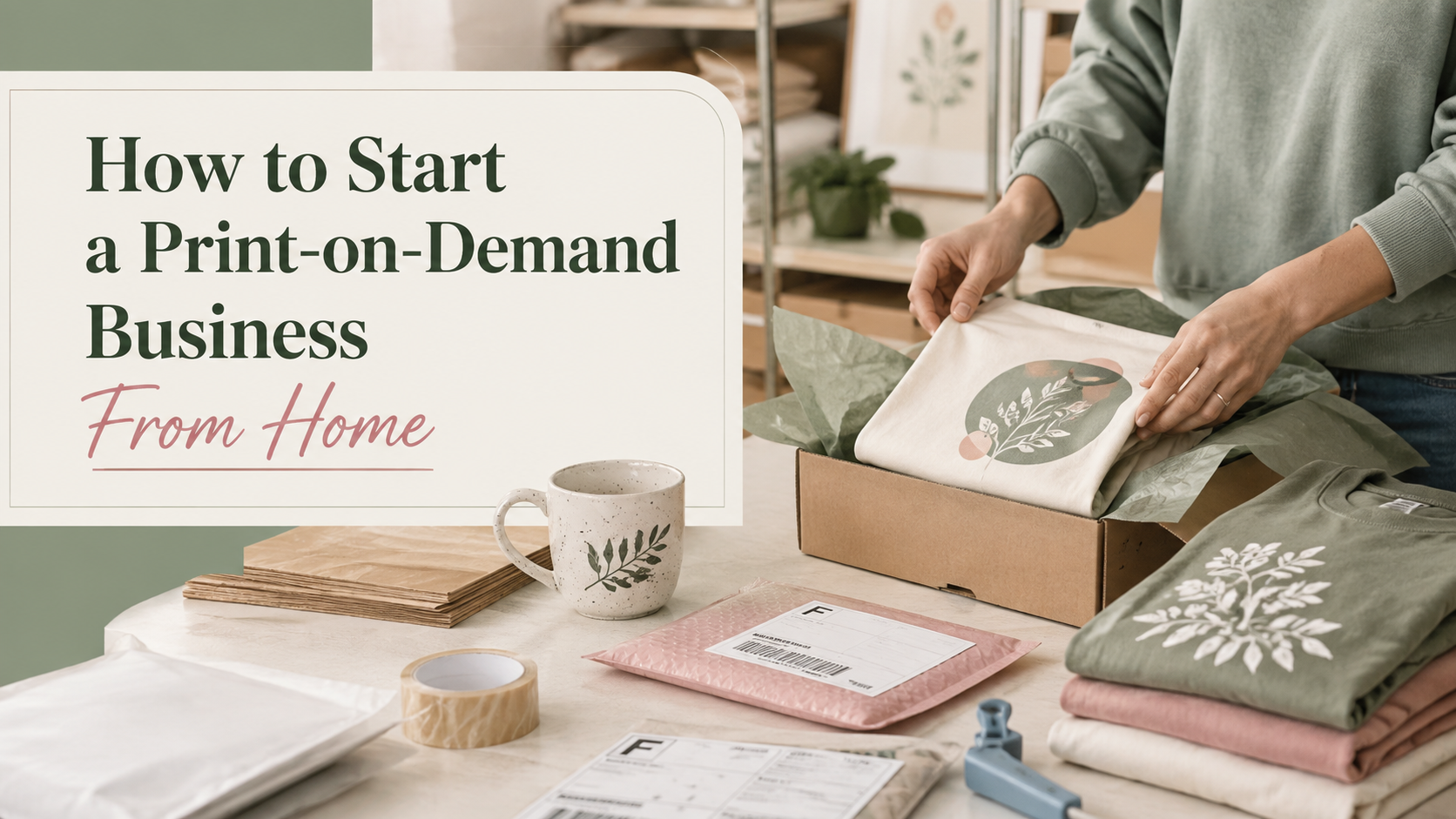
How to Start a Print-on-Demand Business From Home
In this article
- Introduction: explain how the business makes money
- What to sell first
- Materials, equipment and workspace
- Safety, legal, labeling and professional requirements
- Create and test a minimum viable collection
- Calculate real product cost
- Price and capacity
- Where to sell
- Product photos, listing and customer expectations
- Production, fulfillment and customer service
- Common mistakes and business risks
- 30-day test launch
Launching an e-commerce venture from your living room has never been more accessible. Many entrepreneurs explore how to start a print on demand business because it eliminates the need for heavy inventory investments. In this model, items are created and shipped only after a customer completes their purchase.
This guide provides a roadmap for those in the United States looking to build a sustainable brand. We will cover essential steps, including niche selection, creative design workflows, and scaling your online storefront. Understanding the basics requires patience and strategy.
While this path offers low financial risk, it is not an automatic path to wealth. Success demands consistent effort in marketing and quality control. By testing market interest and managing buyer expectations, you can turn this flexible model into a thriving professional endeavor.
Key Takeaways
- Print-on-demand allows you to sell custom products without holding physical stock.
- Success relies on choosing a specific niche that resonates with your target audience.
- Effective design creation is the foundation of a competitive online store.
- Low inventory risk does not mean the process is effortless or guaranteed to succeed.
- Strategic marketing and testing are vital for long-term growth and profitability.
Introduction: explain how the business makes money
Learning how to start a print on demand business requires a clear understanding of how your revenue flows. At its core, this model allows you to sell custom products without holding inventory. You create a design, upload it to a platform, and wait for a customer to place an order. If you would rather own the storefront than rent space on someone else’s, making money with a Shopify business covers that route.
When you learn the process step by step, you will see two main paths. You can either partner with a third-party supplier like Printful or Printify, or you can produce items independently at home. Using a supplier means they handle printing and shipping, while home production gives you full control over quality but requires an upfront investment in equipment.
The profit you earn is the difference between your retail price and the total costs incurred. To stay profitable, you must account for production, platform fees, marketing, and taxes. If you do not track these numbers, your margins will quickly disappear.
Consider this simple breakdown of a single t-shirt sale to understand your potential earnings:
| Expense Category | Amount (USD) |
|---|---|
| Retail Sale Price | $25.00 |
| Product & Shipping Cost | -$12.00 |
| Transaction & Platform Fees | -$2.00 |
| Marketing & Advertising | -$3.00 |
| Net Profit | $8.00 |
Remember that refunds and taxes also impact your bottom line. Always set aside a portion of your profit for tax obligations to avoid surprises at the end of the year. By keeping your costs low and your designs unique, you can build a sustainable and scalable business from home.
What to sell first
Selecting your initial product range requires a balance of passion and market data. When learning the basics, the biggest mistake is trying to offer too many items at once. Instead, focus on a narrow customer niche and a small, high-quality collection of designs.
By keeping your catalog small, you can easily adapt your best artwork across different print on demand products. This strategy helps you test what your audience loves without overwhelming your store with unrelated inventory.
“Success in retail is not about having the most products; it is about having the right products for the right people.”
When brainstorming print on demand niche ideas, consider the following categories based on their unique characteristics:
- Apparel (T-shirts and Sweatshirts): These have high demand but face stiff competition. Sizing issues can lead to higher return rates, so provide clear size charts.
- Drinkware (Mugs): These are excellent for beginners because they are durable, easy to ship, and have very low return rates.
- Accessories (Tote Bags and Phone Cases): These items are lightweight and affordable, making them perfect for impulse buys.
- Wall Art (Posters): These offer high profit margins and are simple to produce, though they require careful packaging to prevent damage during transit.
Focusing on a specific theme, such as hobbyists, pet owners, or local pride, allows you to build a loyal following. Once you identify a winning design, you can easily scale it by applying it to various print on demand products. This approach simplifies your production process and keeps your shipping logistics manageable.
Remember that your goal is to create a cohesive brand experience. By choosing a specific niche, you make it easier for customers to find exactly what they want. Start with three to five core items, refine your designs, and grow your shop as you gain confidence in your market.
Materials, equipment and workspace
You do not need a massive warehouse to launch your creative business from home. Whether you choose to use a third-party supplier or finish products yourself, your setup should remain lean and efficient. Understanding tools requirements early on helps you avoid unnecessary spending.
If you rely on a supplier, your needs are minimal. You primarily require a reliable computer, high-speed internet access, and professional design software like Adobe Illustrator or Canva. These items form the core of your digital workflow. You should also order product samples to verify quality before listing items for your customers.
For those who prefer to finish products at home, such as applying vinyl or heat transfers, you will need specialized print on demand equipment. A heat press, a professional cutting machine, and dedicated storage space for inventory are common additions. Ensure your home workspace meets local electrical standards in the United States to safely operate these machines.
When calculating how to start a print on demand business, separate your budget into essential and optional categories. Essential purchases include your computer and basic software subscriptions. Upgrades, such as high-end photography equipment or specialized printers, can wait until your sales volume justifies the investment.
Your workspace should also include a clean area for photography. Good lighting and a simple backdrop help you create professional images that build trust with buyers. Always check that your chosen suppliers offer shipping coverage to your target regions within the United States to ensure timely delivery.
| Category | Essential Items | Optional Upgrades | Estimated Priority |
|---|---|---|---|
| Digital | Laptop & Internet | Design Tablet | High |
| Production | Samples | Heat Press | Medium |
| Photography | Smartphone Camera | Studio Lighting | Medium |
| Logistics | Packaging Supplies | Label Printer | Low |
Focusing on these print on demand equipment basics allows you to scale your business sustainably. By keeping your overhead low at the start, you maintain the flexibility needed to pivot as you learn what your customers love most.
Safety, legal, labeling and professional requirements
Before you launch your first product, you must navigate the essential rules that govern home-based commerce in the United States. Adhering to print on demand legal requirements is not just about avoiding fines; it is about building a sustainable and professional brand. You should start by checking your local city, county, and state rules regarding business registration and sales tax permits.
Many entrepreneurs overlook home business regulations when setting up their workspace. You must verify that your residential zoning allows for commercial activity to avoid potential eviction or legal trouble. Always contact your local clerk’s office to confirm if you need a specific home occupation permit to operate legally from your property.
Protecting your business from intellectual property risks is equally vital. You must never use copyrighted artwork, celebrity images, or professional sports logos without explicit written permission. Even unauthorized slogans can lead to severe legal consequences, so ensure every design you upload is either your original work or properly licensed for commercial use.
When selling apparel or physical goods, you must follow strict product labeling requirements. Federal law often mandates that items include clear care instructions, accurate fiber content, and the country of origin. Depending on the item, you may also need to include specific safety warnings to protect your customers and ensure compliance with consumer safety standards.
“Compliance is the foundation of a scalable business. Taking the time to verify your legal obligations early prevents costly setbacks later.”
Because requirements vary significantly by product type and location, you should treat this information as a starting point. It is wise to consult with a qualified legal professional or an accountant to confirm that your specific business model meets all current standards. Staying informed helps you focus on growth while keeping your operations safe and secure.
| Compliance Category | Key Responsibility | Action Required |
|---|---|---|
| Business Setup | Registration & Taxes | File for permits and tax IDs |
| Intellectual Property | Design Rights | Verify all assets are original |
| Product Safety | Labeling Standards | Include care and origin tags |
| Local Zoning | Home Occupation | Check city/county ordinances |
Create and test a minimum viable collection
When you learn how to start a print on demand business, the temptation to upload hundreds of designs is strong. However, success often comes from focus rather than volume. By launching a small, curated collection, you can refine your brand identity without overwhelming your potential customers.
A minimum viable product print on demand strategy centers on quality over quantity. Choose a specific niche and create a consistent visual style that speaks directly to that audience. Limiting your variations helps you manage production costs while you learn what your buyers truly value.
To understand the process step by step, you must prioritize file preparation. Ensure your artwork is at least 300 DPI and matches the exact dimensions required by your print provider. Never skip the sample phase, as seeing the product in person is the only way to verify print placement, fabric feel, and color accuracy.
Once your samples arrive, inspect them for durability after a few washes. If the print fades or the fabric feels cheap, your customers will notice. Testing your items allows you to fix these issues before they lead to negative reviews or returns.
Use the following table to track the performance of your initial collection. Monitoring these metrics will help you decide which designs to keep and which to retire.
| Metric | Goal | Action | Priority |
|---|---|---|---|
| Click-Through Rate | High Engagement | Optimize Titles | High |
| Add-to-Cart | Intent to Buy | Check Pricing | Medium |
| Sales Volume | Revenue Growth | Scale Ads | High |
| Return Rate | Quality Control | Review Samples | Critical |
Finally, listen to your customers. If they ask questions about sizing or material, use that feedback to improve your product descriptions. By treating your design work as a continuous improvement process, you build a foundation that supports long-term growth.
Calculate real product cost
Many new entrepreneurs fail because they confuse the supplier’s base price with their actual total cost. When you research how to start a print on demand business, you will notice that the base price is only the tip of the iceberg. Suppliers often list a low price to attract sellers, but this figure excludes the hidden expenses that eat into your earnings.
To find your true print on demand product cost, you must account for every single dollar that leaves your bank account. This includes the base item, printing fees, shipping, and custom packaging. You should also factor in marketplace listing fees, payment processing charges, and the cost of physical samples to ensure quality control.
“Price is what you pay. Value is what you get.”
Managing your print on demand profit margin requires a clear understanding of your variable and fixed expenses. Use the following table to categorize your spending and keep your budget organized.
| Expense Type | Examples | Frequency |
|---|---|---|
| Variable | Shipping, Printing, Fees | Per Order |
| Recurring | Software, Subscriptions | Monthly |
| One-time | Samples, Branding | Startup |
To calculate your contribution margin, use this simple formula: (Retail Price – Total Variable Costs) / Retail Price. This percentage tells you how much of each sale contributes to your profit after covering the cost of goods sold. If your margin is too thin, you must either raise your prices or find a more efficient production partner.
Your break-even point is equally vital for long-term success. Calculate this by dividing your total fixed monthly costs by your contribution margin per unit. This number shows exactly how many items you must sell each month to cover your overhead. Tracking these metrics will help you make informed decisions rather than guessing your way to profitability.
Price and capacity
Mastering your print on demand strategy determines whether your creative shop thrives or struggles. Many beginners focus solely on what competitors charge, but you must prioritize your own financial health. Learning pricing requires a deep look at your total landed cost, which includes production, shipping, and platform fees.
When performing a print on demand profit calculation, you should choose between cost-plus or margin-based pricing. Cost-plus pricing adds a fixed markup to your expenses, while margin-based pricing ensures a specific percentage of the final sale price remains as profit. Always plan for future discounts before you publish your first listing to avoid eroding your margins later.
Your pricing should reflect the perceived value of your designs rather than just the cost of the blank garment. If your artwork is unique or targets a specific niche, customers are often willing to pay a premium. Use the following table to understand how different pricing models impact your bottom line:
| Pricing Model | Calculation Method | Best For | Risk Level |
|---|---|---|---|
| Cost-Plus | Cost + Fixed Dollar Amount | High-volume basics | Low |
| Margin-Based | Cost / (1 – Margin %) | Premium designs | Medium |
| Value-Based | Market Demand Pricing | Unique art/brands | High |
| Dynamic | Real-time adjustment | Seasonal sales | High |
Beyond pricing, you must manage your operational capacity to ensure long-term success. Your ability to handle design production, customer service inquiries, and sample ordering will dictate your growth speed. Cash flow is often the biggest bottleneck, as you must pay for production before you receive funds from the marketplace. Books need no production capacity at all, and making money with Amazon KDP covers that route.
Finally, establish a regular pricing review process based on your actual sales data. Do not change your prices simply because a competitor lowered theirs. Instead, analyze your conversion rates and profit margins to see if your current print on demand strategy is actually working. If your volume is high but your profit is low, it may be time to increase your prices to better reflect your brand’s value.
Where to sell
Where you decide to sell your products determines your long-term success and brand growth. When you research how to start a print on demand business, you will find that your choice of sales channel acts as the foundation for your entire digital storefront.
Choosing between various print on demand platforms requires balancing convenience against control. Marketplaces like Etsy offer built-in traffic, which helps beginners gain visibility quickly. However, these platforms often charge higher transaction fees and limit your ability to customize your brand identity.
If you prefer full control over your customer data and branding, a hosted e-commerce store might be the better path. While these setups require more technical effort, they allow you to build a unique experience that reflects your specific vision. You must also consider the monthly subscription costs associated with these professional tools.
When you sell print on demand products online within the United States, you must prioritize local logistics. Ensure your chosen platform supports American payment gateways and allows for accurate sales-tax settings. Furthermore, verify that your fulfillment partners can meet the shipping expectations of your domestic customers.
| Channel Type | Traffic Source | Branding Control | Monthly Fees |
|---|---|---|---|
| Marketplace | Built-in | Low | Low/None |
| Hosted Store | Self-driven | High | Moderate/High |
| Social Commerce | Community | Medium | Variable |
| Personal Website | Direct | Maximum | High |
We recommend starting with one primary sales channel to keep your operations manageable. Once your listings, fulfillment processes, and customer support systems are working consistently, you can consider adding a second channel. This strategic approach prevents burnout and ensures your business remains sustainable as you scale.
Product photos, listing and customer expectations
Your product listing is the digital storefront that turns casual browsers into loyal customers. When you learn pricing and visual presentation become your most powerful tools for building trust. Every element on your page should work together to remove doubt and encourage a confident purchase.
High-quality print on demand product photos are essential for success. While supplier mockups are convenient, they often look generic to savvy shoppers. You should order real samples of your best-selling items to capture unique, high-resolution images that show the true texture and fit of your products.
Compelling print on demand product descriptions go beyond simple features. They must include clear size charts, specific material details, and easy-to-follow care instructions to minimize returns. By being transparent about color variations between screens and physical items, you manage expectations before the order is even placed.
Communication is the key to a professional brand image. Your listings should clearly state processing times, shipping estimates, and your specific return policy. If you offer personalization, provide simple rules so customers know exactly what to expect from their custom order.
| Listing Element | Purpose | Impact on Conversion |
|---|---|---|
| Real Product Photos | Showcases quality | High |
| Detailed Size Charts | Reduces sizing errors | Medium |
| Shipping Estimates | Manages delivery wait | High |
| Care Instructions | Ensures product longevity | Low |
Treat every listing as a conversion asset rather than just a simple product page. When you provide all necessary information upfront, you reduce customer anxiety and build long-term brand loyalty. A well-crafted listing is the best way to ensure your business grows steadily over time.
Production, fulfillment and customer service
Once a customer clicks buy, your real work in the background begins. The order journey starts with payment confirmation and moves quickly into print on demand fulfillment. You must ensure that your chosen partner handles each step with care, from printing the design to performing quality control checks before the item leaves the facility.
Choosing the right supplier is a critical decision for your business. Look for partners who offer transparent print on demand shipping options and provide reliable tracking numbers. You should prioritize suppliers with consistent production times and clear replacement policies for damaged or misprinted goods. Responsiveness is key; if a supplier does not answer your questions quickly, they may not be the right fit for your brand.
Effective print on demand customer service relies on proactive communication. You should always keep your buyers informed about their order status, especially if a delay occurs. When you manage expectations early, you protect your store’s reputation and encourage repeat purchases.
Even with the best partners, issues can arise. Use these workflows to handle common challenges:
- Delayed packages: Contact the carrier immediately and update the customer with a new estimated arrival date.
- Damaged or incorrect items: Request photos from the customer, then coordinate a replacement or refund through your supplier.
- Wrong shipping addresses: Verify the address with the customer before the order enters the production queue.
- Supplier errors: Maintain a log of mistakes to determine if you need to switch to a more reliable print on demand fulfillment provider.
Reliable print on demand shipping is the backbone of your customer experience. If a package arrives late or damaged, your print on demand customer service team must act fast to resolve the issue. Taking ownership of the problem builds trust, even when things go wrong. Remember that positive reviews are earned through consistent, high-quality service from the moment of purchase until the product reaches the customer’s door.
Common mistakes and business risks
Many entrepreneurs dive into the industry without realizing the hidden print on demand business risks that can derail their progress. Understanding mistakes is the first step toward building a resilient brand. By identifying these traps early, you can protect your investment and ensure long-term stability.
One of the most frequent errors involves copying viral trends without conducting original research. Relying on protected intellectual property is another major pitfall that leads to account suspensions. Always verify that your designs are unique and legally cleared for commercial use.
Skipping product samples is a dangerous shortcut that often results in poor customer experiences. If you do not see the quality of the print or the fabric firsthand, you cannot guarantee satisfaction. Furthermore, underpricing your items while ignoring platform fees creates a cash-flow gap that makes growth nearly impossible.
When analyzing print on demand failure reasons, many experts point to a lack of diversification. Relying on a single supplier leaves your business vulnerable to shipping delays and inventory shortages. You should always maintain a backup plan and document all supplier policies to handle unexpected issues professionally.
Monitoring customer feedback is essential for catching quality issues before they escalate into chargebacks. Keep detailed financial records to track your margins and ensure your pricing covers all hidden costs. The following table outlines common pitfalls and how to prevent them effectively.
| Common Pitfall | Potential Impact | Prevention Strategy |
|---|---|---|
| Ignoring Samples | Poor Quality | Order Test Prints |
| Copyright Infringement | Account Suspension | Use Original Art |
| Single Supplier | Shipping Delays | Diversify Partners |
| Underpricing | Low Profit Margins | Calculate All Fees |
30-day test launch
You can master the process step by step by breaking your goals into four manageable weeks. This structured approach removes the stress of launching a new venture by focusing on one specific milestone at a time. By dedicating thirty days to your initial test, you gain the clarity needed to refine your strategy before scaling up.
During the first week, focus entirely on niche research and product selection. Identify a specific audience and choose three to five core products that solve a problem or express a unique interest. This phase is critical to understanding how to start a print on demand business without wasting time on items that lack market demand.
In the second week, shift your attention to design preparation and supplier comparison. Create high-quality digital assets and order physical samples to verify print quality and material durability. Comparing at least two suppliers ensures you have a reliable backup if fulfillment delays occur.
The third week is for store setup and publishing your listings. Ensure your product descriptions are clear and your images look professional to build immediate trust with potential buyers. Once your store is live, spend the fourth week on active promotion through social media or targeted ads to drive your first wave of traffic.
At the end of your print on demand launch plan, you must evaluate your performance to determine if your business model is sustainable. Use the following table to track your success and identify areas for improvement:
| Metric | Goal | Action |
|---|---|---|
| Conversion Rate | Above 2% | Optimize product copy |
| Profit per Order | Positive margin | Adjust pricing strategy |
| Fulfillment Issues | Near zero | Review supplier quality |
Reviewing these metrics helps you decide whether to pivot your designs or double down on your best-selling items. Consistency is the key to long-term growth, so use this data to make informed decisions for your next month of operations. By treating your launch as a test, you minimize risk while building a solid foundation for your brand.
Growth path
Moving from a hobbyist to a business owner requires a clear strategy for long-term growth. You should only focus on expansion once your initial collection demonstrates consistent demand, healthy profit margins, and reliable fulfillment. Understanding how to grow a print on demand business involves shifting your focus from daily tasks to high-level strategy.
Effective print on demand scaling relies on data-driven decisions rather than guesswork. Start by identifying your best-selling designs and creating variations or complementary products that appeal to the same audience. You can increase your average order value by grouping popular items into curated bundles.
Refining your print on demand marketing efforts is essential for reaching new customers. You should prioritize these growth tactics:
- Optimize your store SEO: Update product descriptions and meta tags to capture high-intent search traffic.
- Build an email list: Capture visitor information to nurture leads and announce new product drops.
- Test paid advertising: Use small budgets on social platforms to identify which audiences convert best.
- Create repeat-purchase offers: Reward loyal customers with exclusive discounts to encourage future sales.
As your volume increases, you will eventually need to delegate specific responsibilities to maintain your sanity. Consider outsourcing tasks like graphic design, customer service, or bookkeeping when your time is better spent on brand strategy. Quality control must remain your top priority, so ensure any partners you hire understand your brand voice and standards.
Managing fulfillment coordination becomes easier as you build relationships with reliable print providers. By automating repetitive processes, you free up resources to focus on creative development. This approach ensures your store remains a sustainable business rather than a temporary project.
FAQs to answer
Many people ask how to start a print on demand business without breaking the bank. Low print on demand make this model attractive, as you only pay for items after a customer places an order. You do not need expensive printing equipment or large inventories to begin.
You might wonder if this path is right for you. Is print on demand worth it? Success depends on your ability to create unique designs, manage realistic profit margins, and provide excellent customer service. You must research state tax laws and labeling requirements in the United States to stay compliant.
Avoiding common mistakes requires careful planning. Focus on quality control with suppliers like Printful or Printify before scaling your operations. A 30-day test launch helps you gather data on shipping times and refund rates without significant financial risk.
Keep your initial collection small to test market demand effectively. Review your pricing strategy to ensure you cover all production and marketing expenses. Return to the launch steps outlined earlier to build a solid foundation. Test your ideas thoroughly before you commit to larger investments.
FAQ
How much does it cost to get started?
How do I the process step by step?
What are the best products to sell first when starting out?
What equipment and tools do I need for a home-based POD business?
What are the most mistakes to avoid?
How do I set my pricing and what margins should I expect?
Do I need to worry about design ownership and legal requirements?
How are shipping and customer service handled?
How long should my initial test launch run?
Is starting a print on demand business actually worth it in 2024?
Keep reading on WAHMN
More articles in this category, browse the full article library, or explore our business tools and learning paths.
Print on Demand Business takes this further, from designs that sell to listings that get found, and Marketplace Business covers selling the same products across more than one storefront.