
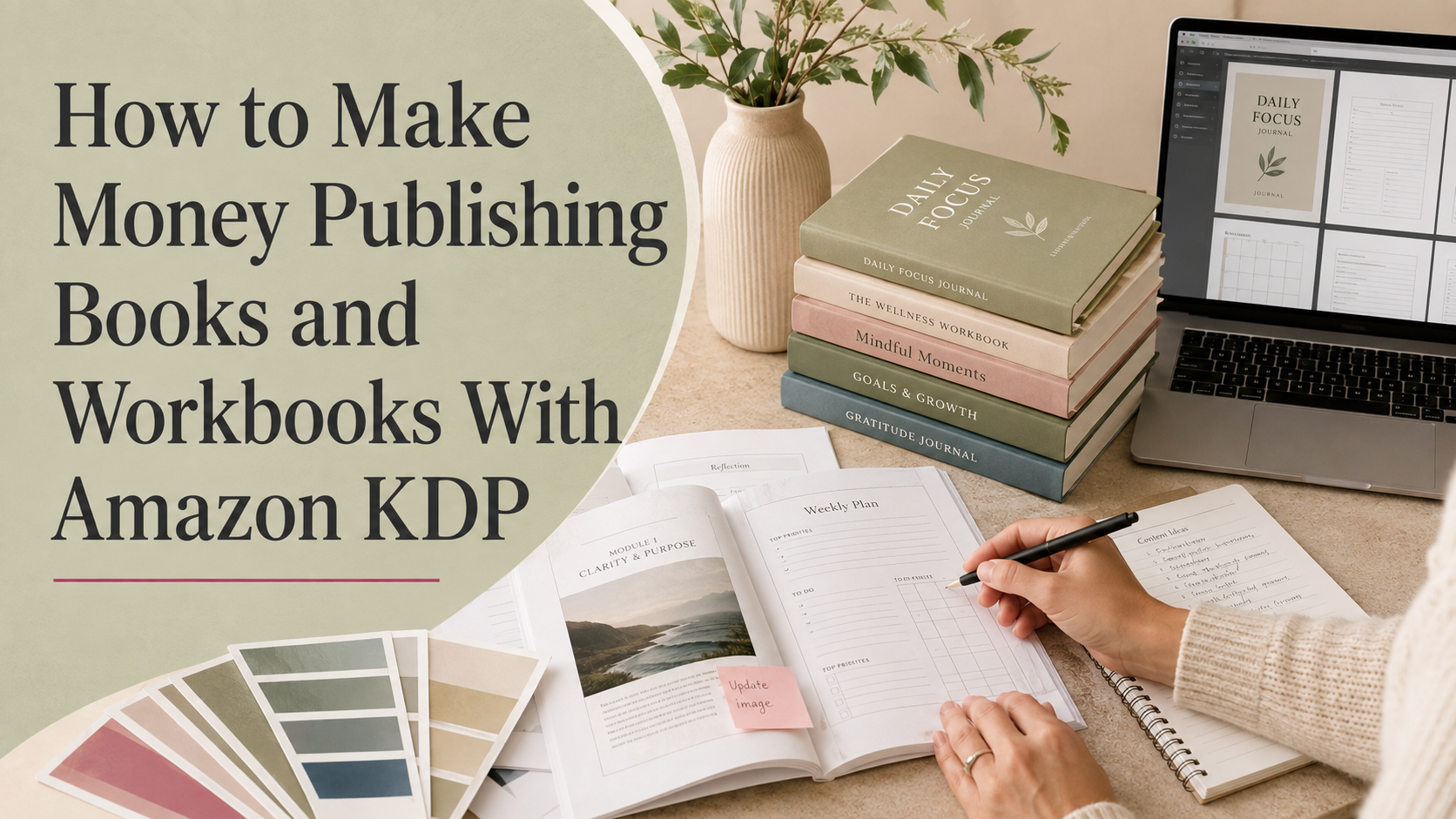
How to Make Money Publishing Books and Workbooks With Amazon KDP
In this article
- Introduction: explain how the business makes money
- What to sell first
- Materials, equipment and workspace
- Safety, legal, labeling and professional requirements
- Create and test a minimum viable collection
- Calculate real product cost
- Price and capacity
- Where to sell
- Product photos, listing and customer expectations
- Production, fulfillment and customer service
- Common mistakes and business risks
- 30-day test launch
Entering the self-publishing business offers a unique path for creative individuals. Many people wonder how to make money with Amazon KDP by turning their ideas into digital or physical products. This platform allows authors to reach a global audience without traditional gatekeepers.
Success in Amazon KDP publishing requires more than just uploading a file. It demands a focus on profitable books and workbooks that solve specific problems for readers. By prioritizing high-quality production and thorough market research, you build a foundation for long-term growth.
Understanding how to make money with Amazon KDP for beginners involves setting realistic expectations. Success is not an overnight guarantee but a result of consistent testing and improvement. Focus on creating value, and the royalties will follow as you refine your craft.
Key Takeaways
- Research niche markets before starting your project.
- Prioritize high-quality content to ensure reader satisfaction.
- Treat your writing efforts as a professional business venture.
- Use data-driven insights to improve your book listings.
- Expect a learning curve while testing different strategies.
Introduction: explain how the business makes money
Amazon KDP transforms the traditional publishing world by allowing anyone to turn ideas into profitable digital and physical products. At its core, the KDP business model relies on a print-on-demand system. This means you do not need to pay for inventory or warehouse space upfront.
Learning how to make money with Amazon KDP step by step involves a clear, repeatable cycle. First, you identify a specific niche or audience need. Next, you create your manuscript and cover design, then upload these files to the Amazon dashboard. Once your book is live, customers can purchase it, and Amazon handles the printing and shipping automatically.
Your Amazon KDP royalties are calculated based on the list price you set minus the printing costs and the marketplace commission. Because Amazon manages the logistics, you focus entirely on creating high-quality content that meets customer demand. This streamlined approach allows authors to scale their efforts without the risks associated with traditional publishing.
Building a consistent book publishing income requires balancing several financial variables. You must consider how your pricing strategy interacts with production costs and competitive market trends. High sales volume often compensates for lower margins, while specialized books may command higher prices due to their unique value.
| Factor | Impact on Profit | Management Strategy |
|---|---|---|
| List Price | Determines gross revenue | Analyze competitor pricing |
| Printing Costs | Reduces net royalty | Optimize page count and size |
| Marketplace Fees | Fixed percentage deduction | Focus on high-demand niches |
| Sales Volume | Increases total earnings | Improve listing visibility |
Ultimately, how to make money with Amazon KDP is about finding the intersection between what you enjoy creating and what readers are actively searching for. By monitoring your sales data and adjusting your strategy, you can refine your approach to maximize your long-term success.
What to sell first
Selecting your first book project requires a blend of careful research and realistic goal setting. Many beginners wonder how to make money with Amazon KDP, but the secret lies in choosing a format that matches your current production skills. You do not need to be a professional author to succeed, provided you focus on solving a specific problem for a target reader.
When starting out, you might consider low-content books like simple journals or logbooks. These items are often easier to design because they rely on repetitive interior patterns rather than long-form text. However, the market for these is quite crowded, so you must find a unique angle to stand out.
If you prefer a more structured approach, consider creating workbooks to sell on Amazon. These products provide a clear outcome for the user, such as learning a new language or tracking fitness goals. By focusing on a narrow audience, you make it much easier to market your book effectively.
Successful niche book ideas often stem from identifying gaps in existing categories. You should look for topics where current offerings are outdated or lack helpful exercises. Always perform thorough Amazon KDP product research to see if customers are actively searching for your chosen topic.
| Book Type | Difficulty Level | Market Potential | Primary Benefit |
|---|---|---|---|
| Simple Journals | Low | High Competition | Quick Production |
| Guided Workbooks | Medium | High Demand | High Perceived Value |
| Activity Books | Medium | Seasonal | Strong Engagement |
| Information Books | High | Niche Authority | Long-term Sales |
Before you commit to a design, validate your idea by reviewing competing listings. Check the customer reviews to see what readers dislike about current books. Use this feedback to create a superior product that addresses those specific pain points.
Materials, equipment and workspace
You do not need a massive budget to learn how to make money with Amazon KDP for beginners. Most aspiring authors already own the primary equipment required to launch their digital publishing career. A reliable computer and a stable internet connection are the only non-negotiable items you need to get started.
When calculating how to make money with Amazon KDP startup costs, it is helpful to distinguish between essential investments and optional upgrades. You can begin with free software and gradually reinvest your profits into premium tools as your business grows. Keeping your initial expenses low allows you to test your concepts without significant financial risk.
Your KDP publishing tools should include reliable word processing software and a dedicated folder system for your files. Organizing your drafts, cover art, and interior files in a cloud-based storage service ensures that your work remains safe and accessible. Consistency in your file naming conventions will save you hours of frustration during the upload process.
Choosing the right book formatting software is a critical decision for your workflow. Whether you use professional tools like Adobe InDesign or user-friendly options like Kindle Create, ensure your software supports standard U.S. trim sizes. Adhering to American spelling conventions and U.S. tax documentation requirements is essential for maintaining a professional presence on the Amazon marketplace.
Finally, your home publishing workspace should be a quiet area where you can focus on creative tasks. A comfortable chair and a clean desk can significantly improve your productivity during long writing or design sessions. By creating a dedicated space, you signal to yourself that it is time to focus on your publishing goals.
| Category | Essential Item | Optional Upgrade |
|---|---|---|
| Hardware | Laptop or Desktop | Dual Monitors |
| Software | Word Processor | Professional Design Suite |
| Assets | Free Stock Images | Premium Font Licenses |
| Storage | Cloud Backup | External Hard Drive |
Safety, legal, labeling and professional requirements
Building a successful publishing business requires a solid foundation of legal and safety knowledge. When you start your journey, you must prioritize Amazon KDP copyright protection to ensure your work remains unique. Never use images, fonts, or interior designs that you do not own or have a commercial license to use.
Proper documentation is essential for your business growth. While Amazon provides a free internal identifier, you should understand ISBN requirements if you plan to distribute your books through other retailers. Keeping your records organized helps you maintain full control over your intellectual property.
Conducting thorough trademark checks is a vital step before finalizing your book titles or series names. You want to avoid accidental infringement on existing brands, which could lead to account suspension. Use these best practices to stay safe:
- Always verify that your book title does not contain protected brand names.
- Ensure your interior pages are original and not copied from other creators.
- Use clear, honest descriptions to avoid misleading claims about your product.
- Include necessary disclaimers if your book contains specialized advice.
Focusing on privacy and accessibility makes your content better for every reader. Ensure your digital files are formatted correctly so that screen readers can interpret your text easily. Accessibility is not just a technical requirement; it is a way to reach a wider audience.
Finally, maintain high standards of publishing compliance by keeping your metadata accurate and age-appropriate. Always review the latest Amazon policies to ensure your business practices remain current. If you have complex questions regarding taxes or specific legal issues, consult with a qualified professional to protect your assets.
Create and test a minimum viable collection
Learning how to make money with Amazon KDP step by step starts with building a minimum viable book collection. Instead of spending months on a massive catalog, you should focus on a small set of related titles. This approach allows you to test the market without risking significant time or capital.
Successful authors often use KDP niche validation to ensure their ideas have real demand. By creating simple publishing prototypes, you can see if readers actually want your content. These early versions do not need to be perfect, but they must clearly communicate the value of your book.
“The goal of a minimum viable product is to learn what your customers truly value, not to build a perfect final version.”, Eric Ries
Once you have a prototype, workbook testing becomes the most critical phase of your development. You should share sample pages with a small group of representative readers to gather honest feedback. This process helps you identify confusing instructions, weak layouts, or incorrect answers before you launch to a wider audience.
Catching these errors early prevents negative reviews and saves you from costly revisions later. Refining your content based on user feedback ensures that your final product is high-quality and ready for the market. Taking these small, deliberate steps will help you build a sustainable and profitable publishing business on Amazon.
Calculate real product cost
Understanding your true expenses is the secret to building a sustainable publishing business. Many creators focus only on the final sale price, but learning how to make money with Amazon KDP startup costs requires a deeper look at your balance sheet. You must track every dollar spent on software subscriptions, cover design, and professional editing services.
It is equally vital to account for your own time. While you might not pay yourself a hourly wage immediately, ignoring your labor makes your business appear more profitable than it truly is. Treat your writing and formatting hours as a hidden investment in your future success.
When you prepare your book production budget, you must factor in the platform’s specific fees. Use an official royalty calculator to determine exactly how much you earn after Amazon KDP printing costs are deducted from the list price. These costs vary based on page count, ink type, and trim size.
To maintain a healthy publishing profit margin, you should build a per-sale estimate that accounts for more than just the base printing fee. You must also consider potential refunds, marketing discounts, and the platform’s distribution cut. Use the table below to organize your financial projections for each title.
| Expense Category | Type | Impact on Profit |
|---|---|---|
| Writing & Editing | Unpaid Labor | High (Time Investment) |
| Cover Design | Cash Expense | Medium (One-time) |
| Printing Fees | Platform Deduction | High (Per-unit) |
| Advertising | Cash Expense | Variable (Scalable) |
Always keep a buffer for unexpected costs like promotional price drops or seasonal sales fluctuations. By tracking these metrics early, you ensure that your business remains financially viable as you scale your catalog. Consistency in your accounting will provide the clarity needed to make smarter publishing decisions.
Price and capacity
Mastering Amazon KDP book pricing requires a balance between market research and profit margins. You must understand how to make money with Amazon KDP pricing/tools by evaluating your competition and the perceived value of your work. Readers often judge a book by its cover, but they also compare your price against similar titles in the same niche.
Consider your page count, trim size, and interior complexity when setting your initial price. A high-quality workbook with unique content justifies a higher price point than a simple lined journal. Always verify your math using dedicated spreadsheets to ensure your margins remain healthy after printing costs.
“Price is what you pay. Value is what you get.”
Understanding your royalty rates is essential for long-term success. You should calculate your break-even point for every unit sold to ensure you are not losing money on production. Use these factors to guide your decisions:
- Analyze the average price of the top ten books in your category.
- Factor in the cost of color versus black-and-white printing.
- Account for Amazon’s distribution fees and regional taxes.
Your publishing capacity dictates how many titles you can realistically manage without sacrificing quality. If your production time is too high, you may find it difficult to scale your business effectively. Do not attempt to launch dozens of books if you cannot maintain a high standard for every interior.
Finally, implement a clear price testing strategy to see how your audience responds to different tiers. Remember that a low price cannot compensate for weak demand or a poorly designed interior. Quality content will always be the primary driver of sales, regardless of your pricing model.
Where to sell
While Amazon KDP is your primary hub, your reach can extend far beyond its digital shelves. The Amazon book marketplace provides an incredible foundation for your business, offering instant access to millions of active shoppers. By leveraging KDP distribution, you ensure your books are available globally without managing complex logistics yourself.
However, relying solely on organic discovery can limit your growth potential. You should use professional software to analyze the market and refine your strategy. Learning how to make money with Amazon KDP pricing/tools allows you to identify high-demand niches and set competitive prices that attract buyers. These tools help you understand what readers are searching for right now.
“The most successful authors treat their books like a business, using every available channel to connect with their target audience.”
To scale your income, you must diversify your reader acquisition channels. While Amazon handles the transaction, you should build a brand that exists independently of the platform. Consider these effective ways to drive traffic:
- Email Lists: Build a direct line to your readers to announce new releases.
- Social Platforms: Engage with communities on Instagram, TikTok, or Pinterest.
- Author Websites: Create a central home for your portfolio and brand story.
- Strategic Partnerships: Collaborate with influencers or bloggers in your niche.
Effective direct book marketing involves more than just posting links. Every promotional effort must send qualified readers toward a clear, accurate product listing. When your external marketing efforts align with your Amazon listing, you increase your conversion rates significantly. Consistency is the key to turning casual browsers into loyal, repeat customers.
Product photos, listing and customer expectations
Mastering your Amazon KDP listing optimization is the most effective way to turn casual visitors into loyal readers. Many new authors struggle to understand how to make money with Amazon KDP mistakes, often overlooking the fact that their listing is their primary sales tool. When your metadata and visuals align, you create a seamless path for the reader to click “buy.”
Your book cover design serves as the first point of contact for potential customers. A professional, genre-appropriate cover signals quality and builds immediate trust. If your cover misrepresents the content inside, you will likely face high return rates and negative feedback.
A compelling product description should highlight the benefits of your book while managing reader expectations. Avoid exaggerated promises that the interior cannot fulfill, as this leads to disappointment. Instead, focus on clear, honest communication about what the reader will gain from your work.
Finally, pay close attention to your customer reviews to identify areas for improvement. If readers consistently mention missing information or poor proofreading, use that data to refine your future uploads. A well-maintained listing that matches the interior preview is the best way to ensure long-term success.
| Listing Element | Effective Strategy | Common Mistake |
|---|---|---|
| Book Cover | Genre-specific and clear | Misleading or low-resolution |
| Description | Benefit-driven and honest | Exaggerated claims |
| Interior Preview | Matches the final product | Mismatched or incomplete |
| Keywords | Relevant to search intent | Keyword stuffing |
Production, fulfillment and customer service
Efficient production and responsive customer service are the pillars of a sustainable book brand. By utilizing Amazon KDP print-on-demand technology, you eliminate the need to purchase or store physical inventory. This model simplifies book fulfillment because the platform handles printing and shipping directly to the reader whenever a sale occurs.
Maintaining high standards is essential for long-term success. You must prioritize quality control by carefully reviewing your digital files before they go live. Always order a physical proof copy to check for formatting errors, margin issues, or print quality concerns that digital previews might miss.
Providing excellent customer service for authors involves staying proactive about reader feedback. If a customer reports a printing defect or a shipping delay, respond with empathy and professionalism. Monitoring these reports helps you identify recurring production issues, allowing you to update your files or contact support to resolve systemic problems.
To keep your business running smoothly, establish a repeatable publishing workflow. This system ensures that every book you release meets your brand standards from start to finish. Follow these steps to maintain consistency:
- Finalize your manuscript and ensure all interior formatting is clean.
- Upload your files to the dashboard and verify that all metadata is accurate.
- Order and review a physical proof copy to confirm visual and structural integrity.
- Publish your work and monitor reader reviews for any potential quality concerns.
- Update your files periodically to address feedback and improve the reader experience.
By treating your publishing process as a professional operation, you build trust with your audience. Consistency is the key to turning casual readers into loyal fans who look forward to your next release.
Common mistakes and business risks
Understanding the risks involved in self-publishing is the first step toward long-term success. Many new authors struggle because they ignore the basics of market research or try to cut corners with low-quality content. Learning how to make money with Amazon KDP mistakes is actually a vital part of your education as a publisher.
One of the most frequent reasons for failed book launches is a lack of proper preparation. When you publish content that has not been thoroughly researched or contains errors in metadata, customers will notice. Poor formatting often leads to negative reviews, which can permanently damage your reputation on the platform.
Managing your budget is another area where many beginners stumble. It is easy to overspend on tools or advertising before you have a proven product. By carefully tracking how to make money with Amazon KDP startup costs, you ensure that your business remains profitable rather than becoming a financial burden.
You must also be aware of broader Amazon KDP risks that come with relying on a single marketplace. Market conditions change quickly, and conversion rates can fluctuate based on seasonal trends or algorithm updates. Diversifying your strategy and staying adaptable helps you weather these inevitable shifts in the industry.
Maintaining publishing account compliance is non-negotiable for any serious author. Violating platform policies can lead to account suspension, which effectively ends your business overnight. To protect your hard work, implement these practical controls:
- Keep detailed source records for all images and text to verify your rights.
- Always review physical proofs before finalizing your book for sale.
- Track every expense to ensure your profit margins remain healthy.
- Test only one change at a time to see what truly impacts your sales.
Consistency is your best defense against the common pitfalls of the industry. By staying organized and keeping a close eye on your data, you can avoid the traps that cause others to quit. Focus on building a sustainable brand that provides real value to your readers.
30-day test launch
If you want to learn how to make money with Amazon KDP for beginners, starting with a focused publishing experiment is the smartest move. Rather than guessing what works, you should commit to a structured 30-day KDP launch plan. This timeframe allows you to test your concepts without getting stuck in analysis paralysis.
To understand how to make money with Amazon KDP step by step, you must break your month into clear phases. Spend the first week researching high-demand niches and creating a solid outline for your workbook or book. Focus on solving a specific problem for a small, defined audience to ensure your content provides real value.
During the second week, shift your energy toward production and rigorous proofreading. Use a book launch checklist to ensure your manuscript is formatted correctly and free of errors. Professional presentation is a key factor in building trust with your early readers.
In the third week, prepare your Amazon listing by writing a compelling description and designing an eye-catching cover. Once your files are uploaded, hit the publish button and monitor your initial traffic. This publishing experiment is not just about sales; it is about gathering data on how customers interact with your product.
Finally, use the fourth week to review your performance metrics. Look beyond simple enthusiasm and analyze the actual data to see if your business model is sustainable. This 30-day KDP launch plan provides the foundation you need to scale your efforts in the future.
| Metric | Goal | Why It Matters |
|---|---|---|
| Listing Impressions | 500+ | Measures visibility and keyword relevance. |
| Conversion Rate | 2% – 5% | Shows if your cover and description work. |
| Production Time | Under 14 days | Ensures your workflow is efficient. |
| Actual Profit | Positive ROI | Confirms the viability of your niche. |
Growth path
Scaling your business requires a shift from random uploads to a calculated growth strategy. Once you have a validated title, you should avoid the temptation to simply flood the market with new content. Instead, focus on building a sustainable foundation that prioritizes quality and long-term profitability.
You can learn how to make money with Amazon KDP pricing/tools by analyzing your sales data to see which titles perform best. These tools reveal exactly which books deserve more advertising budget or content improvements. By monitoring your profit margins, you ensure that every new project adds real value to your bottom line.
A smart book series strategy is often the fastest way to increase your revenue. When readers enjoy one workbook, they are naturally inclined to purchase the next installment in the series. This approach to catalog expansion helps you capture more market share while building a loyal base of repeat customers.
Consider these effective ways to grow your publishing business:
- Sequels and Volumes: Create follow-up workbooks that build on the skills taught in your first release.
- Complementary Formats: Offer digital downloads or print-on-demand versions to reach different user preferences.
- Adjacent Audiences: Adapt your successful content for a slightly different demographic or niche.
- Updated Editions: Refresh your best-sellers with new information to keep them relevant for years.
True publishing business growth is driven by customer demand and reliable data rather than sheer volume. Always maintain your quality standards as you scale your operations. By keeping your production capacity in check, you ensure that your brand remains synonymous with excellence in the competitive Amazon marketplace.
FAQs to answer
New authors often have questions about the publishing process. Common KDP beginner questions focus on startup costs and equipment needs. You can start with a basic laptop and free design tools like Canva. Minimal investment allows you to test your ideas without high financial risk.
Understanding Amazon KDP account requirements is vital for success in the United States. You must provide accurate tax information and banking details to receive royalties. These Amazon KDP FAQs help clarify that your earnings depend on your book niche and marketing efforts.
Many people worry about how to make money with Amazon KDP mistakes. You avoid these pitfalls by researching your target audience and creating high-quality content. Focus on professional formatting and clear book descriptions to build trust with readers.
Book publishing profits grow when you treat your catalog like a real business. Start by choosing a useful idea that solves a specific problem. Create a quality workbook, publish an accurate listing, and measure your results carefully. Improving your catalog over time leads to sustainable growth on the platform.
FAQ
What are the how to make money with Amazon KDP startup costs for a total beginner?
Can you explain how to make money with Amazon KDP step by step?
What are the most common how to make money with Amazon KDP mistakes to avoid?
How do how to make money with Amazon KDP pricing/tools affect my profit?
Is how to make money with Amazon KDP for beginners still realistic in the current market?
Do I need to live in the United States to publish on Amazon KDP?
How long does it take for a book to go live and start generating sales?
Can I use AI tools like ChatGPT to write my KDP books?
Keep reading on WAHMN
More articles in this category, browse the full article library, or explore our business tools and learning paths.
Books need no stock, but they do need readers. Content Marketing Business covers finding them, and Business Launcher covers treating this as a business rather than a hobby.