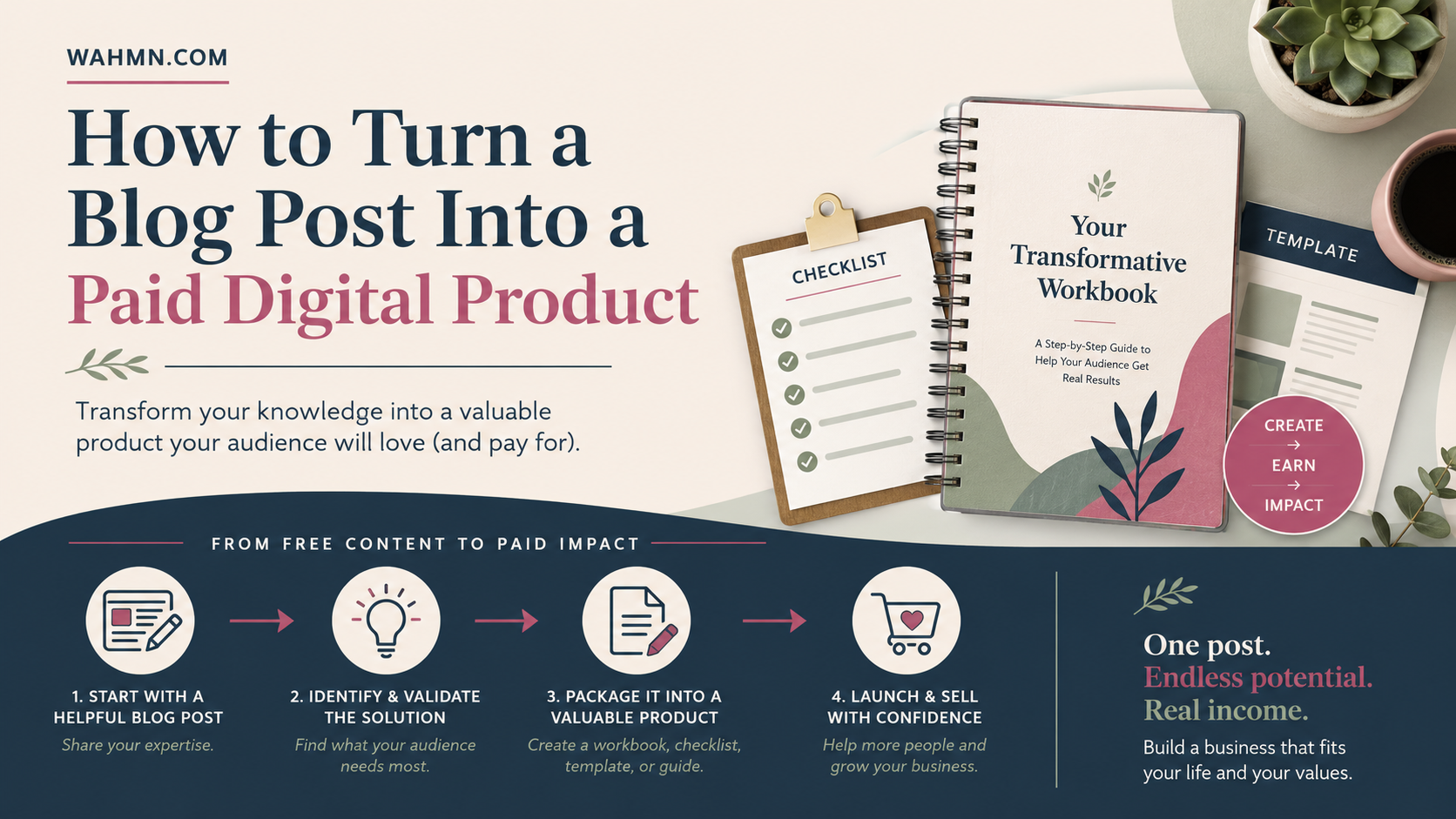
How to Turn a Blog Post Into a Paid Digital Product
Many creators sit on a goldmine of expertise without realizing it. You likely have archives filled with valuable insights that could serve your audience in new ways. Learning how to turn a blog post into a paid digital product is the smartest move for scaling your influence.
Blogging for profit requires more than just republishing old entries. It demands a shift in perspective where you solve a specific problem for your readers. By packaging your best advice, you create a resource that people are happy to buy.
This guide walks you through twelve essential steps to achieve this goal. We will cover everything from identifying your most helpful content to launching your final offer. You will learn how to research your market, structure your material, and promote your work effectively. Let’s start building your new income stream today.
Key Takeaways
- Repurposing existing content saves time while maximizing your reach.
- Success comes from solving a clear, specific problem for your audience.
- Market research ensures your new resource meets actual buyer needs.
- A structured launch plan helps you reach your target customers effectively.
- Focus on providing high value rather than just recycling old words.
Find the Blog Content With the Strongest Product Potential
Successful creators often find their best product ideas hidden in plain sight within their own archives. Before you start building, you must evaluate which topics resonate most with your audience. Implementing effective blog monetization strategies begins with auditing your existing library to see what already works.
Use Traffic and Engagement Data to Identify Proven Demand
Start by reviewing your analytics dashboard to see which pages receive the most consistent traffic. High pageviews indicate that a topic is popular, but you should also look at time on page and bounce rates. If readers spend a long time on a specific post, they are likely consuming the information deeply.
High engagement suggests that your audience finds the content valuable. When you see a post with high traffic and long dwell times, you have found a strong candidate to monetize blog content. These metrics serve as a clear signal that your readers are hungry for more depth on that subject.
Look for Posts That Solve a Specific, Expensive, or Repetitive Problem
Not all popular posts are suitable for paid products. Focus on content that addresses a painful or recurring challenge for your readers. If a post helps someone save money, earn more, or avoid a costly mistake, it holds significant value.
People are willing to pay for solutions that save them time or reduce frustration. A post that explains a complex, repetitive process is often the perfect foundation for a template or a step-by-step guide. By turning these solutions into a product, you provide a tangible shortcut for your audience.
Separate Informational Topics From Product-Ready Topics
It is important to distinguish between curiosity-driven content and action-oriented content. Informational posts are great for SEO and brand awareness, but they rarely convert into sales. Product-ready topics, however, help readers achieve a specific goal or complete a task.
The following table helps you categorize your existing content to determine if it is ready for a premium upgrade:
| Content Type | Reader Goal | Monetization Potential |
|---|---|---|
| General News | Stay informed | Low |
| How-to Guides | Solve a problem | High |
| Opinion Pieces | Entertainment | Medium |
| Toolkits/Templates | Save time | Very High |
Check Search Intent, Comments, Email Replies, and Customer Questions
Your audience often tells you exactly what they want if you listen closely. Look at the comments section of your most popular posts to see if readers are asking follow-up questions. These questions often highlight gaps in your current content that a paid product could fill.
Check your email replies and direct messages for recurring themes. If multiple people ask for a checklist or a template based on your article, you have found a winning idea. These interactions are vital for refining your blog monetization strategies and ensuring you monetize blog content in a way that truly serves your readers.
Define the Audience and Paid Outcome
Defining a specific buyer is the secret to turning your blog traffic into consistent revenue. When you try to speak to everyone, you end up connecting with no one. By narrowing your focus, you make your marketing message more persuasive and your digital product creation process much easier to manage.
Choose One Clearly Defined Buyer
Successful creators do not build products for the masses. Instead, they identify a single person who is struggling with a specific problem. When you know exactly who your buyer is, you can tailor your language to address their unique pain points and desires.
- Identify their current job title or role.
- List the top three frustrations they face daily.
- Determine the specific goal they want to reach within 30 days.
Describe the Result the Product Will Help Buyers Achieve
People do not buy information; they buy transformations. Your product should promise a clear, measurable outcome that justifies the purchase price. Whether you help them save time, avoid costly mistakes, or reach a new milestone, the value must be obvious.
To earn money blogging, you must move beyond general advice. Focus on a tangible result, such as “building a custom email sequence in one afternoon” rather than “learning about email marketing.”
Turn a Broad Blog Topic Into a Focused Transformation
A broad topic like “how to garden” is difficult to sell because it lacks a specific endpoint. You can turn this into a high-value product by narrowing the scope to a single, urgent transformation. Think about the specific steps a reader needs to take to move from point A to point B.
Match the Product Promise to the Reader’s Skill Level
Your digital product creation strategy must align with the expertise of your audience. A beginner needs foundational support, while an advanced user requires sophisticated tools to scale their results. You can earn money blogging more effectively by offering solutions that meet the reader exactly where they are today.
| Skill Level | Primary Need | Product Focus |
|---|---|---|
| Beginner | Clarity and speed | Step-by-step checklists |
| Intermediate | Efficiency | Templates and workflows |
| Advanced | Optimization | Advanced data and strategy |
By matching your promise to these levels, you ensure that your customers feel supported. This clarity builds trust and encourages repeat purchases, which is essential for long-term growth.
How to Turn a Blog Post Into a Paid Digital Product
When you decide to create digital products from blog posts, the secret lies in shifting your audience from passive reading to active implementation. Your existing articles likely contain the foundational logic needed to solve a specific problem. By reorganizing this information, you provide a faster, more structured path to success for your readers.
Extract the Blog Post’s Core Framework
Start by identifying the logical sequence hidden within your post. Most high-performing articles follow a step-by-step process that can be mapped out as a transformation journey. Strip away the introductory fluff and focus on the core methodology that delivers the result.
- Identify the starting point of your reader.
- Define the specific end goal they want to reach.
- Map the logical milestones required to bridge that gap.
Expand Each Major Point Into an Actionable Product Module
Once you have your framework, treat each major heading as a distinct module. A blog post is often a summary, but a paid product requires depth and clarity. You should expand these sections by providing deeper context, specific scenarios, and clear instructions that guide the user through the process.
Think of your modules as a classroom experience. Each lesson should build upon the previous one, ensuring the user feels a sense of progress as they move through your material.
Add Templates, Checklists, Examples, and Decision-Making Tools
To truly understand how to turn a blog post into a paid digital product, you must offer more than just text. Customers pay for the convenience of having tools that save them time and effort. Incorporating practical assets turns a static guide into a dynamic resource.
Consider adding these elements to your product:
- Templates: Pre-formatted files that users can copy and customize.
- Checklists: Step-by-step lists to ensure no detail is missed.
- Decision-Making Tools: Simple flowcharts or calculators that help users choose the right path.
Remove Free Content That Does Not Support the Paid Outcome
It is tempting to include everything you have ever written on a topic, but less is often more. You must ruthlessly edit your content to ensure every page serves the final goal. If a paragraph does not help the user achieve the promised result, remove it to keep the product focused and high-impact.
By streamlining your content, you help your customers reach their goals without feeling overwhelmed by unnecessary information. This focus is exactly what makes people happy to pay for your expertise.
Choose the Right Digital Product Format
Not every blog post needs to become a complex video course to be valuable to your readers. When you create digital products from blog posts, your primary goal should be selecting the simplest format that delivers the promised transformation. You do not need expensive production gear or complicated software to provide a high-quality experience.
Package a Detailed Guide as an Ebook or Playbook
If your blog post covers a deep, conceptual topic, an ebook or playbook is often the best choice. These formats allow you to expand on your original ideas with greater depth and structure. Readers appreciate a clean, downloadable PDF that they can reference whenever they need to solve a specific problem.
Convert a Repeatable Process Into a Course or Workshop
When your content outlines a step-by-step method, consider turning it into a structured course. This format works best for topics that require active implementation and guidance. A workshop setting can also provide a sense of community, helping your audience feel supported as they work through the material.
Build a Template Bundle, Spreadsheet, or Swipe File
Sometimes, your readers just want a shortcut to get the job done faster. A template bundle or a custom spreadsheet can save your audience hours of manual labor. These tools are highly effective because they provide immediate utility without requiring the user to read long chapters of theory.
Combine Complementary Formats Into a Practical Toolkit
For complex topics, you might find that a single format is not enough. A toolkit combines guides, checklists, and templates into one cohesive package. This approach provides a comprehensive solution that addresses different learning styles and needs within a single purchase.
Choose Based on Buyer Effort, Topic Complexity, and Support Needs
To successfully create digital products from blog posts, you must weigh the effort required against the value provided. If a simple checklist solves the problem, do not force it into a video course. Always prioritize the user experience by matching the format to the complexity of the task at hand.
| Format Type | Best For | Buyer Effort | Support Needed |
|---|---|---|---|
| Ebook/Playbook | Conceptual learning | Low | Minimal |
| Course/Workshop | Skill acquisition | High | High |
| Templates/Tools | Task execution | Very Low | None |
| Toolkit | Full transformation | Medium | Moderate |
Develop the Product Beyond the Original Blog Post
When you decide to create digital products from blog posts, the real value lies in the transformation you offer. A blog post often provides a high-level overview, but a paid product must deliver a tangible outcome. To succeed, you must move from simply sharing information to guiding your reader through a complete process.
Organize the Material Into a Clear Learning or Action Sequence
Your readers need a logical path to follow. Instead of presenting information in a linear article format, break your content into a step-by-step sequence. This helps users feel confident and capable as they progress through your material.
- Start with foundational concepts that prepare the user for action.
- Group related tasks into distinct modules or chapters.
- Ensure each step builds directly upon the knowledge gained in the previous one.
Replace General Advice With Specific Instructions and Examples
General advice is often free, but specific instructions are worth paying for. You should replace vague suggestions with concrete, actionable steps that leave no room for confusion. Providing real-world examples helps your audience visualize how to apply your methods in their own lives or businesses.
| Feature | Blog Post | Paid Product |
|---|---|---|
| Guidance | General theory | Step-by-step instructions |
| Examples | Brief mentions | Detailed case studies |
| Tools | None | Templates and calculators |
Include Original Research, Calculators, Worksheets, or Case Studies
Adding unique tools turns a standard guide into a must-have resource. Worksheets allow your customers to apply your framework immediately, while calculators provide instant clarity on their specific situation. Original research or detailed case studies provide the social proof needed to validate your methods.
Make Every Added Feature Support the Product’s Core Promise
It is tempting to add as much content as possible, but more is not always better. Every feature you include must directly support the main goal of your product. If a tool or worksheet does not help the user achieve the final result, it becomes a distraction that complicates your digital product creation process.
Focus on utility over volume to keep your product lean and effective. By removing unnecessary fluff, you ensure that your customers stay focused on the transformation they purchased. This approach saves you time on maintenance while providing a superior experience for your audience.
Validate the Product Before Building Everything
Validation is the secret weapon that separates successful creators from those who waste months on unsold goods. Before you invest time in recording videos or designing complex layouts, you must confirm that your audience is willing to pay for your solution. This approach is a core pillar of effective blog monetization strategies.
Ask Readers Which Solution They Would Pay For
Start by talking directly to your most engaged readers. You can use simple surveys or one-on-one interviews to uncover what keeps them up at night. Ask them specifically about the problems they would pay to solve right now.
Listen closely to the language they use to describe their pain points. When you mirror their own words back to them, you build trust and demonstrate that you truly understand their needs.
Test the Offer With a Waitlist or Presale
A waitlist is one of the most powerful tools for gauging real interest. By asking readers to sign up for early access, you create a pool of potential buyers who have already raised their hands.
“The best way to predict the future is to create it, but the best way to fund it is to presell it.” — Anonymous
If you want to take it a step further, offer a discount for those who purchase before the product is finished. This is a classic tactic within blog monetization strategies that provides immediate feedback on your pricing and value proposition.
Use a Minimum Viable Product to Confirm Buyer Interest
You do not need a perfect, polished course to start selling. A Minimum Viable Product (MVP) allows you to deliver the core transformation using a simple PDF, a private email series, or a basic checklist.
This lean approach helps you validate your blog monetization strategies without the risk of over-building. If the MVP sells well, you have the green light to expand the content into a larger, more comprehensive format.
Interpret Feedback Without Letting Free Requests Expand the Scope
As you gather feedback, you will inevitably receive requests for extra features or topics. It is vital to distinguish between actionable insights and “feature creep” that distracts from your main goal.
Stay focused on the primary transformation you promised. If a request does not directly help the user achieve that specific result, politely set it aside for a future project.
Set the Price and Create a Profitable Offer
Setting the right price is more than just picking a number; it is about capturing the value you deliver. Many creators make the mistake of pricing based solely on the hours spent building their product. Instead, you should focus on the urgency, difficulty, and financial impact of the outcome your reader achieves.
Price According to the Value of the Outcome
When your product solves a painful or expensive problem, the price should reflect that relief. If your guide helps a reader save thousands of dollars or earn more money, the price can be significantly higher than a simple informational ebook. Value-based pricing ensures you are rewarded for the transformation you provide rather than just the time you invested.
Compare Entry-Level, Core, and Premium Product Options
Offering different tiers is a smart strategy for blogging for profit. By providing options at various price points, you cater to different budgets and levels of support. This structure allows you to capture a wider audience while maximizing your revenue potential.
- Entry-Level: A low-cost, self-paced guide or checklist for quick wins.
- Core: The complete framework, including video tutorials and templates.
- Premium: The core product plus personal coaching or exclusive access to your community.
Bundle Bonuses That Increase Usefulness Without Creating More Work
You can increase the perceived value of your offer by including bonuses that require little extra effort. Look through your existing archives for high-quality content that complements your new product. Repurposing old blog posts, slide decks, or internal checklists into exclusive bonuses adds immediate utility for your customers.
Account for Platform Fees, Taxes, Refunds, and Ongoing Support
To build a sustainable passive income from blogging, you must account for the hidden costs of doing business. Platforms like Gumroad or Teachable charge transaction fees, and you must also set aside funds for sales tax and potential refunds. Proactive planning for these expenses ensures that your profit margins remain healthy as you scale your efforts.
Build the Product and Deliver It Professionally
Your journey toward successful digital product creation enters its most critical phase during the final production stage. Moving from a draft to a polished asset requires a focus on visual consistency and intuitive navigation. Professionalism is what separates a casual download from a premium resource.
Turn the Content Into a Consistent, Easy-to-Use Experience
Start by editing your material for clarity and flow. Ensure that your fonts, colors, and layout remain uniform across every page or module. A cohesive design helps users feel confident that they are interacting with a high-quality product.
Organize your files logically so that customers can find what they need without frustration. Include a “Start Here” guide or a clear table of contents to provide immediate value. Clear instructions are essential for ensuring your audience achieves the transformation you promised.
Choose a Delivery Platform for Files, Video, Payments, and Access
Selecting the right infrastructure is a vital part of digital product creation. You need a reliable platform that handles secure payments, video hosting, and automated file delivery. Popular options like Gumroad, Teachable, or Kajabi offer built-in tools to manage these tasks efficiently.
- Payment Processing: Ensure the platform supports major credit cards and digital wallets.
- Access Control: Use systems that provide unique login credentials for each buyer.
- Scalability: Choose a service that grows alongside your business needs.
Protect Customer Data and Control Product Access
You must prioritize the security of your buyers’ information at every step. Use platforms that offer encrypted transactions and follow strict privacy standards. Limit administrative permissions to ensure that only authorized team members can access sensitive customer records.
Handle all buyer data with extreme care to build long-term trust. When sharing files, use secure links that expire or require authentication. This approach to digital product creation keeps your intellectual property safe while protecting your customers from unauthorized access.
Test the Checkout, Download, Links, and Automated Emails Before Launch
Before you accept your first real order, perform a comprehensive prelaunch audit. Walk through the entire customer journey as if you were a new buyer. Verify that the checkout process is smooth and that all automated emails arrive in the inbox as expected.
Check every download link to ensure files open correctly on different devices. Testing every touchpoint prevents technical glitches that could lead to refund requests or negative reviews. A final, thorough review ensures your launch goes off without a hitch.
Promote the Product With Your Existing Blog Content
Your existing blog posts are hidden gold mines waiting to be turned into revenue. By integrating your digital product into the content that already attracts visitors, you create a natural bridge between free information and paid solutions. This approach allows you to monetize blog content without feeling like a pushy salesperson.
Update the Original Post With Relevant Calls to Action
Start by auditing your top-performing articles to see where a product mention fits naturally. Instead of generic banners, use contextual links that solve a specific problem mentioned in the text. Strategic placement ensures that readers see your offer exactly when they are most interested in the topic.
Use Content Upgrades to Capture Interested Email Subscribers
Offer a small, free sample of your product as a content upgrade to build your list. This tactic works because it filters for high-intent readers who are already looking for a deeper solution. Once they join your list, you have a direct line to share your full product offering.
Create an Email Sequence That Connects the Free Lesson to the Paid Solution
When a reader downloads your upgrade, trigger an automated email sequence that provides extra value. You can earn money blogging by guiding these subscribers through a journey that highlights the limitations of free advice. Show them how your paid product provides the structure and speed they need to succeed.
Repurpose the Topic for Search, Social Media, and Partnerships
Expand your reach by turning your core topic into various formats across different platforms. Effective blog monetization strategies often involve creating short video clips for social media or guest posts for industry partners. Each piece of content should point back to your primary product page to drive consistent traffic.
Use Testimonials and Demonstrations Instead of Vague Promotional Claims
Avoid making empty promises that sound like standard advertisements. Instead, use concrete evidence to show the value of your work. Screenshots, before-and-after case studies, and video walkthroughs prove that your product delivers real results.
| Promotion Channel | Primary Goal | Conversion Tactic |
|---|---|---|
| Blog Posts | Contextual Awareness | In-text product links |
| Email List | Relationship Building | Educational sequences |
| Social Media | Broad Reach | Video demonstrations |
| Partnerships | Authority Transfer | Shared case studies |
Improve Sales and Build Long-Term Blog Income
Your journey toward long-term profitability begins the moment your first customer hits the buy button. To effectively monetize blog content, you must move beyond simple sales figures and look at the entire customer experience. Consistent growth requires a commitment to data-driven decision-making.
Track Visits, Conversions, Revenue, Refunds, and Customer Completion
You should monitor the full lifecycle of your buyers to understand what works. Start by tracking visits to your sales page and the subsequent conversion rate of those visitors. High traffic with low sales often points to a disconnect between your blog audience and your product offer.
Keep a close eye on revenue trends and refund rates, as these indicate the perceived value of your work. Finally, measure customer completion rates to see if your product actually delivers the promised transformation. If users stop halfway through, your material may be too difficult or poorly structured.
Fix Weak Points in the Product Funnel
Once you have your data, you can identify exactly where your funnel breaks down. If your traffic is high but sales are low, your offer or pricing might be the issue. If customers buy but never finish the product, you likely need to improve your onboarding or the quality of your instructions.
| Metric | Potential Issue | Action Required |
|---|---|---|
| Low Traffic | Poor SEO or Promotion | Optimize content and outreach |
| Low Conversion | Weak Sales Copy | Refine the value proposition |
| High Refunds | Product Mismatch | Update content to meet expectations |
| Low Completion | Complex Material | Simplify steps and add support |
Refresh Examples, Links, and Instructions as the Topic Changes
Successful blogging for profit is not a “set it and forget it” strategy. Industries evolve, and your digital products must keep pace with these shifts. Regularly audit your resources to ensure all external links remain active and relevant.
Update your examples to reflect current trends or new software tools. When you keep your material fresh, you build trust with your audience and increase the longevity of your digital assets.
Create Related Products From the Same Content Ecosystem
Once you have a successful product, look for gaps in your existing content ecosystem. You can often build a secondary, more advanced product for customers who have already completed your entry-level guide. This strategy allows you to maximize the lifetime value of every reader who visits your site.
Balance Passive Income From Blogging With Customer Support and Updates
Many creators view passive income from blogging as a way to escape work, but it actually requires ongoing maintenance. You must remain available for customer support to ensure your buyers feel valued and heard. Compliance, security updates, and periodic content improvements are essential to keep your business running smoothly.
By balancing these responsibilities, you ensure that your efforts to monetize blog content remain sustainable for years to come. Remember that blogging for profit is a marathon, not a sprint, and your dedication to quality will pay off in the long run.
Conclusion
Building a profitable digital business requires more than just writing articles. You must identify proven demand, define a specific buyer, and promise a clear transformation. Learning how to turn a blog post into a paid digital product is a strategic business process rather than a simple republishing exercise.
This guide provides a roadmap to move from initial research through validation, launch, and optimization. By choosing the right format and adding practical value, you create tools that solve real problems for your audience. This approach allows you to earn money blogging by providing solutions that people are eager to purchase.
Success relies on your ability to connect useful products with consistent promotion. You must maintain your offerings by updating examples and links to keep them relevant over time. This commitment to quality ensures your work remains a reliable resource for your readers.
Focusing on these steps helps you build a sustainable model for passive income from blogging. Start by reviewing your top-performing posts today to see which topics hold the most potential for your first paid offer. Your existing audience is the best place to begin your journey toward creating professional digital products.